At least 55 Ghanaians killed in Russia-Ukraine war — Ghana’s foreign affairs minister
At least 55 Ghanaians have been killed fighting in the war in Ukraine, with two others currently held as prisoners of war, Ghana’s foreign affairs minister, Samuel Okudzeto Ablakwa, said.
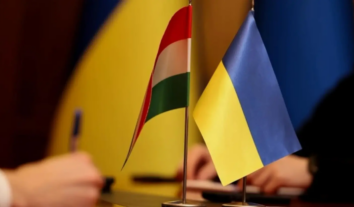
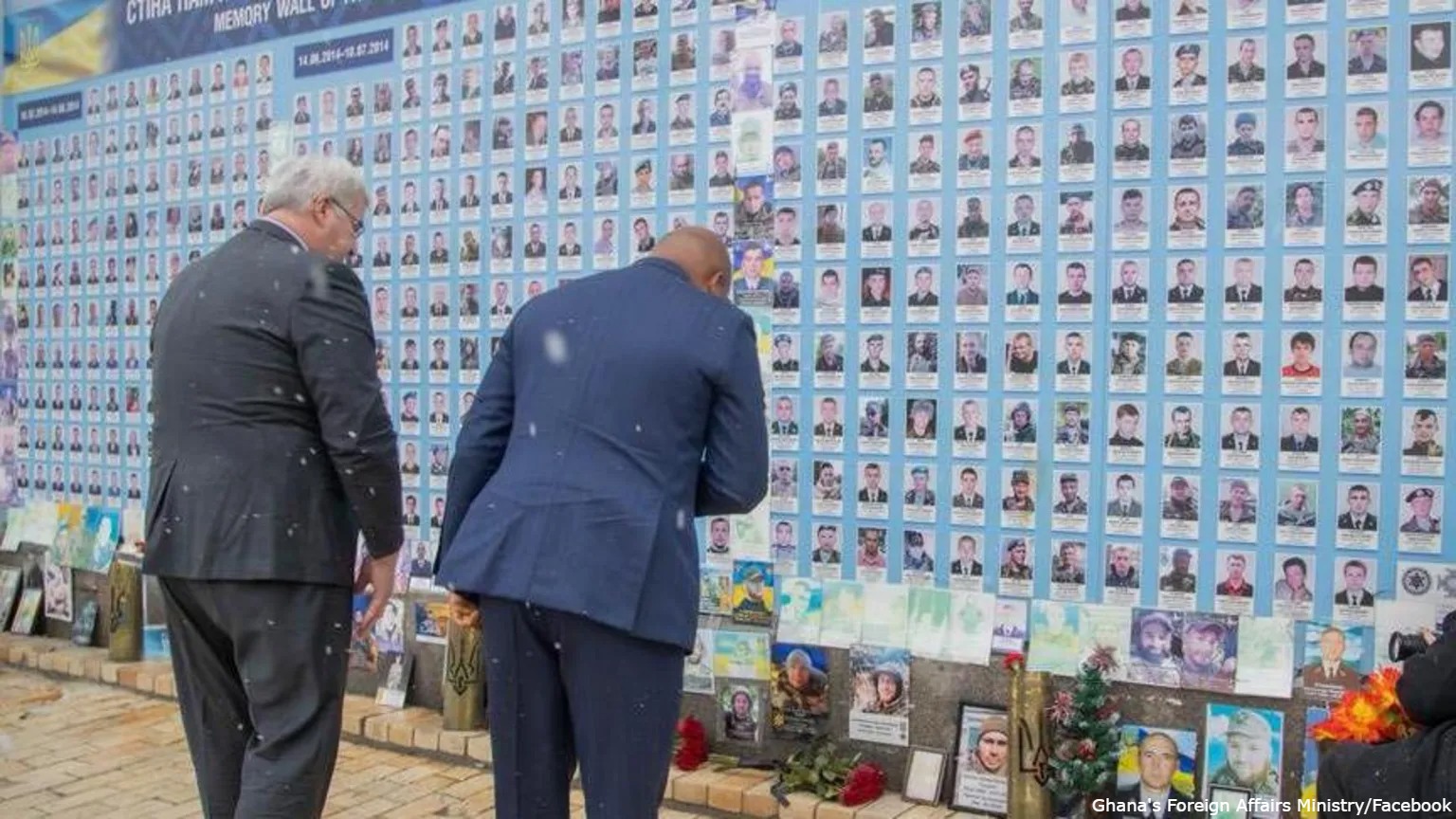 Ukraine Foreign Minister Andrii Sybiha and his Ghanaian counterpart Samuel Okudzeto Ablakwa paid their respects to those killed in the war
In January, Ukraine’s Foreign Minister Andrii Sybiha responded to an appeal regarding a captured citizen of Ghana as a POW on Ukrainian soil and invited the country’s Foreign Minister, Samuel Okudzeto Ablakwa, to Ukraine.
As BBC News reported, on a trip to Kyiv, Ablakwa stated that about 272 Ghanaians are believed to have been lured into the conflict since 2022, citing Ukrainian authorities.
Ablakwa described the figures as “depressing and frightening,” saying Ghana “cannot turn a blind eye to these heartbreaking statistics.”
He did not say whose side the Ghanaians had been fighting on, but Ukraine’s foreign minister said on February 25, 2026, that more than 1,700 people from 36 countries in Africa had been recruited to fight for Russia.
The 55 Ghanaians are the highest number of casualties from a single African country to have been officially confirmed in the Ukraine-Russia war.
Local media in Cameroon have reported that 94 of its nationals have died in the conflict, but the authorities have not commented on these figures.
Two South Africans and at least one Kenyan have died in the war.
Ablakawa said the casualty figures were “not just numbers, they represent human lives, the hope of many Ghanaian families and our nation.”
He said the Ghanaian government was committed to “tracking and dismantling all dark web illegal recruitment schemes” as well as launching intensive public awareness campaigns to prevent the country’s youth from being drawn into the conflict.
“This is not our war, and we cannot allow our youth to become human shields for others,” he added.
On February 26, a Kenyan national was charged over accusations he had lured young men to Russia with job opportunities, only for them to end up fighting in Ukraine. Festus Arasa Omwamba denied the charges.
A total of 1,000 Kenyans have been recruited to fight for Russia in its four-year war against Ukraine, said a report from Kenya’s National Intelligence Service (NIS), released last week.
Russia’s embassy in Kenya has denied accusations that it was involved in recruiting people to fight in the war. However, it stated that Russian law allowed foreign nationals legally in the country to voluntarily enlist in the armed forces.
To provide background, since 2022, Moscow has targeted the economically vulnerable across Africa, South Asia, and Latin America — Nepalis promised security work, Kenyans told they’d guard facilities, Cubans offered escape from grinding poverty. Instead, they’ve become expendable infantry in a war they barely understand, while young women from Brazil and African nations labor under exploitative conditions in Russian drone factories.
You also want to read: Sybiha invites Ghana’s FM to Ukraine amid appeal over captured Ghanaian fighter on Ukrainian soil
Wellington Nyongesa, intake editor at Standard Group PLC, stated at the Third International Conference Crimea Global that nearly 300 young Kenyan men are trapped on the Russian front lines in Ukraine, lured by false promises of jobs in supermarkets, logistics, and construction.
Previously, ZMINA reported that a video showing Russian mistreatment of African mercenaries spread among Kenyan social media users. In the video, a Russian serviceman humiliates an African fighter by strapping an anti-tank mine to him in what the narration frames as a cruel prank or punishment, labeling him with a racist expression as “coal.”
Families of Kenyans killed in Russia’s war blame Kenya’s government for failing to regulate illegal recruiters. Many still cannot bury their loved ones as bodies remain on the battlefield.
Previously, ZMINA reported that in the Luhansk Oblast, Ukraine’s military intelligence officers discovered the bodies of two citizens of the Federal Republic of Nigeria who fought on the side of the Russian occupying army.
Munira Mustaffa, Senior Fellow at Verve Research, warned countries that Russia has built a global human trafficking infrastructure to sustain its war in Ukraine, exploiting economic desperation across the Global South to avoid domestic mobilization. Moscow loses approximately 1,000 soldiers daily and must recruit 30,000-40,000 new personnel monthly to maintain force levels.
After a 2022 mobilization attempt drove over 261,000 Russians to flee the country, Russian ruler Vladimir Putin authorized foreign nationals to serve in Russia’s military through a July 2025 decree that deliberately omitted recruitment specifications.
The trafficking networks span from North Korea to Cuba, Nepal to Kenya, operating through false promises of construction jobs or warehouse work. Russia has recruited over 10,000 North Korean soldiers and established pipelines in Syria, Cuba, Nepal, India, Bangladesh, Kenya, Somalia, Sierra Leone, South Africa, and Iraq. These networks weaponize poverty, with victims having no stake in the conflict’s causes or outcomes.