Death toll from 1 September Russian strike on Kyiv rises to nine
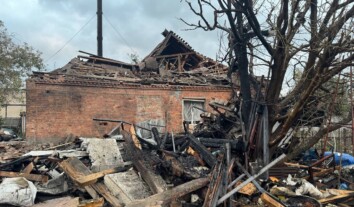
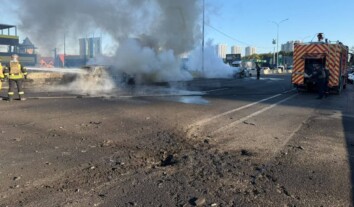
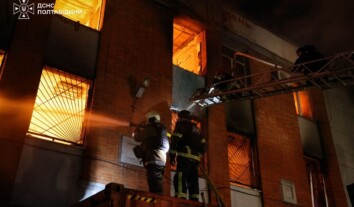
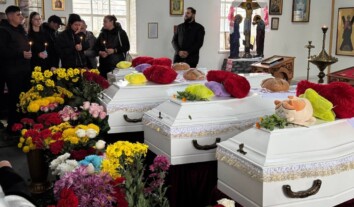
The death toll from the Russian strike on Kyiv on the night of 1 September 2026 has risen to nine, the Kyiv City State Administration reported.
 Illustrative image
A 30-year-old man, whose life doctors had been fighting to save for a week, died in hospital.
Kyiv officials expressed their condolences to the family of the deceased.
Official data analysed by BBC Verify shows Kyiv has suffered more air-raid alerts than at any time since 2022, on average 10 times a day. For weeks, Russia has bombarded the capital round the clock with new jet-powered drones that are faster and harder to intercept. Each time the siren sounds, people head for shelter, causing huge disruption to schools and businesses.
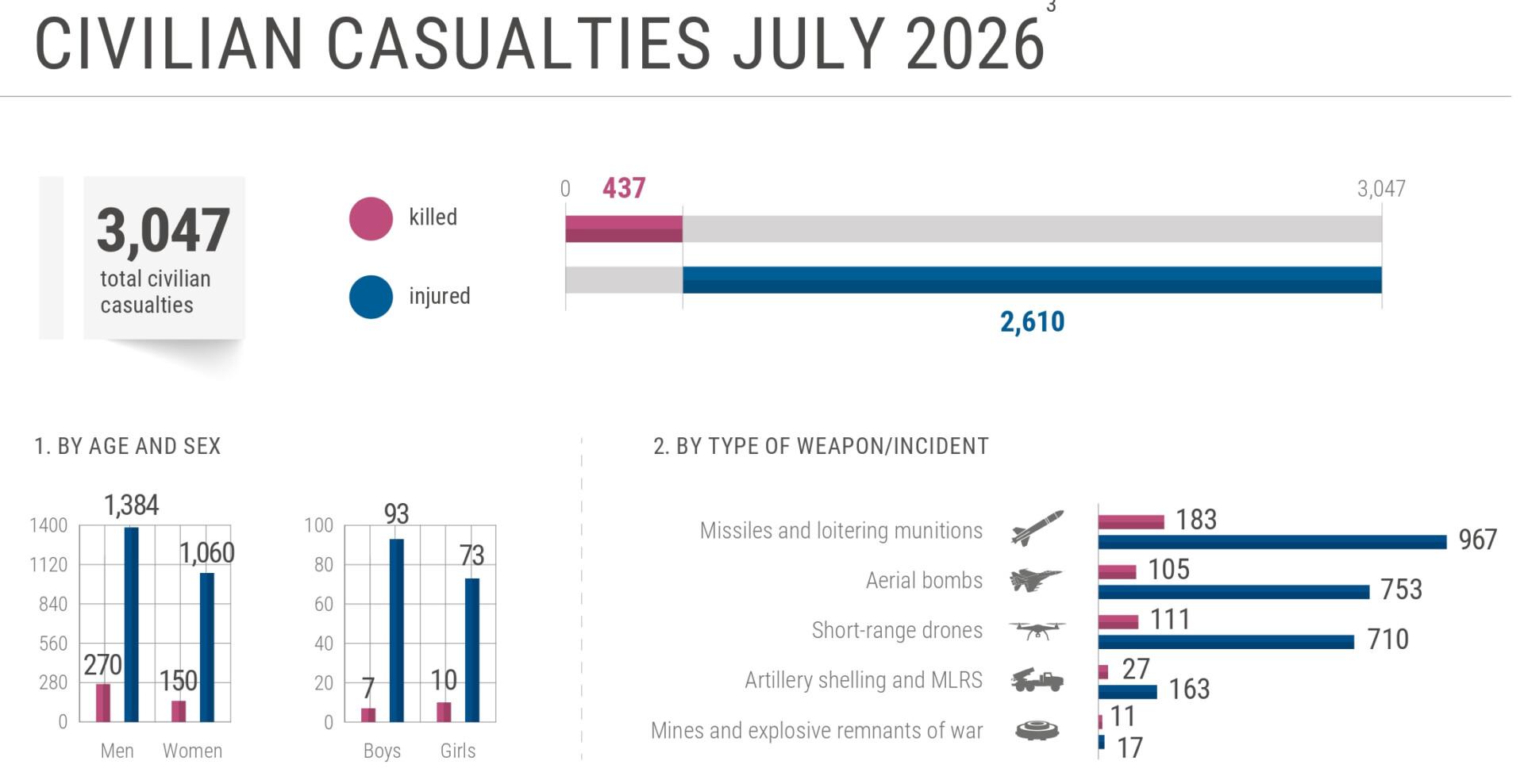
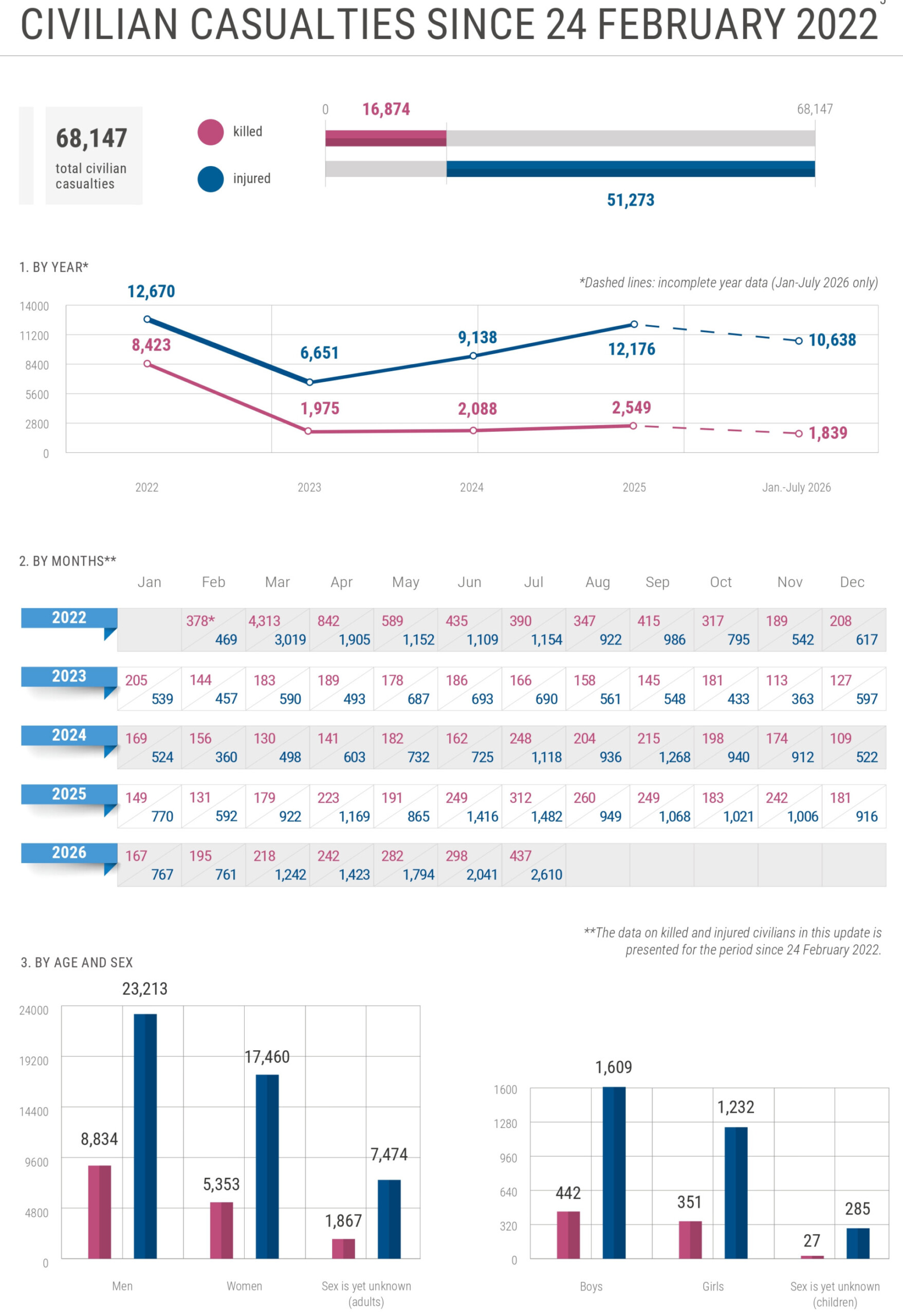
Previously, the UN Human Rights Monitoring Mission in Ukraine (HRMMU) stated in its monthly report that at least 437 civilians were killed and 2,610 injured in Ukraine in July 2026, a 30 per cent increase compared to June 2026 (298 killed; 2,041 injured). It is the highest monthly death toll since the start of Russia’s full-scale invasion of Ukraine, UN human rights experts have said.
Ukrainian experts point out that countries, including China, Greece, North Korea, Hungary, Slovakia, Iran, and Brazil, assist Moscow in killing Ukrainians in its war against Ukraine by funding the Russian budget through trade.
Human rights organisations and Ukrainian authorities emphasise that structural economic pressure remains a key tool to halt such atrocities. They urge every nation and individual government worldwide to strictly enforce global sanctions, close existing regulatory loopholes, and completely sever remaining commercial and technological ties with the Russian Federation. Civil society groups stress that any continued cooperation by foreign businesses directly contributes to the resources Moscow uses to sustain its ongoing war crimes and crimes against humanity in Ukraine.