European conscientious objection group calls for release of imprisoned believers in Ukraine
More than 100 believers who refuse military service on religious grounds have been imprisoned in Ukraine, while thousands of such individuals are being forcibly held in military units. Ukrainian parliament still hasn’t adopted the planned legislation guaranteeing the right to conscientious objection during wartime, according to the European Bureau for Conscientious Objection’s 2025 report on Ukraine.
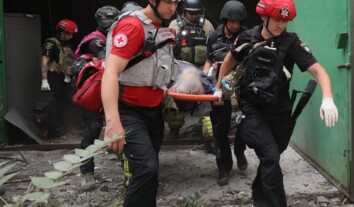
 illustrative image via Unsplash
Ukraine has the Law “On Alternative (Non-Military) Service” in vigour. However, alternative service was suspended under martial law, and attempts to restore it have been blocked by the Defence Ministry, the bureau’s report states.
According to 2025 data, military service during martial law has no fixed term. Currently, 0% of military personnel are serving in civilian service roles.
The report cites data showing that last year, at least 110 people in Ukraine who refused military service because of their faith were imprisoned under court rulings that violate human rights. Thousands of such believers are being forcibly held in military units, while many have faced arbitrary detention and torture.
“On 24 November 2025, the Ministry of Defence of Ukraine responded to a questionnaire from the European Bureau for Conscientious Objection, expressing its position that conscientious objection should not be permitted during wartime,” the authors of the document reported.
The obligation to adopt legislation allowing conscientious objection to military service during wartime is included in the government’s roadmap on the rule of law. The bureau noted that such legislation was supposed to be prepared in the second quarter of 2026.
“However, during interagency consultations, the Ministry of Defence insisted that conscientious objection to military service on religious grounds cannot be permitted during wartime. The State Service of Ukraine for Ethnopolitics and Freedom of Conscience, tasked with drafting the bill, pointed to a lack of authority and proposed that the Ministry of Economy develop the relevant amendments. As of the end of 2025, the amendments had not been drafted,” the authors of the document reported.
The report emphasises that, due to the lack of public debate, the exclusion of civil society from interagency consultations, and the Defence Ministry’s position, the possibility of amending legislation on conscientious objection remains uncertain.
The European Bureau for Conscientious Objection called for the immediate release of all individuals who are imprisoned, detained or convicted for refusing military service because of their beliefs or religion.
The organisation also highlighted delays in proposed legislation regulating alternative non-military service during wartime.
The bureau also stated that conscientious objectors face persecution, discrimination, torture and hostile campaigns in the media.
According to the report, Supreme Court rulings classify conscientious objection as draft evasion, insubordination and a criminal offence, while appeals to the Constitutional Court face judicial delays.
“Violent forced conscription practices lead to arbitrary incommunicado detention, beatings, ill-treatment and deaths, as well as restricted access to employment, education and public services,” the report states.
The study also points to other issues identified in 2025. In particular, Ukrainian male refugees face the threat of deportation or forced return from abroad.
Meanwhile, Russian occupation authorities are carrying out military recruitment and forced indoctrination measures that violate international humanitarian law, alongside the detention of Jehovah’s Witnesses.
ZMINA previously reported that more than 1,000 criminal cases had been opened in Ukraine against Jehovah’s Witnesses for refusing mobilisation.
There is currently no provision allowing alternative service in civilian institutions during martial law on the basis of religious or other beliefs.
The 2025 EU enlargement report states that Ukraine must establish safeguards protecting individuals from criminal prosecution for refusing military service on religious grounds, taking into account a March 2025 amicus curiae brief issued by the Venice Commission.
In May 2025, the Ukrainian government approved a rule-of-law roadmap as part of the country’s EU accession process.
One of the measures outlined in the document is the drafting and adoption of legislation guaranteeing the right to alternative service during martial law, with implementation scheduled for the second quarter of 2026. The measure is intended to ensure the right to conscientious objection to military service on religious grounds.
During more than four years of the full-scale war, not a single application for alternative service has been approved in Ukraine. At the same time, courts continue to punish men who refuse to take up arms because of their religious beliefs.
In October 2025, Ukraine’s Supreme Court ruled that people cannot refuse to be mobilised during wartime on religious grounds. However, believers retain the right to serve without weapons.
Need a human-rights perspective on Ukraine’s latest legal developments? Connect with ZMINA on X, BlueSky, and LinkedIn for regular policy updates – and let us know what you want to read next in our survey here.