Damage to Chornobyl New Safe Confinement raises risk of collapse, Greenpeace warns
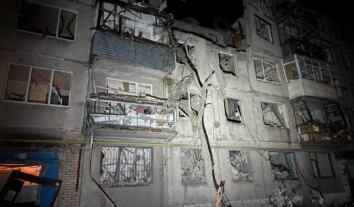
Greenpeace Ukraine warned that the sarcophagus at the Chornobyl Nuclear Power Plant requires urgent dismantling, yet damage to its protective structure following a Russian strike has rendered the process currently impossible, significantly escalating the risk of collapse.
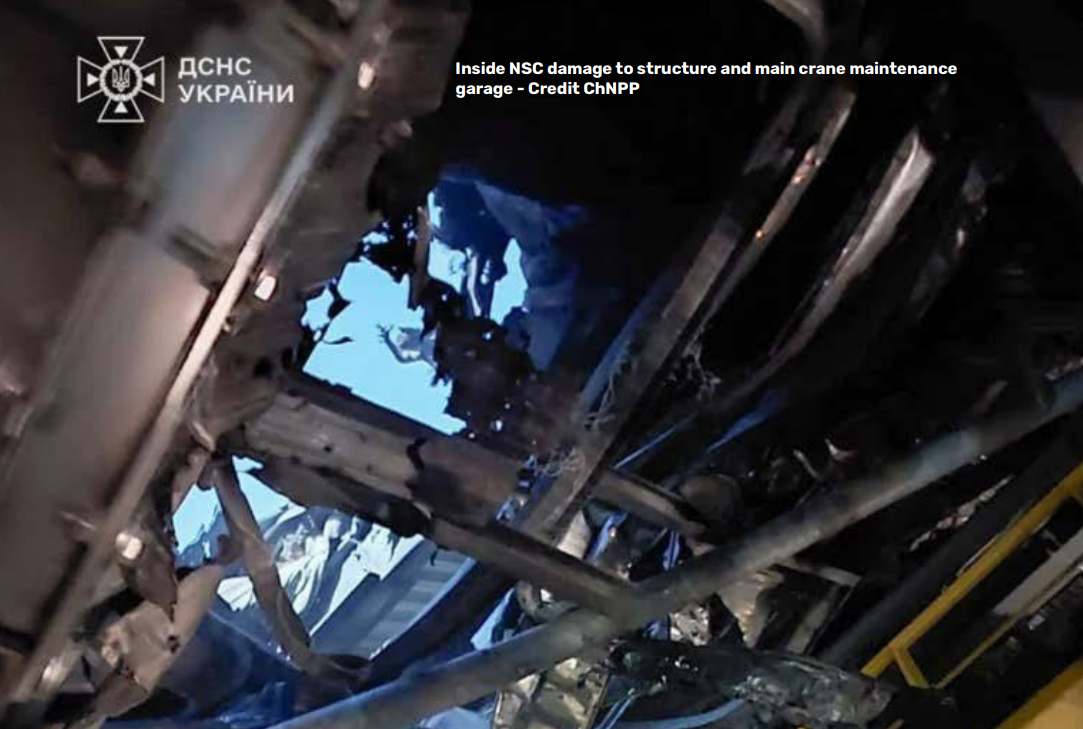
According to the Greenpeace report “The impact of the Russian Drone Attack on the Chornobyl New Safe Confinement”, Russia’s war against Ukraine poses a direct threat to international efforts to rectify severe damage to the New Safe Confinement (NSC) at the Chornobyl site. The damage was caused by a Russian drone attack in February 2025. Beneath the NSC lie the ruins of Reactor No. 4 and the original sarcophagus; while the latter was slated for immediate removal, the compromised state of the confinement structure has halted these efforts.
“It’s almost impossible for people to grasp the magnitude of the lethal conditions inside the Sarcophagus. Tons of highly radioactive nuclear fuel, dust, and debris. My colleagues and I spent years investigating the ruins of reactor 4 at Chornobyl. We designed and built the New Safe Confinement to protect the environment and people of Ukraine and Europe. It is urgent that all measures are taken to find a way to restore as much of the critical functions of the facility as possible”, said engineer Eric Schmieman.
Greenpeace Ukraine reports that efforts to level stringent global sanctions against Rosatom are being stymied – most notably by Hungary and France – as billions of euros in active contracts with the corporation continue to bankroll the war against Ukraine.
The Chornobyl Nuclear Power Plant explained that despite the Russian drone strike on February 14, 2025, and the subsequent damage caused by fire suppression efforts, which resulted in the New Safe Confinement arch losing its full hermetic sealing, the structure’s protective shell continues to fulfill its primary role – providing ecological isolation of the destroyed power unit from the environment.
The plant’s administration assures that preparatory work is underway to restore the facility’s airtightness.
“No damage to the load-bearing structures of either the Shelter Object’s localizing structure or the NSC has been identified as a result of the drone strike. Provided that all systems continue to operate within normal parameters and in the absence of external impacts (including those associated with hostilities or natural hazards), the risk of uncontrolled release of radioactive materials beyond the NSC is currently assessed as low. The gamma radiation equivalent dose rates (EDR) across the industrial site remain within established control levels. The automated radiation monitoring systems are functioning normally, with no exceedances detected,” the statement reads.
In late March 2026, G7 Foreign Ministers convened in Paris to deliberate on the extensive efforts required to restore the protective shelter at Ukraine’s Chornobyl Nuclear Power Plant. The cost of this restoration is projected at approximately $575 million.
Central to the current agenda is the repair of the massive protective dome encasing the destroyed reactor.
The Greenpeace report will be submitted to the Office of the Prosecutor General of Ukraine as independent evidence of Russian war crimes.
To provide background, the explosion of Chornobyl’s fourth reactor in 1986 remains the world’s most catastrophic nuclear disaster.
The $2.5 billion dome was completed in 2019 to mitigate radiation leaks and facilitate the eventual decommissioning of the reactor’s ruins.