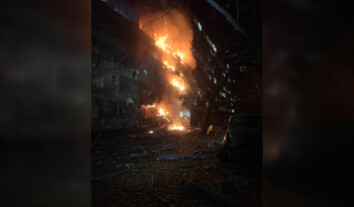
Russian night drone strikes kill father and three children: widespread destruction and further injuries reported
Overnight Russian military strikes on February 11 caused casualties and widespread destruction across the Kharkiv and Zaporizhzhia regions, leaving thousands of people without power. The State Emergency Service and regional military administrations reported that the attacks resulted in both fatalities and injuries, alongside significant damage to infrastructure.
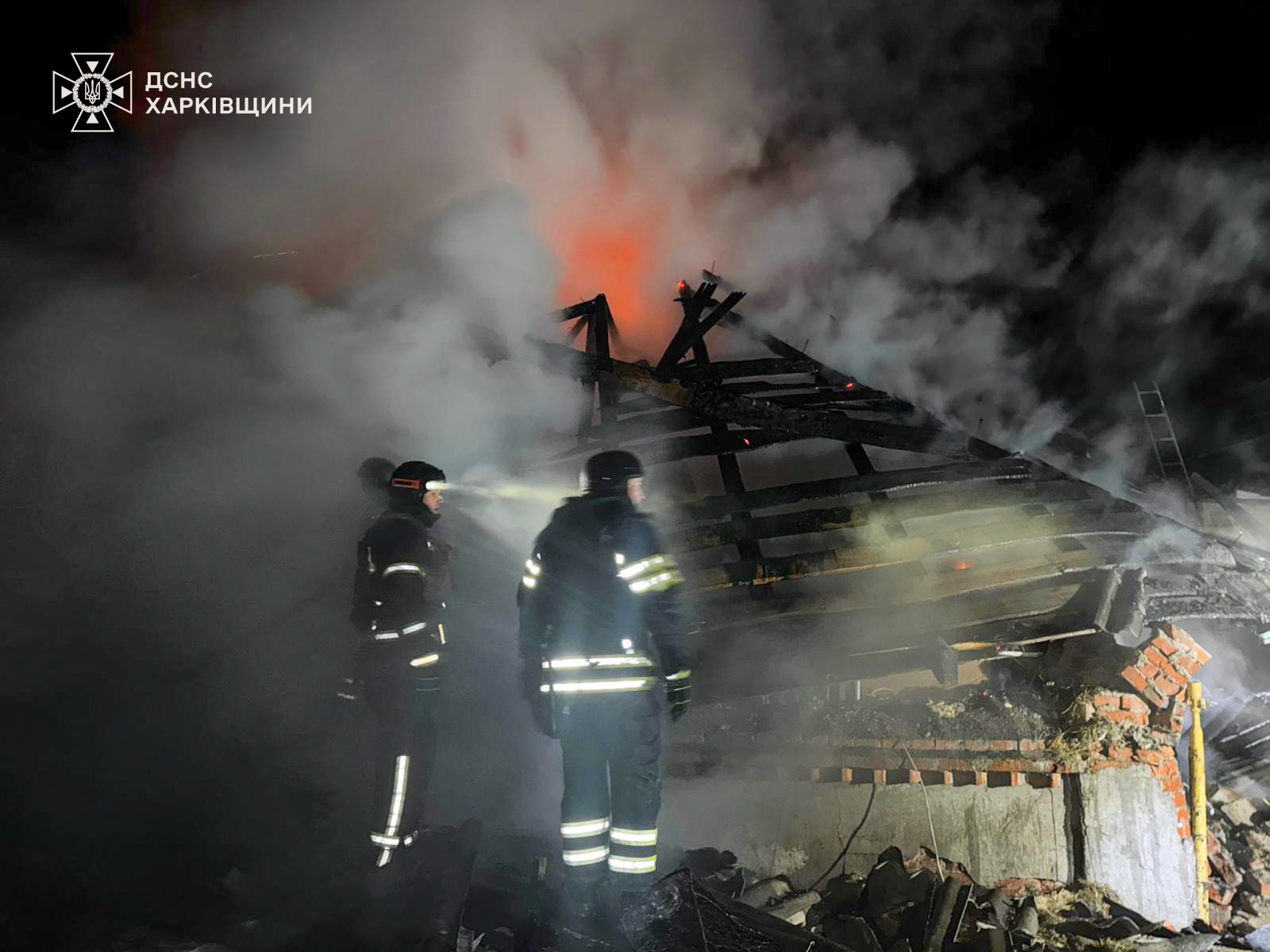
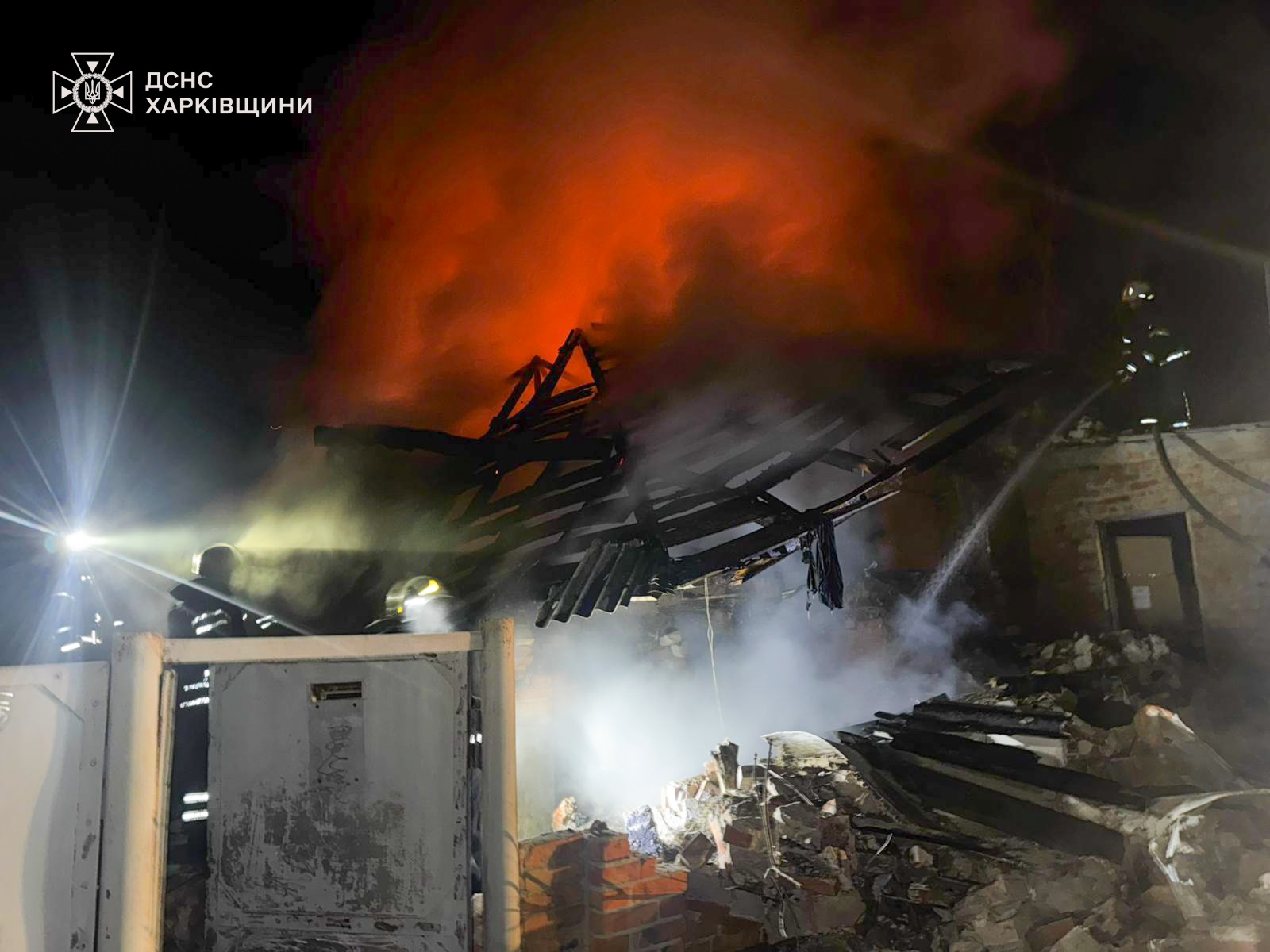 A house in Bohodukhiv destroyed by a Russian strike, under the rubble of which a father and three children were found dead
Four victims of the overnight strike are a family from Bohodukhiv in the Kharkiv Oblast.
The deceased father was 34 years old, his two sons were 1 year old, and his daughter was 2 years old. Their bodies were found under the rubble of the house hit by a Russian drone.
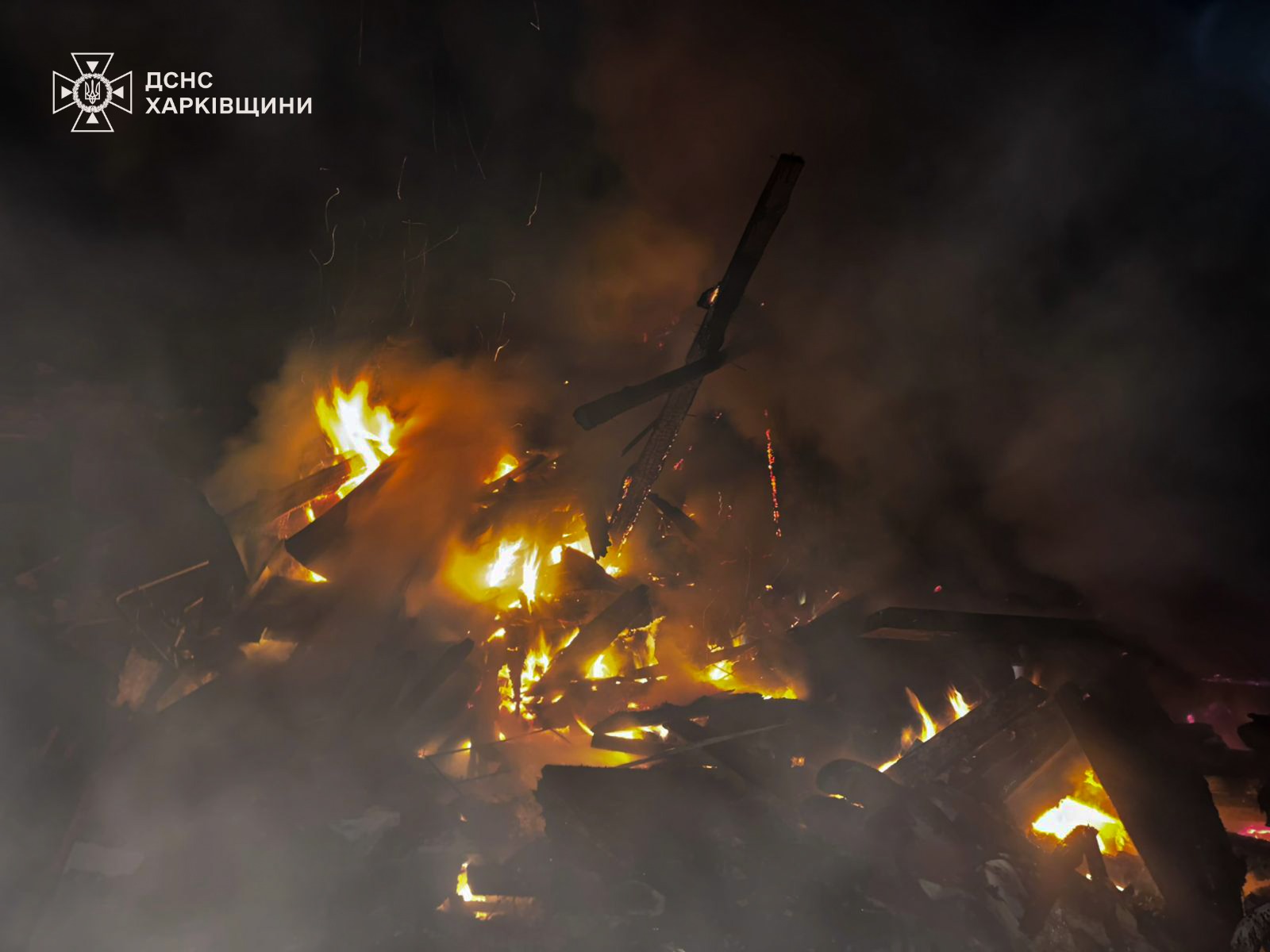
Another Russian target overnight was Vilniansk in Zaporizhzhia, where two women were injured. Additionally, due to an enemy strike on critical infrastructure, more than 11,000 people in the region were left without electricity.
As a reminder, Russia also attacked Ukraine with drones the previous night, causing injuries to civilians in several regions.
To provide background, U.S. President Donald Trump has not secured an end to Russia’s war within 24 hours of taking office, as he had promised. Furthermore, numerous Ukrainian and international experts point out that the U.S., as a guarantor state under the Budapest Memorandum, is pressuring Kyiv into capitulation.
Meanwhile, Ukrainian human rights lawyer and Nobel Peace Prize laureate Oleksandra Matviichuk has criticized U.S. President Donald Trump over a rise in civilian war casualties in Ukraine since he took office in 2025.
Matviichuk pointed out that the number of Ukrainian civilians killed or injured because of the war rose by 31% compared to the previous year. She asked why Trump’s year of negotiations was the deadliest for Ukraine’s civilian population since the start of Russia’s full-scale invasion.
“Why did Putin not allow himself such brutal strikes on civilian infrastructure under Biden, whom Trump calls ‘weak,’ but totally destroys peaceful cities and disregards the ‘strong Trump’?” she asekd on her Facebook page.
Earlier, Bohdan Bernatskyy, a member of the Sanctions Policy Working Group of the Crimean Platform Expert Network, revealed at the Third Parliamentary Summit in Latvia that over 1,300 Russian military companies and 2 million industrial workers continue to operate, many without international restrictions.
Over the last 10 days, Russia has increased oil discounts for Indian refining companies to encourage India to continue purchasing Russian crude, Bloomberg news agency reported, citing its own sources.
According to the publication, Russian Urals crude is being offered to Indian buyers at prices more than $10 per barrel lower than Brent, including shipping and other costs. Analytical firm Argus estimates current discounts at approximately $11 per barrel. Prior to January 22, this figure stood at $9.15.
Over the last three and a half years, China has become a critically important partner for the Russian Federation. While Beijing officially declares its neutrality, Western intelligence and analytical studies indicate otherwise. For instance, China does not supply weapons directly to Russia, but it provides critically important components, including machinery, microelectronics, specialized chemicals, optics, gunpowder, and ammunition components.
Donald Trump announced several days ago that the United States would lower tariffs on Indian goods in exchange for India halting its imports of Russian oil.
Indian Prime Minister Narendra Modi thanked Trump but did not explicitly confirm the deal or disclose further details.
According to energy data firm Kpler, purchases have declined in recent months but still averaged approximately 1.2 million barrels per day in January.
Meanwhile, the Center for Strategic and International Studies found that in 2024 China increased sales of ammonium perchlorate — a key ingredient used to produce solid propellant for Iskander missiles. This assistance enabled Russia to triple its ballistic missile production, the report stated. Beijing’s support has bolstered Russia’s defense industrial base, enabling Russian forces to launch salvos of 13 to 18 Iskander-M ballistic missiles in 2026.
Overall imports from China have grown to represent one-third of Russia’s total imports, while Russian oil exports now account for 75% of all oil purchased by Beijing. Analysts specifically highlighted defense-related imports, which provided the Russian military-industrial complex with machine tools, components, and raw materials for weapons manufacturing.
Furthermore, Russia’s defense industry also received computer chips, machine tools, radars, and sensors from China, according to CSIS. These goods are part of a list of 50 items aiding weapons production, effectively compensating for Russia’s limited manufacturing capacity in its defense sector. Other areas of support include the supply of drone hulls, lithium batteries, and fiber-optic cables. CSIS reported that Russian imports from China rose from $190 billion in 2022 to $250 billion in 2024.
In 2024, then-U.S. Secretary of State Antony Blinken stated that 70% of heavy industrial equipment and 90% of all microelectronics are sourced from China, which then flows into Russia.
Furthermore, according to recent NATO intelligence data, 80% of all Russian drones consist of Chinese parts.
According to The Telegraph newspaper, Chinese firms supplied sanctioned Russian companies with at least £47 million ($57.4 million USD) worth of parts between 2023 and 2024. Almost a quarter of the value of these supplies went to firms that produce Shahed-type drones.
Moreover, the Foreign Intelligence Service of Ukraine stated that China is also providing intelligence to Russia. The Kremlin used this data to prepare missile strikes, particularly against objects belonging to foreign investors, though the specific targets were not clarified. China denies these accusations.
Following the imposition of Western sanctions, Beijing has become a key supplier to Russia of cars, clothing, raw materials, and a range of other goods. In 2023, Russia-China trade turnover set a historic record, exceeding $240 billion, which is more than 60% higher than before Russia’s invasion of Ukraine, according to Chinese customs data.
Reuters also reported that China is buying oil and gas from Russia. The average daily volume of oil is more than two million barrels per day. During Vladimir Putin’s visit to Beijing, the countries signed a document for the supply of 106 billion cubic meters of gas per year to China.
Follow ZMINA on X and LinkedIn for daily human rights coverage from Ukraine – we invite you to share your feedback on what you’d like to see more of in our survey here.