Zelenskyy insists U.S. security guarantees conditional on Ukrainian withdrawal from Donbas
Ukrainian President Volodymyr Zelenskyy said during a video call with journalists on March 28, as reported by Interfax-Ukraine, that he disclosed only the tip of the iceberg regarding statements by U.S. representatives indicating that America is ready to provide Ukraine with security guarantees only after Ukrainian troops withdraw from their own territory in Donbas.
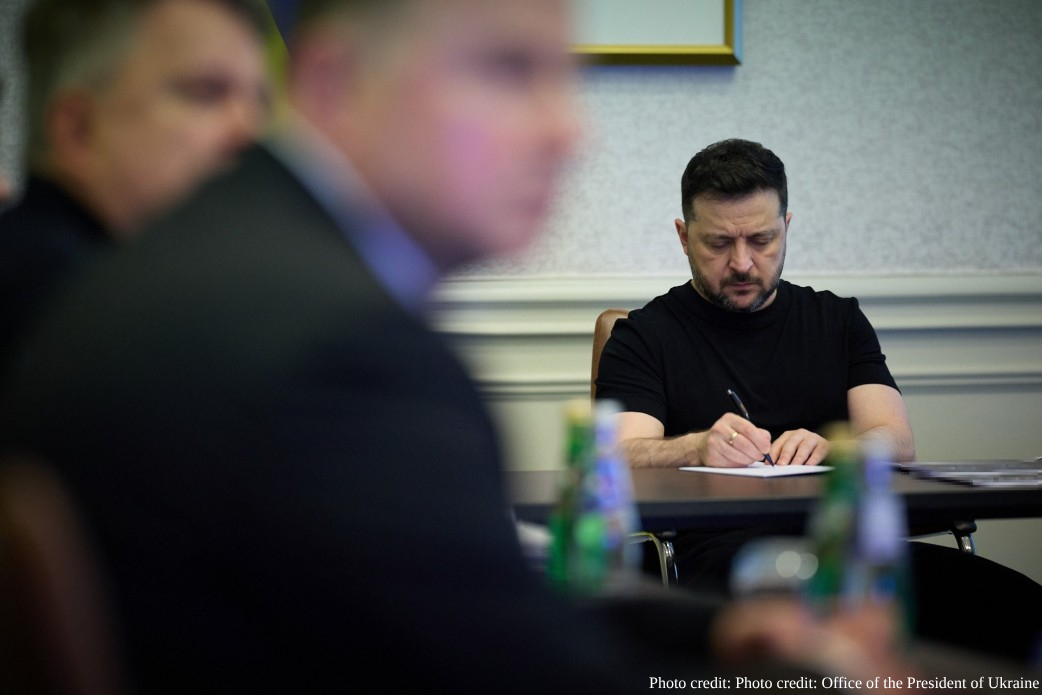 Volodymyr Zelenskyy
“Most of the iceberg is not visible, but believe me, I showed only the tip of it. I am being absolutely honest… You can view this in different ways, but all the signals throughout the whole negotiation process indicate this – and this is not just my analysis, it sounds entirely correct – that we will be able to obtain security guarantees from the United States not before a ceasefire, not before the end of the war, but after our troops withdraw from Donbas,” the head of Ukrainian state stated.
He said Ukraine wants to sign security guarantees before the war ends, along with a recovery package. Those guarantees would take effect after a vote in the U.S. Congress, and Congress would vote only after the war is over.
“But even so, we were told that the issue is not when this comes into force, but when these guarantees are provided to us. These guarantees are given to us only after we leave Donbas. That is the condition for ending the war,” Zelenskyy said.
In addition, he pointed out that the risks of Russia launching aggression again are high enough, which is why Ukraine needs security guarantees.
He also denied reports suggesting that the United States is putting pressure on Ukraine.
“It may simply have been perceived as if the Americans are supposedly pressuring us to leave, and only then would they provide guarantees. But I am not saying they are pressuring us. I have never said that. Not publicly, nor otherwise,” the President stated.
A day earlier, on March 27, US Secretary of State Marco Rubio said the United States had not made the withdrawal of the Armed Forces of Ukraine from the whole of Donbas a condition for security guarantees, and that Volodymyr Zelenskyy’s statements to that effect are false.
To provide background, human rights organizations urged Zelenskyy to prioritize protection for war victims.
You may also want to read: Crimean Tatar leader responds to Trump’s remarks, citing international law: Only Ukraine and Crimean Tatars can determine Crimea’s fate
Earlier, eight Ukrainian human rights organizations called on all parties in the negotiation process to consider the interests of Ukrainian citizens living in the temporarily occupied territories (ТОТ) of Ukraine. In a joint statement, the organizations underlined the fact that ensuring the rights and interests of TOT residents must be part of the agreements within the negotiation process. The organizations also presented a ten-point list of specific steps that the occupying authorities must implement.
Among the specific steps that should be part of the negotiation process, the organizations highlighted:
- Release of all civilians arbitrarily detained by representatives of the Russian armed forces or the occupation authorities;
- Cessation of Russia’s unlawful practice of criminal and administrative persecution and detention of Ukrainian citizens in the TOT of Ukraine, which is used as an instrument of intimidation and political pressure;
- Determining the temporary line of contact and establishing temporary checkpoints to allow entry and exit from the TOT of Ukraine to areas that are controlled by the Ukrainian government and vice versa (humanitarian corridors);
- Granting humanitarian access for international organisations to the TOT of Ukraine by the Russian Federation, with the possibility of direct humanitarian assistance to Ukrainian citizens;
- Providing available information and access to the TOT of Ukraine to search teams to establish the location of persons missing under special circumstances;
- Ensuring the presence of international observation (monitoring) missions in all TOT of Ukraine, in particular to monitor the human rights situation;
- Demining of settlements and civilian infrastructure in the TOT of Ukraine;
- Ensuring that Ukrainian citizens can reside in the TOT of Ukraine without the need to obtain a Russian passport or any other documents granting the “right to reside” in the TOT of Ukraine, in accordance with the Russian legislation illegally extended to the TOT of Ukraine;
- Ensuring unimpeded access of Ukrainian citizens in the TOT of Ukraine to medical services, social and pension benefits, education, property rights, and freedom of movement, and independent sources of information;
- Ensuring that residents of the TOT of Ukraine who have been forcibly displaced to the territory of the RF or within the TOT of Ukraine are able to return to their homes or leave for the territory controlled by the Government of Ukraine.
Any delay in the liberation of the territories temporarily occupied by Russia will lead to the complete destruction of Ukrainian and Crimean Tatar identities there, Alena Lunova, advocacy director of the ZMINA Human Rights Center, stated live on “Radio Nakypilo.”
The human rights advocate called a proposal to discuss the de-occupation of the temporarily occupied territories in 49 years, as was voiced during talks with the aggressor country, unacceptable. She noted that the aggressor nation, in violation of international law, is demanding that Ukrainian citizens in the occupied territories obtain Russian passports or a foreigner’s document, among other things.
-
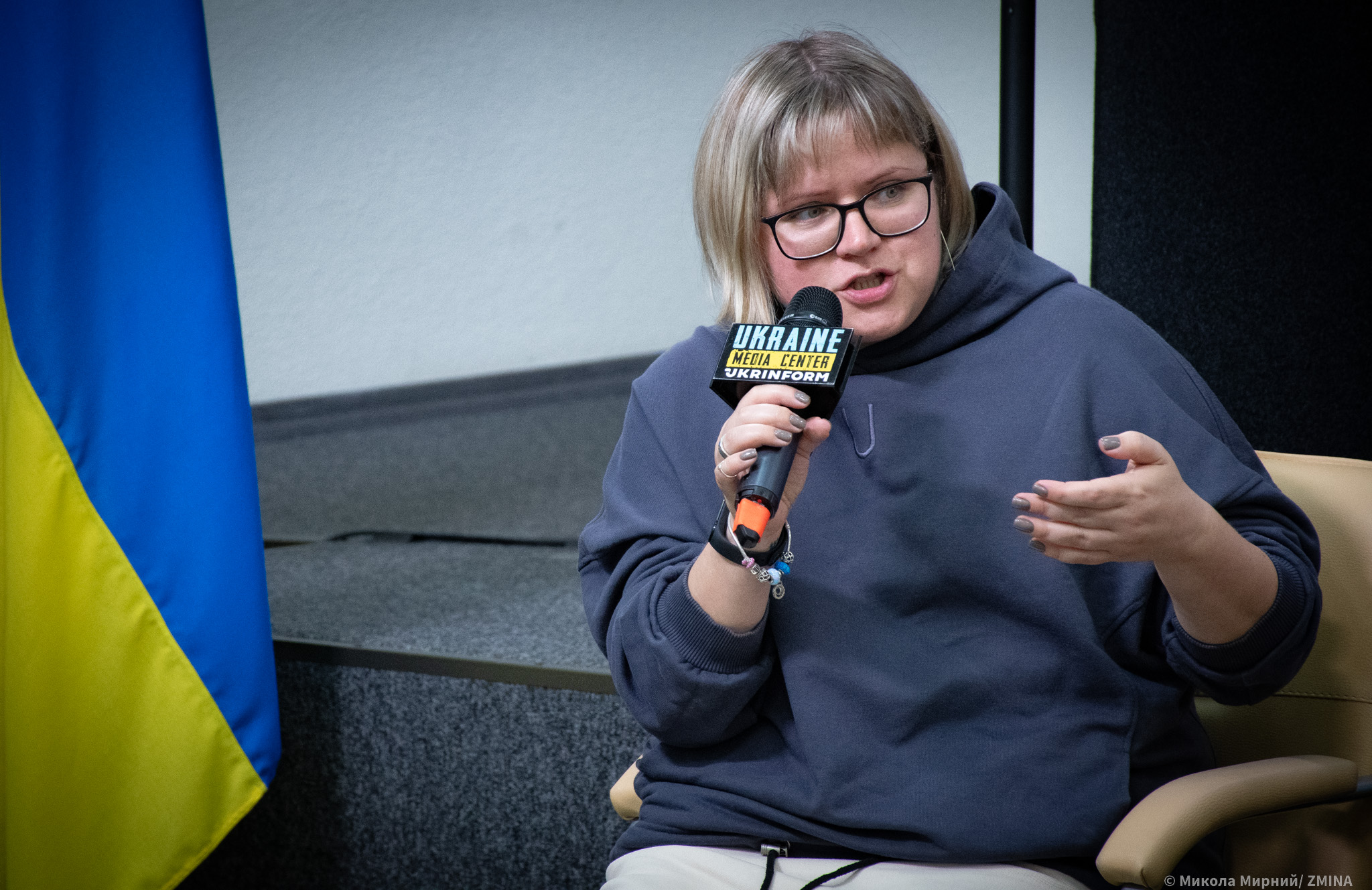 Alena Lunova
Follow ZMINA on X and LinkedIn for daily human rights coverage from Ukraine – we invite you to share your feedback on what you’d like to see more of in our survey here.