Ukrainian ombudsman details talks with Russian counterpart on POW conditions and letter exchanges
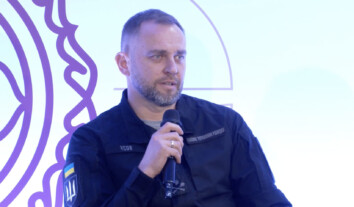
Ukraine and Russia have exchanged letters from prisoners of war’s families and agreed to continuously monitor the conditions in which service members are held in captivity, Ukrainian Parliament Commissioner for Human Rights Dmytro Lubinets stated.
 Photo credit: Dmytro Lubinets / Facebook
During talks held alongside a prisoner exchange, the Ukrainian ombudsman discussed the continuation of prisoner exchanges with his Russian counterpart, Yana Lantratova. The Russian side agreed to establish systematic, ongoing monitoring of facilities where Ukrainian prisoners of war are held. The Ukrainian team is also conducting inspections at facilities where Russian prisoners of war are held.
You may also want to read: Nearly 700 methods of torture are used against Ukrainian civilian captives and prisoners of war in Russian prisons – Ombudsman’s Office
“We will exchange information after such monitoring visits. The networks of regional ombudsman offices from both countries are involved in this work. We pay particular attention to where prisoners of war receive food, how they are provided with medical care and how their rights to freedom of religion are ensured,” Lubinets said.
The Ukrainian ombudsman also spoke about the exchange of letters. The letters will be delivered both to Ukrainian prisoners of war held in Russia and to Russian prisoners of war held in Ukraine. It is currently impossible to independently verify whether Russia actually delivered the letters to Ukrainian POWs.
“We are also working on the possibility of phone calls between Ukrainian prisoners of war and their families, as well as other humanitarian areas,” he said.
You may also want to read: Moscow pressures families of Ukrainian POWs to register blocked Starlink terminals
The two sides discussed establishing a monitoring mission involving foreign ombudsmen to assess the conditions of civilian captives. A separate part of the talks focused on the mutual return of elderly citizens to the territory of both countries.
“Recently, another humanitarian evacuation took place. Eight elderly people returned to Ukraine, and eight elderly people returned to the Russian Federation,” Lubinets said.
The Ukrainian ombudsman added that in-person meetings with his Russian counterpart take place when prior agreements yield results, such as prisoner exchanges.
Lubinets also reported that 79 Ukrainian service members who had previously been considered missing had been found in Russian captivity.
The Ukrainian Parliament Commissioner for Human Rights previously called Lantratova’s claims in August 2026 that Ukraine had allegedly refused to take back 273 prisoners of war “information manipulation.”
You may also want to read: About 7,000 prisoners of war and up to 20,000 civilians are currently in Russian captivity – deputy speaker of the Verkhovna Rada
Earlier, Lubinets and Lantratova met in Belarus on 26 June 2026. During the talks, the two sides exchanged lists of service members reported missing from both countries to establish whether they were being held in captivity.
On 24 July, 2025, the OSCE invoked the Moscow Mechanism after 41 participating states, in consultation with Ukraine, requested that the Office for Democratic Institutions and Human Rights examine the treatment of Ukrainian prisoners of war by Russia. Ukraine established a mission of three experts on August 15 to investigate possible violations of OSCE commitments, international humanitarian law, and international human rights law.
The OSCE mission found that Russia systematically denies prisoner of war status to Ukrainian combatants, subjects them to widespread torture and ill-treatment, including severe beatings, electric shocks, sexual violence, and mock executions, and conducts arbitrary killings and executions both on the battlefield and in detention.
You may also want to read: Russian general Roman Demurchiev brags to wife about torturing and executing Ukrainian POWs
Russian officials’ public statements declaring “no quarter will be given” encourage summary executions. Detention conditions fall below international standards, with overcrowding, inadequate food and medical care, and forced labor. POWs are denied fair trial guarantees through coerced confessions and unfair proceedings, while family communication and International Committee of the Red Cross access remain severely restricted. The mission concluded these violations constitute war crimes and, in some cases, arguably crimes against humanity.
At least 13,500 members of the Ukrainian Armed Forces have been captured by Russia since February 2022. Approximately 169 have died in captivity, nearly 6,800 have been released, and an estimated 6,300 remain in detention across multiple sites in Russia and temporarily occupied Ukrainian territories.
Stay connected with us via X, BlueSky, and LinkedIn – and while you’re here, please spare five minutes to fill out our survey and tell us what you’d like to see next.