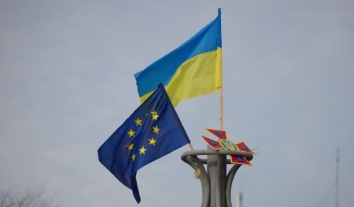
Ukraine will not cede territory, has no legal or moral right to do so — Zelenskyy
President of Ukraine Volodymyr Zelenskyy, speaking at an online briefing, stated that Ukraine is not considering handing over any of its territories, as neither national legislation, international law, nor moral principles allow it.
“Are we considering the question of giving up any territories? We have no right by law — by the law of Ukraine, by our Constitution, by international law, to be honest. We have no moral right either,” Zelenskyy said.
“Of course, Russia insists that we give up territories. We, of course, do not want to give up anything. That is what we are fighting for, you know this perfectly well.”
The President of Ukraine added that the United States is currently seeking compromise solutions to resolve the situation.
Earlier, Zelenskyy said negotiators discussing a US-brokered peace initiative remain divided over territory as President Donald Trump expressed disappointment in Kyiv’s handling of the deal.
You may also want to read: 76% of Ukrainians reject Russian “peace terms” – poll
Elements of the US plan require further discussion on a number of “sensitive issues,” including security guarantees for the war-battered nation and control over eastern regions, Zelenskyy said in a phone interview with Bloomberg News Agency. The Ukrainian leader said talks have yet to yield agreement on Ukraine’s Donbas, including the provinces of Donetsk and Luhansk.
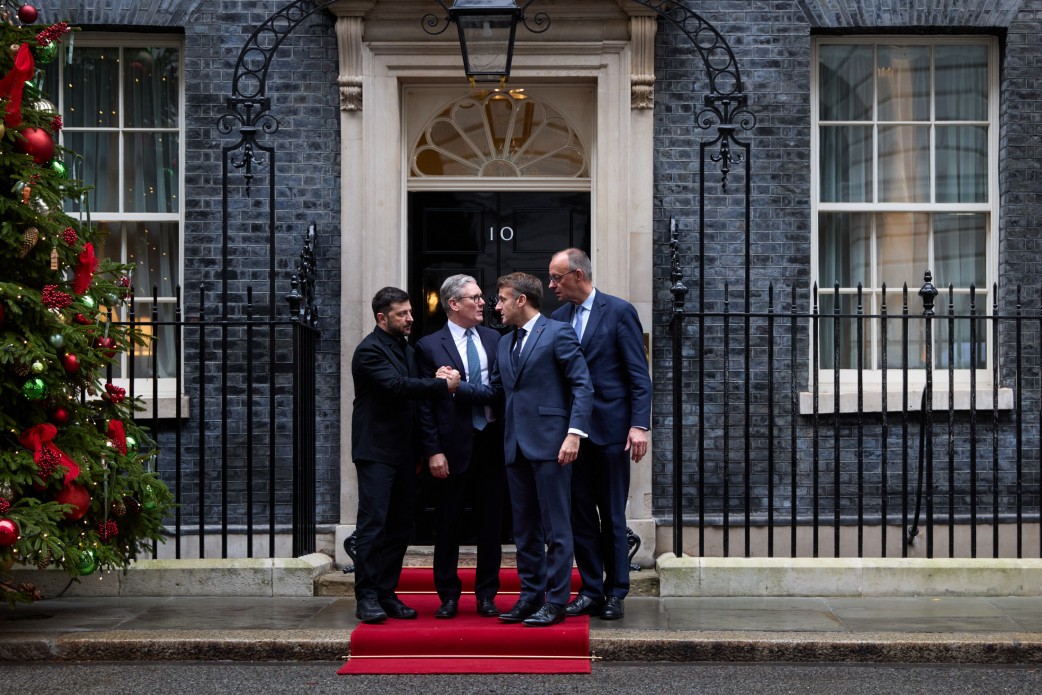
“There are visions of the US, Russia and Ukraine — and we don’t have a unified view on Donbas,” Zelenskyy told Bloomberg News early Monday before his departure to London to meet leaders of the UK, Germany and France. The head of the Ukrainian state said Kyiv is pushing for a separate agreement on security guarantees from Western allies, above all the US.
Zelenskyy spoke hours after Trump criticized him — in contrast with comments in recent days about President Vladimir Putin’s reaction to the proposal — saying he was “a little bit disappointed” in the Ukrainian leader, who he claimed hadn’t yet read the proposal. Moscow, on the other hand, was “fine with it,” Trump told reporters in Washington on December 7.
Zelenskyy said the talks were “long and difficult, but they are not confrontational.” Still, his comments signal that more ground needs to be covered to reach a consensus.
The Ukrainian president, who said he’s prepared to fly to Washington for talks with Trump, reinforced Kyiv’s position that security guarantees function like NATO’s mutual-defense mechanism, known as Article 5. However, he wants to know what Western allies were prepared to offer, he said, with negotiators working on a separate accord that involves the guarantees.
“There is one question I — and all Ukrainians — want to get an answer to: if Russia again starts a war, what will our partners do,” Zelenskyy said.
Bloomberg comments that while an initial 28-point draft, which appeared favorable to Russia, gave way to a 20-point framework document, there remains little clarity on how Moscow will be deterred from another attack.
Merz said he was “skeptical about some of the details which we are seeing in the documents coming from the US side, but we have to talk about it.”
The Kremlin and the United States demand that Ukraine cede areas of the Donetsk region that its troops failed to take by force in nearly four years of war. Politico, citing European officials, reports that during discussions on a possible agreement to end the Russian-Ukrainian war, the United States continues to push the idea that Ukraine should agree to abandon the territory of the Donetsk region without a fight.
Zelenskyy and European allies have repeatedly said a ceasefire must be imposed along the current front line, rejecting a demand for the Ukrainian army to withdraw.
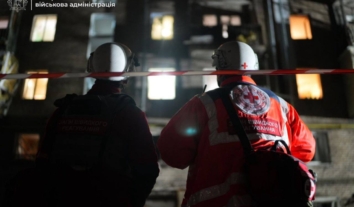
Meanwhile, on the evening of December 8, the Russian army launched a massive attack on energy infrastructure in Sumy, according to Oleh Hryhorov, head of the Sumy Oblast Military Administration.
“The Sumy community is under a massive attack by enemy UAVs on energy infrastructure facilities. In just half an hour, Russians directed more than a dozen attack drones at the city,” Hryhorov wrote on social media.
According to the local authorities, power is out in Sumy, and some critical infrastructure is operating on backup power sources. Information regarding casualties is being clarified.
“As soon as the security situation allows, specialists will begin inspecting damage and restoration,” Hryhorov added.
Earlier, eight Ukrainian human rights organizations called on all parties in the negotiation process to consider the interests of Ukrainian citizens living in the temporarily occupied territories (ТОТ) of Ukraine. In a joint statement, the organizations underlined the fact that ensuring the rights and interests of TOT residents must be part of the agreements within the negotiation process. The organizations also presented a ten-point list of specific steps that the occupying authorities must implement.
Among the specific steps that should be part of the negotiation process, the organizations highlighted:
- Release of all civilians arbitrarily detained by representatives of the Russian armed forces or the occupation authorities;
- Cessation of Russia’s unlawful practice of criminal and administrative persecution and detention of Ukrainian citizens in the TOT of Ukraine, which is used as an instrument of intimidation and political pressure;
- Determining the temporary line of contact and establishing temporary checkpoints to allow entry and exit from the TOT of Ukraine to areas that are controlled by the Ukrainian government and vice versa (humanitarian corridors);
- Granting humanitarian access for international organisations to the TOT of Ukraine by the Russian Federation, with the possibility of direct humanitarian assistance to Ukrainian citizens;
- Providing available information and access to the TOT of Ukraine to search teams to establish the location of persons missing under special circumstances;
- Ensuring the presence of international observation (monitoring) missions in all TOT of Ukraine, in particular to monitor the human rights situation;
- Demining of settlements and civilian infrastructure in the TOT of Ukraine;
- Ensuring that Ukrainian citizens can reside in the TOT of Ukraine without the need to obtain a Russian passport or any other documents granting the “right to reside” in the TOT of Ukraine, in accordance with the Russian legislation illegally extended to the TOT of Ukraine;
- Ensuring unimpeded access of Ukrainian citizens in the TOT of Ukraine to medical services, social and pension benefits, education, property rights, and freedom of movement, and independent sources of information;
- Ensuring that residents of the TOT of Ukraine who have been forcibly displaced to the territory of the RF or within the TOT of Ukraine are able to return to their homes or leave for the territory controlled by the Government of Ukraine.
Any delay in the liberation of the territories temporarily occupied by Russia will lead to the complete destruction of Ukrainian and Crimean Tatar identities there, Alena Lunova, advocacy director of the ZMINA Human Rights Center, stated live on “Radio Nakypilo.”
The human rights advocate called a proposal to discuss the de-occupation of the temporarily occupied territories in 49 years, as was voiced during talks with the aggressor country, unacceptable. She noted that the aggressor nation, in violation of international law, is demanding that Ukrainian citizens in the occupied territories obtain Russian passports or a foreigner’s document, among other things.
-
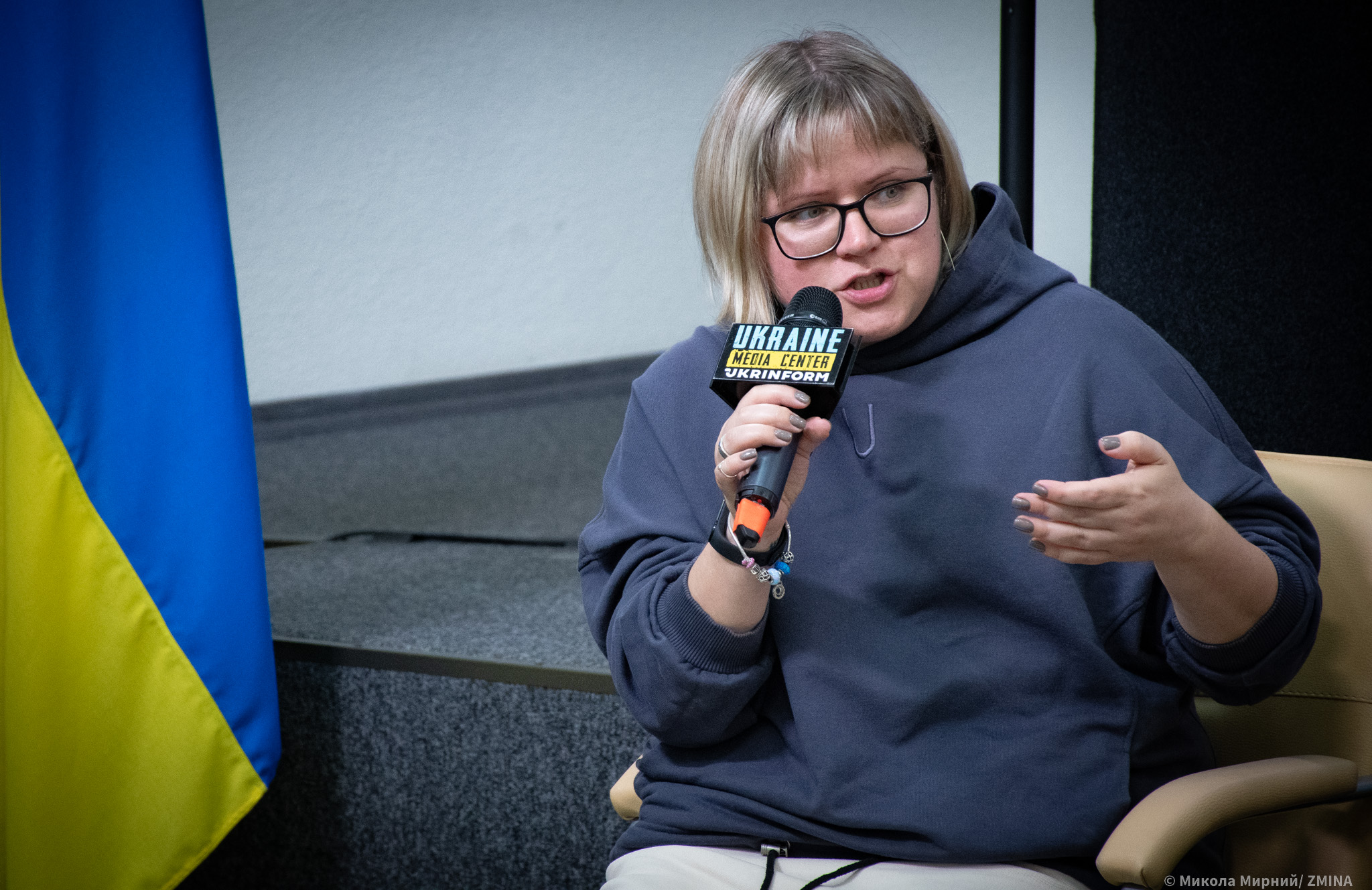 Alena Lunova
Stay connected via X and LinkedIn with ZMINA – and help build this platform with us by filling out our anonymous 5-minute survey here.