The ICC found the leader of the “Janjaweed” guilty of war crimes and crimes against humanity in Darfur
The International Criminal Court (ICC) in The Hague found Ali Muhammad Ali Abd-Al-Rahman, also known as Ali Kushayb, guilty on 27 counts of war crimes and crimes against humanity committed in Darfur, Sudan, in 2003–2004, on October 6, 2025. This is the first conviction in the Situation in Darfur, Sudan, and the first in a situation that the UN Security Council referred to the Court.
 Ali Muhammad Ali Abd-Al-Rahman
Based on evidence presented by the ICC’s Office of the Prosecutor, the judges unanimously found Abd-Al-Rahman guilty beyond a reasonable doubt for crimes that occurred in the widespread and systematic attack by the Janjaweed militia and Government of Sudan forces against the civilian population in West Darfur, Sudan, between at least August 2003 and March 2004.
“The conviction of Mr Abd-Al-Rahman is a crucial step towards closing the impunity gap in Darfur. It sends a resounding message to perpetrators of atrocities in Sudan, both past and present, that justice will prevail, and that they will be held accountable for inflicting unspeakable suffering on Darfuri civilians, men, women, and children,” said Deputy Prosecutor Nazhat Shameem Khan.
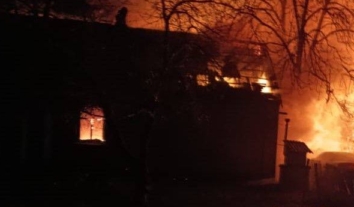
In particular, the judges found that Abd-Al-Rahman was criminally responsible for all crimes, including murder, torture, and outrages upon personal dignity. These crimes are grave, having caused death, injur,y and destruction among civilians from scorched earth tactics, which entailed the burning and pillaging of entire villages, and mass executions.
The verdict included important convictions for gender-based crimes, the investigation and prosecution of which remains a strategic priority of the Office, the ICC’s press service pointed out.
 The ICC. Photo credits: the ICC
Mr Abd-Al-Rahman was found guilty of rape as a war crime and a crime against humanity, among other gender-based crimes. The judges ruled that the attack resulted in the commission of rapes of women and girls, causing profound physical, cultural, and social harm to victims.
Moreover, Abd-Al-Rahman was convicted of the crime against humanity of persecution of males from the Fur tribe on political, ethnic, and gender grounds. This decision recognises the intersecting nature of multiple forms of discrimination wherein Fur males were specifically targeted.
Following this ruling, the judges will now consider the appropriate sentence for Mr Abd-Al-Rahman. The Prosecution will prepare arguments for sentencing guided by the requirements of the Rome Statute, the statement of the ICC reads.
The judgment follows a thorough investigation, which began following the Security Council’s referral in 2005, and an efficient trial. The Prosecution relied on the testimonies of 81 witnesses and 1,521 items of evidence out of the total 1,861 submitted to the Chamber. These included documents from the Government of Sudan and the United Nations, as well as satellite images, photographs, videos, and social media posts.
The Office expressed gratitude to the victims, survivors, and witnesses whose support and commitment over the years have made this outcome possible. The cooperation from the Sudanese authorities, the UN Security Council, States Parties, non-State Parties, international organisations, and civil society has also been instrumental in advancing the investigation and prosecution of this case, the court’s press service highlighted.
The Office renewed its call for the arrest of individuals with outstanding warrants in the Situation in Darfur: Omar Hassan Ahmad Al Bashir, Ahmad Harun, and Abdel Raheem Muhammad Hussein. The charges against Harun in particular are closely linked to those of Abd-Al-Rahman.
For reference, the war in Sudan has devastated Khartoum and many other cities, leaving behind numerous crimes, including mass rape and ethnic killings. According to estimates by the U.N. and international human rights organizations, these actions constitute war crimes and crimes against humanity, particularly in Darfur, which has suffered large-scale attacks by the Rapid Support Forces (RSF).
The International Organization for Migration (IOM) reports that approximately 10 million Sudanese — about a quarter of the country’s population — have fled their homes due to the conflict. Over 2 million of those have fled abroad, mainly to Chad, South Sudan, and Egypt.