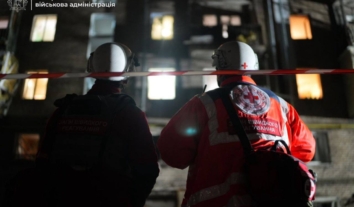
Russian strikes kill civilians on November 19 across Ukraine, including in Sumy region, as U.S.–Russia “peace plan” proposes concessions to Moscow
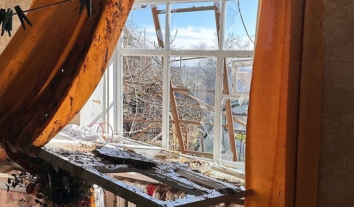
The Sumy Oblast Prosecutor’s Office reported that two men aged 47 and 49 were killed in a Russian attack on Sumy Oblast on November 19.
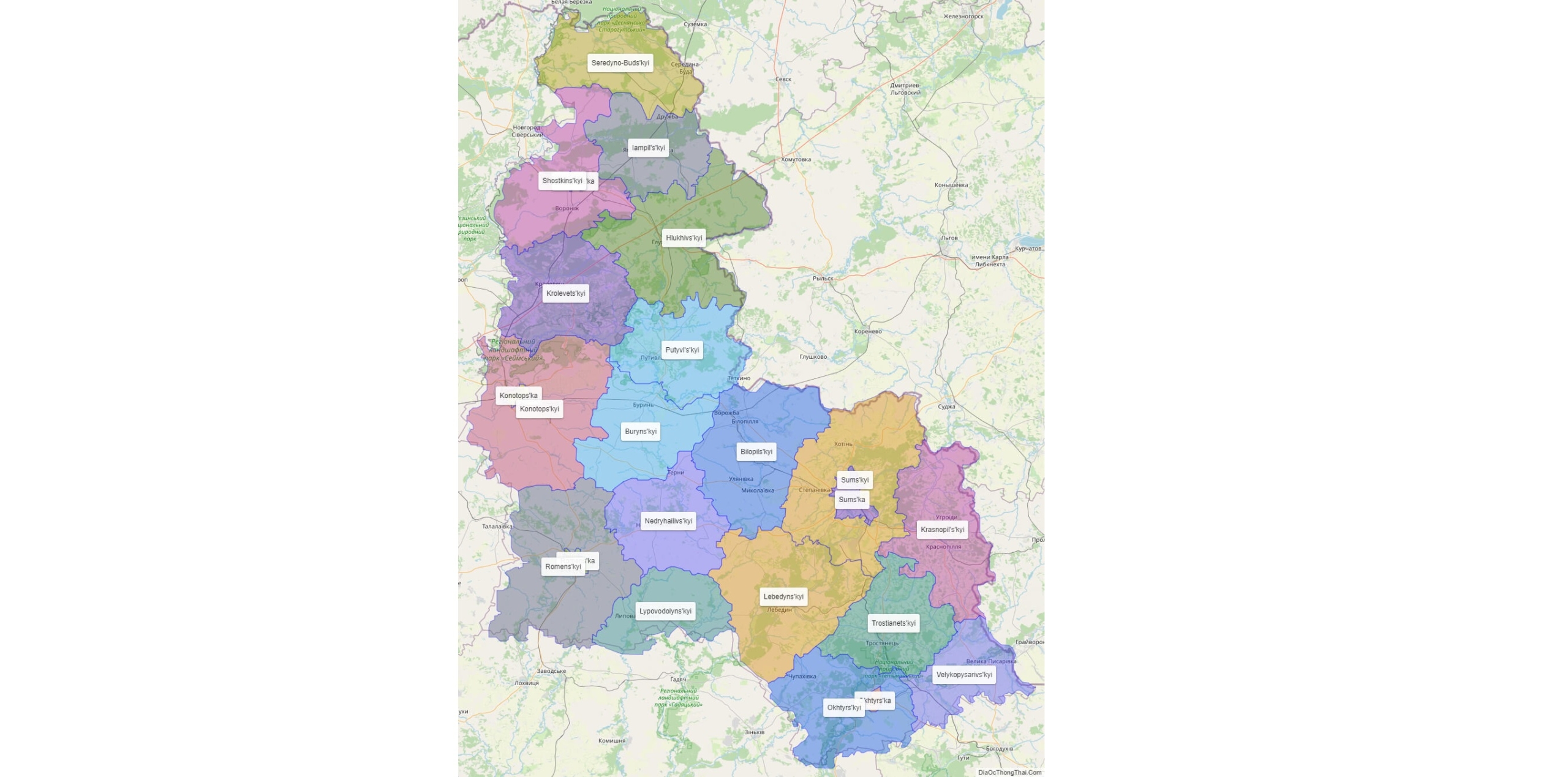
The two men lived in the Krasnopillia “hromada”і — the basic unit of local self-government in Ukraine that may include one or more settlements — villages, towns, or cities.
The Sumy Oblast Prosecutor’s Office has opened a criminal case under Article 438.2 (commission of war crimes) of the Criminal Code of Ukraine.
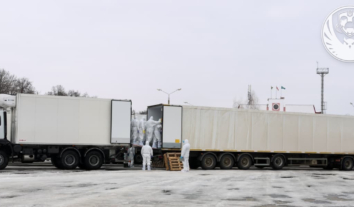
Meanwhile, the State Emergency Service of Ukraine (SES) reported that 27 people were killed in Ternopil following a Russian missile strike on a residential building, and 94 civilians were injured.
The Suspilne Dnipro public news broadcaster reported that a Russian drone attack on Dnipro on November 19 damaged a food-storage warehouse belonging to the United Nations World Food Programme (WFP).
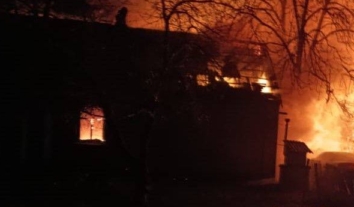
The strike caused a fire, destroying at least 10,000 food kits intended to support the civilian population near the front line. Other food products stored in the warehouse that had not yet been packaged were also damaged by the Russians.
In other news, on November 19, American news media began circulating unconfirmed reports that the US and Russia secretly drafted a “peace plan”.
Media reports suggested that the plan legitimizes Russian violations of Ukraine’s territorial integrity and internal interference. The reports also suggest that this plan was drafted without Ukraine, despite numerous calls to adhere to the principle “nothing about Ukraine without Ukraine.”
Read also: Crimea liberation is question of survival for Crimean Tatars
White House spokesperson Caroline Levitt has stated that US President Donald Trump’s special envoy, Steve Witkoff, and Secretary of State Marco Rubio have been conducting behind-the-scenes work on a new “peace plan” for Ukraine.
Levitt said the Trump administration has been “working on a plan quietly for about the last month.”
“They’ve been engaging with both sides, Russia and Ukraine equally, to understand what these countries would commit to in order to see a lasting and durable peace,” Sky News quoted Levitt as saying.
Levitt said the talks are ongoing, but she would not “litigate the details” of the US-drafted plan.
The Bloomberg news agency has revealed additional details of the so-called “28-point U.S. peace plan,” which the U.S. side developed in consultation with Russia. President Donald Trump supports the plan, according to a senior US official. The proposal includes demands for Ukraine to cede territory in its eastern Donbas region to the Kremlin, the removal of sanctions from Russia, and a halt to war-crimes investigations, according to a person familiar with the matter.
European diplomats expressed skepticism about any deal, noting that Putin has a track record of appearing to accept overtures when under pressure. The Kremlin is trying to stop US sanctions targeting Russia’s two largest oil companies, Rosneft PJSC and Lukoil PJSC, from coming into force on Friday, people familiar with the matter said, requesting anonymity.
An unnamed European diplomat noted to CNN that the new efforts, which repeat many of Russia’s maximalist demands from 2022, resemble the film Groundhog Day, where events repeat themselves over and over again. A European envoy in Ukraine noted that the plan was a complete surprise to the diplomatic community.
“All of this has already been considered and rejected, and now we are back to square one,” the diplomat said, according to CNN and European Pravda.
“For Ukrainians, this is simply an unrealistic proposal, and there are strong reasons for that,” the source added. “It would simply be an invitation for the Russians to return again in the future. For any Ukrainian leader [to accept it] it would be political suicide, and handing over this fortified territory would be military suicide.”
European Union Foreign Policy Chief Kaja Kallas says the EU has a clear plan for achieving peace in Ukraine, consisting of only two points: first, weakening Russia, and second, supporting Ukraine.
“The European Union has always supported a just, lasting, and comprehensive peace. Today, we discussed, of course, the latest developments, and Minister Sybiha briefed us on Ukraine’s perspective,” Kallas said.
Berlin was unaware of the new “28-point peace plan” that the Trump team was developing in consultation with Russia. German Foreign Minister Johann Wadephul made this statement, as reported by DER SPIEGEL. In a conversation with journalists in Berlin, Wadephul said Germany was unaware of the behind-the-scenes negotiations between the U.S. and Russia to prepare the new plan for “achieving peace” between Russia and Ukraine.
As reported by Yle, Finnish Foreign Minister and current OSCE Chair Elina Valtonen sharply criticized the U.S. peace plan for ending the Russia-Ukraine war, as reported by several Western media outlets. Valtonen commented that if the idea of the U.S. peace plan is as described in the media, such conditions would be unacceptable to both Ukraine and its European partners.
“They [the plan’s ideas] look as if they were written rather in Moscow. They very unambiguously ‘take the U.N. Charter off the table,” Valtonen stated.
The Office of the President of Ukraine confirmed that President Volodymyr Zelenskyy has officially received a draft plan from the United States, which, according to the American side, could reinvigorate diplomacy.
“The president of Ukraine outlined the fundamental principles that are important for our people, and following today’s meeting, we agreed to work on the points of the plan in a way that would bring a worthy end to the war. From the very first seconds of the Russian invasion, Ukraine has sought peace, and we support all substantive proposals that can bring real peace closer. Since the beginning of this year, Ukraine has supported President Trump’s proposals to end the bloodshed,” the statement reads.
The President’s Office stated that Ukraine is ready to work constructively with the US side and with partners in Europe and around the world to achieve a result that brings peace.
The office added that in the coming days, Zelensky expects to discuss with US President Donald Trump the available diplomatic options and the key points needed to achieve peace.
Earlier, Bohdan Bernatskyy, a member of the Sanctions Policy Working Group of the Crimean Platform Expert Network, revealed at the Third Parliamentary Summit in Latvia that over 1,300 Russian military companies and 2 million industrial workers continue to operate, many without international restrictions.
Ukraine urges the international community to unite to restore global security under the UN Charter and strengthen sanctions against Russia to enforce compliance with international law. Following Russia’s initial invasion in 2014, Ukraine has pursued the liberation of its territories within its internationally recognized 1991 borders while developing comprehensive reintegration strategies and policies for all liberated areas.
Reuters news agency reported that Russia is planning to levy a new tax on electronics and other consumer imports, with $2.7 billion in proceeds earmarked to support the domestic electronics industry, including in the defence sector, over the next three years.
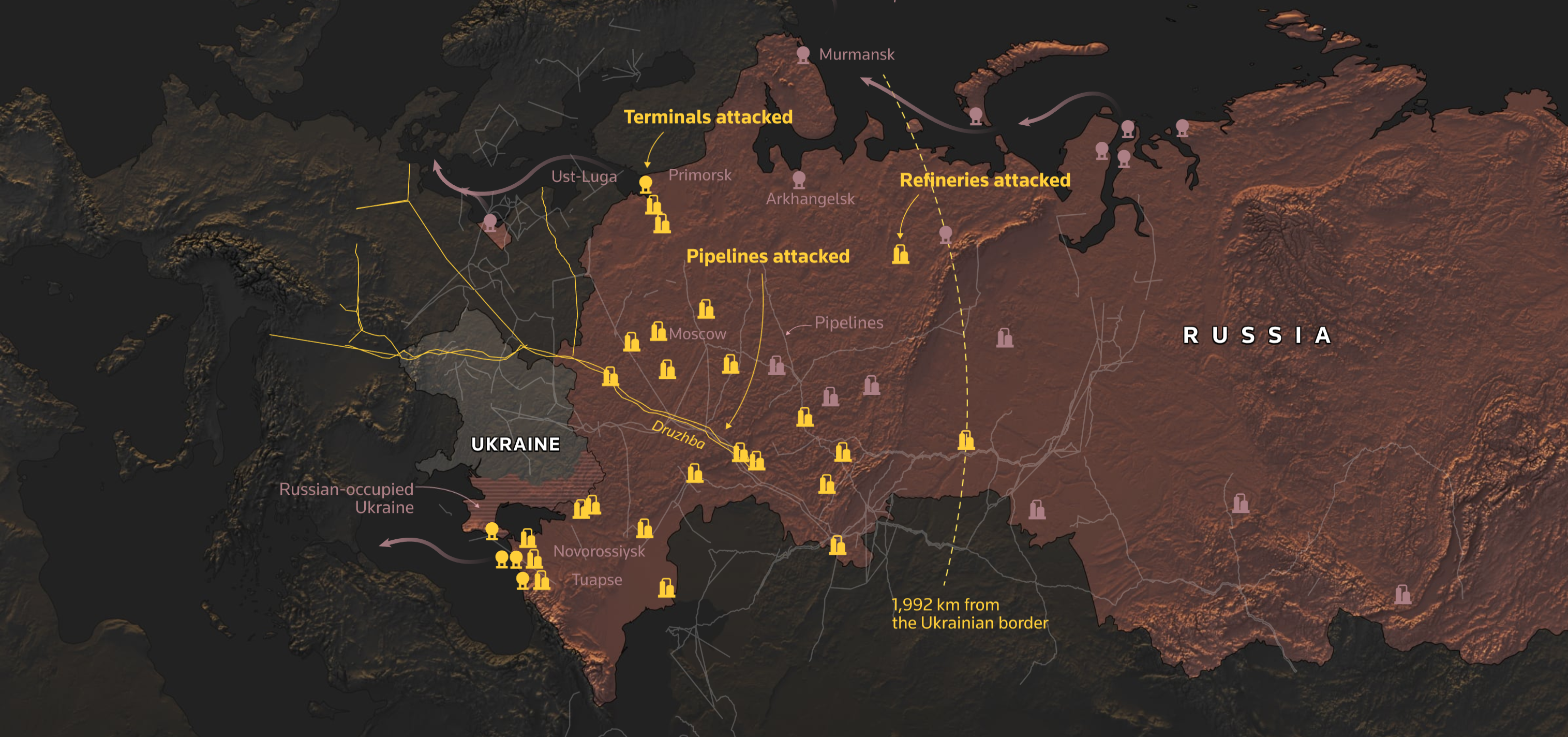 Map by Reuters
At the height of the second wave of strikes between August and October, attacks and planned maintenance took 20% of Russia’s refinery capacity offline, according to calculations by Reuters based on information from three Russian industry sources. But that only resulted in a 6% drop in total Russian refining volumes to around 5.1 million barrels per day — a reduction of some 300,000 barrels per day (bpd) compared to the same period last year, according to Reuters calculations based on information from three Russian industry sources