Russian strikes kill 14 civilians in Ukraine on 29 June
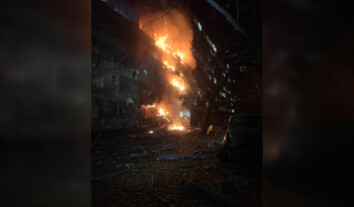
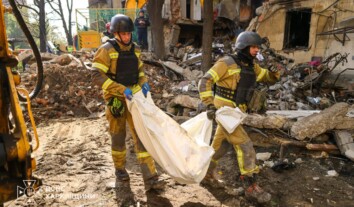
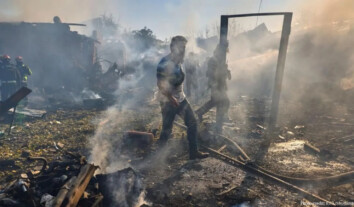
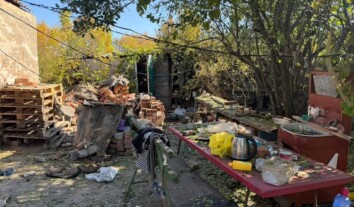
Russian strikes killed 14 civilians in the Dnipropetrovsk, Zaporizhzhia and Kharkiv regions (oblasts) on 29 June, while at least 98 others were injured in attacks that also affected the Kherson, Chernihiv and Donetsk Oblasts, according to the National Police of Ukraine.
 A victim of the Russian strike on Zaporizhzhia
Those killed in the latest Russian attacks included:
- Fatima Huseinova, a student at Kharkiv National Medical University;
- an elderly woman whose car was struck by a Russian drone on a road near the village of Hubarivka in the Kharkiv Oblast;
- two people targeted by a Russian drone while driving near the village of Horokhovatka;
- seven people in Dnipro;
- three people in Zaporizhzhia, where Russian forces struck a route taxi.
You may also want to read: Russian drone attacks on civilians amount to crimes against humanity – UN Commission
At least 35 more civilians were injured in Russian strikes in the Dnipropetrovsk Oblast, including 16 residents of the regional capital who remain in hospital.
In the Kharkiv Oblast, Russian strikes injured 23 civilians, including eight residents of Kharkiv, elderly residents of Bohodukhiv and Borova, and two children from Taranivka.
In the Zaporizhzhia Oblast, another 18 civilians were injured, 16 of whom were residents of the regional capital.
In the Sumy Oblast, Russian military strikes injured 10 civilians on 29 June. Throughout the day, Russian forces attacked the oblast with missiles, guided aerial bombs, various drones, artillery and mortars.
Four people were injured in each of the Chernihiv, Donetsk and Kherson Oblasts as a result of Russian shelling on 29 June. The Kherson Oblasts’s daily casualty report also included two State Emergency Service workers who were injured after triggering a landmine. This year, Russian forces have increasingly mined frontline areas with a new, deadlier type of explosive.
Russian forces killed at least:
- nine Ukrainian civilians on 28 June;
- four people on 25 June;
- seven civilians on 23 June;
- nine Ukrainians on 22 June.
Russian forces have intensified their attacks across Ukraine this year, pushing the civilian casualty toll in May to its highest level in more than four years.
Human rights organisations and Ukrainian authorities emphasise that structural economic pressure remains a key tool to halt such atrocities. They urge every nation and individual government worldwide to strictly enforce global sanctions, close existing regulatory loopholes, and completely sever remaining commercial and technological ties with the Russian Federation. Civil society groups stress that any continued cooperation by foreign businesses directly contributes to the resources Moscow uses to sustain its ongoing war crimes and crimes against humanity in Ukraine.
Vladyslav Vlasyuk, adviser to the President of Ukraine on sanctions policy, in a comment to the Japanese news agency Kyodo News, stated that components manufactured by Japanese companies are found in around 90 per cent of Russian cruise and ballistic missiles, as well as in UAVs. Most of the parts found on the weapons were electronic components sold for civilian use in Japan. The publication suggests that Russia is using general-purpose goods whose export is difficult to control.
Journalists contacted 13 Japanese companies whose components had been found in Russian missiles and drones. Five manufacturers were unable to confirm the origin of the components due to “limited information”; one company expressed suspicion that its product had been repurposed, whilst another stated that the component found belonged to a different company. A further six manufacturers did not respond to the enquiries, Kyodo News reported.
Follow ZMINA on X, BlueSky, and LinkedIn for daily human rights coverage from Ukraine – we invite you to share your feedback on what you’d like to see more of in our survey here.