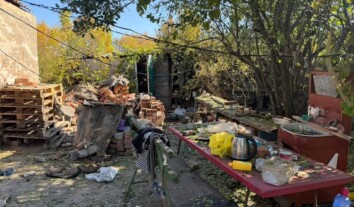
Russian shelling across Ukraine kills 10 civilians and injures at least 44 on 24 September
On 24 September 2026, Russian military shelling killed 10 civilians in Kyiv and the Donetsk and Kharkiv Regions (Oblasts) and injured at least 44 others, particularly in the Dnipropetrovsk, Kherson, Zaporizhzhia, Sumy, Kyiv and Odesa Oblasts, the National Police reported.
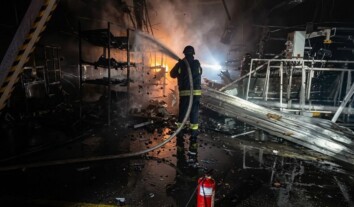
 Aftermath of one of the Russian strikes on Zaporizhzhia
The victims of the Russian shelling on 24 September included:
- two people in Kyiv;
- six people in the Kharkiv Oblast;
- two civilians in the Donetsk Oblast.
At least 14 more civilians sustained injuries in the Kharkiv Oblast, where the Russian military targeted a farm in the Chuhuiv District.
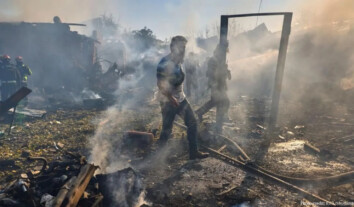
 Aftermath of one of the Russian strikes on the Kharkiv Oblast
Eight people were injured as a result of enemy strikes in each of the Kyiv and the Kherson Oblasts. In Kherson Oblast, the daily report also included a female doctor from Bilozerka, who was injured in a Russian strike days earlier.
Seven civilians were injured due to Russian strikes in Donetsk Oblast, and three, including a child, in Odesa Oblast. One person was injured in each of the Zaporizhzhia, Dnipropetrovsk and Kyiv Oblasts.
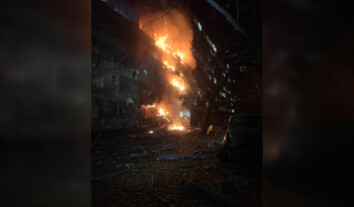
 Aftermath of the Russian strikes on the Donetsk Oblast
On 23 September, the Russian military killed 12 civilians in Ukraine with shelling. Since the beginning of the year, Russian shelling has killed and injured more Ukrainian civilians than in the entire previous year.
Meanwhile, Finnish President Alexander Stubb said on 24 September he pleaded with SpaceX owner Elon Musk to expand Starlink satellite internet coverage for Ukraine so it can strike Russian ballistic missile launchers located inside Russian territory, Reuters reported.
Ukrainian MP and member of the parliamentary Committee on National Security, Defence and Intelligence, Serhiy Rakhmanin, has stated that the increase in Russian strikes on Ukraine’s civil and logistics infrastructure is not merely a retaliatory measure, as some international media report, but a calculated strategy to precipitate a humanitarian crisis in Ukraine.
In an interview with Channel 24, Rakhmanin refuted the suggestion that Russia is simply responding to Ukrainian actions, stating that the intensification of attacks is largely due to the expanded mass production of Russian jet-propelled drones and Ukraine’s lack of Patriot air defence systems.
“As soon as they acquired more methods and opportunities to inflict strikes with impunity, their target selection expanded,” Rakhmanin said. “They would have done this regardless, because their ultimate goal is to quickly and deeply engineer a humanitarian catastrophe in Ukraine.”
Related: Russian attack hits WHO humanitarian warehouse in Kyiv Oblast for third time in three months
He further explained that this “humanitarian catastrophe” encompasses more than just the energy sector; it targets essential civilian needs, including the supply of medicines, food, and fuel.
Related: Ukraine’s Ombudsman flags mental health emergency in psychiatric wards during 2025 blackouts
Since Russia’s full-scale invasion of Ukraine began on 24 February 2022, the WHO has verified more than 3,000 attacks on healthcare objects or sites, including strikes on health facilities, ambulances, medical supplies and warehouses.
Ukrainian experts point out that countries, including China, Greece, North Korea, Hungary, Slovakia, Iran, and Brazil, assist Moscow in killing Ukrainians in its war against Ukraine by funding the Russian budget through trade.
Human rights organisations and Ukrainian authorities emphasise that structural economic pressure remains a key tool to halt such atrocities. They urge every nation and individual government worldwide to strictly enforce global sanctions, close existing regulatory loopholes, and completely sever remaining commercial and technological ties with the Russian Federation. Civil society groups stress that any continued cooperation by foreign businesses directly contributes to the resources Moscow uses to sustain its ongoing war crimes and crimes against humanity in Ukraine.
Join our community on X, Bluesky and LinkedIn, and while you’re reading, let us know how we can serve you better – take our feedback survey here.