Russian military strikes across Ukraine leave 11 civilians dead and 126 wounded on 10 September
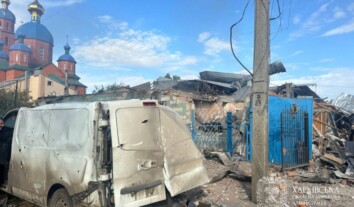
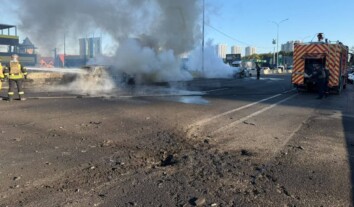
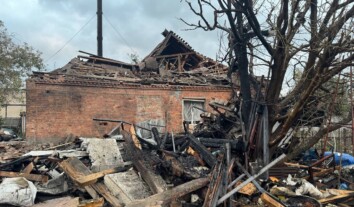
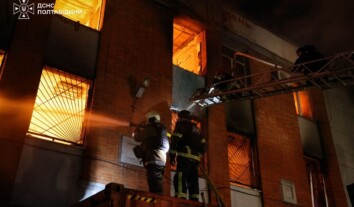
Eleven civilians were killed and at least 126 others were injured across the Kyiv, Kharkiv, Donetsk, Sumy, and Dnipropetrovsk Regions (Oblasts), with casualties also reported in the Kherson and Zaporizhzhia Oblasts, as a result of Russian military shelling over the course of 10 September, the National Police reported.

Traces of a Russian shell hit on a multi-storey building in Kramatorsk, Donetsk region
The victims of Russian strikes on 10 September were:
- two people in the Kyiv Oblast;
- a man in the Kharkiv Oblast;
- one person in the Donetsk Oblast;
- two people in the Sumy Oblast;
- five people, including two miners, in Pavlohrad Dnipropetrovsk Oblast.
At least 65 civilians were injured in the Dnipropetrovsk Oblast, mostly in Pavlohrad, where Russian forces struck with drones near a shopping mall in the city centre. Among the injured are rescuers who were working at the site of the Russian strike.
In the Donetsk Oblast, 29 civilians were injured the previous day in Kramatorsk, Sloviansk, Malotaranivka, and Bilenke, which Russian forces hit with aerial bombs, artillery, and various types of drones.
A woman injured as a result of a Russian strike in the Zaporizhzhia Oblast
In the Sumy Oblast yesterday, Russian military shelling injured 16 civilians, including four children and many elderly people.
Five civilians each were injured due to Russian strikes on Zaporizhzhia, the Kyiv region, and the Kherson Oblast; in the latter case, the daily report also included four people injured days earlier.
Two more civilians were injured in the Kharkiv Oblast, where Russian forces attacked, among other places, Zolochiv.
Separately, repeaters capable of helping Russian forces control attack drones during strikes on Ukraine are operating again in Belarus, Ukrainian intelligence reports. Six such facilities have been detected along the border. Kyiv says it has sufficient capabilities to deal with the threat if it persists.
To provide background, on 9 September, the Russian military killed 14 civilians in Ukraine through shelling.
Despite U.S. President Donald Trump’s promise, the war in Ukraine has not ended 24 hours after his inauguration. His further attempts to facilitate an unconditional ceasefire between Russia and Ukraine have also failed.
Related: Zelensky vows not to sign weak peace deal with Russia despite pressure
Amid the new Russian attacks, Ukraine is once again asking partners to expedite the delivery of air defence capabilities to protect the skies from ballistic and cruise missiles. In Paris, the Speaker of the Verkhovna Rada, Ruslan Stefanchuk, called for the provision of interceptor missiles, increased defence financing, and support for the energy sector.
In Europe, part of the credit programme was authorised to be directed towards missiles for Patriot systems.
European diplomat Katarína Mathernová, recalling the terrorist attacks of 11 September 2001, stated in her post in social media that she sees a common trait with Russian attacks on Ukraine: deliberate intimidation.
Meanwhile, Rikard Jozwiak, Europe editor at Radio Free Europe/Radio Liberty, has reported on X that EU ambassadors have once again been unable to reach agreement on extending personal sanctions imposed over Russia’s aggression against Ukraine. They will meet again on Monday – the day before the 15 September deadline.
“Slovakia still wants Usmanov and Fridman delisted, but the issue is now further complicated as France also wants Usmanov off the blacklist,” he wrote.
President Volodymyr Zelenskyy stated that Moscow must not enter winter with a sense of impunity for missile and drone terror. Sanctions and international support, according to him, must genuinely deter new strikes.
Former Google CEO Eric Schmidt believes countries in the world should view Ukraine’s defence industry as an extension of their own, according to reports. This involves joint weapons production, stable supply chains, and faster provisioning for Ukrainian troops, he wrote in his column for The Washington Post.
Follow ZMINA on X, BlueSky and LinkedIn for daily human rights coverage from Ukraine – we invite you to share your feedback on what you’d like to see more of in our survey here.