Russian drone strikes target two gas stations in Kyiv, injuring civilians
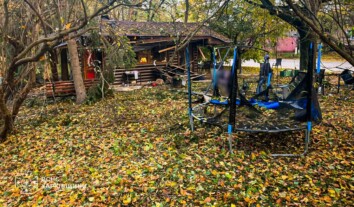
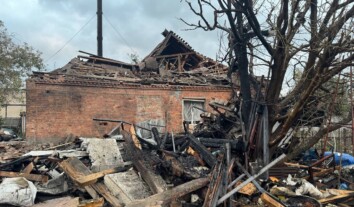
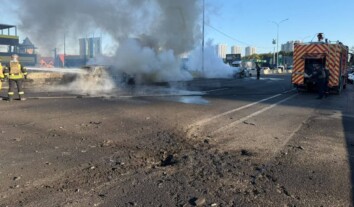
Two people were killed, and eight others were injured as a result of a Russian attack on a gas station in Kyiv on 11 September 2026, Mayor Vitalii Klitschko reported on social media, alongside statements from the Kyiv City Military Administration and the State Emergency Service.

Russian attacks targeted facilities in the Troieshchyna and Obolon Districts
“There are already eight casualties from the morning attack on the capital’s gas station. Of these, six injured are in hospitals. Two city residents died,” Klitschko stated.
However, data provided by the State Emergency Service and the Kyiv City Military Administration differed. The Kyiv City Military Administration reported that a 36-year-old man died in the hospital from injuries sustained during the Russian attack, while six others were injured.
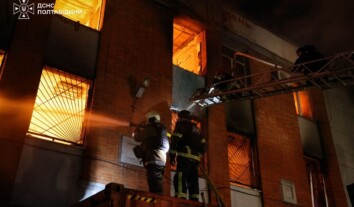
Meanwhile, the Kyiv branch of the State Emergency Service reported that as of 11:23, five people had been injured in the capital, including one firefighter.
The engineering team’s office at Kyivstar, Ukraine’s largest mobile operator, was also hit on 11 September. The company confirmed damage to the building but emphasised that no employees were injured.
Separately, repeaters capable of helping Russian forces control attack drones during strikes on Ukraine are operating again in Belarus, Ukrainian intelligence reports. Six such facilities have been detected along the border. Kyiv says it has sufficient capabilities to deal with the threat if it persists.
On 10 September, Russian forces hit a gas station in the Holosiivskyi District of Kyiv with a drone, injuring four people. Acting Head of Naftogaz Serhii Fedorenko reported that a jet-powered drone attacked a Ukrnafta gas station complex in Ukraine’s capital. He noted that, in accordance with safety rules, the gas station was not operating during the air raid alert, but people who were nearby were injured.
Amid the new Russian attacks, Ukraine is once again asking partners to expedite the delivery of air defence capabilities to protect the skies from ballistic and cruise missiles. In Paris, the Speaker of the Verkhovna Rada, Ruslan Stefanchuk, called for the provision of interceptor missiles, increased defence financing, and support for the energy sector.
In Europe, part of the credit programme was authorised to be directed towards missiles for Patriot systems.
European diplomat Katarína Mathernová, recalling the terrorist attacks of 11 September 2001, stated in her post in social media that she sees a common trait with Russian attacks on Ukraine: deliberate intimidation.
Meanwhile, Rikard Jozwiak, Europe editor at Radio Free Europe/Radio Liberty, has reported on X that EU ambassadors have once again been unable to reach agreement on extending personal sanctions imposed over Russia’s aggression against Ukraine. They will meet again on Monday – the day before the 15 September deadline.
“Slovakia still wants Usmanov and Fridman delisted, but the issue is now further complicated as France also wants Usmanov off the blacklist,” he wrote.
Despite U.S. President Donald Trump’s promise, the war in Ukraine has not ended 24 hours after his inauguration. His further attempts to facilitate an unconditional ceasefire between Russia and Ukraine have also failed.
Related: Zelensky vows not to sign weak peace deal with Russia despite pressure
President Volodymyr Zelenskyy stated that Moscow must not enter winter with a sense of impunity for missile and drone terror. Sanctions and international support, according to him, must genuinely deter new strikes.
Former Google CEO Eric Schmidt believes countries in the world should view Ukraine’s defence industry as an extension of their own, according to reports. This involves joint weapons production, stable supply chains, and faster provisioning for Ukrainian troops, he wrote in his column for The Washington Post.
Ukrainian experts point out that countries, including China, Greece, North Korea, India, Hungary, Slovakia, Iran, and Brazil, assist Moscow in killing Ukrainians in its war against Ukraine by funding the Russian budget through trade.
Human rights organisations and Ukrainian authorities emphasise that structural economic pressure remains a key tool to halt such atrocities. They urge every nation and individual government worldwide to strictly enforce global sanctions, close existing regulatory loopholes, and completely sever remaining commercial and technological ties with the Russian Federation. Civil society groups stress that any continued cooperation by foreign businesses directly contributes to the resources Moscow uses to sustain its ongoing war crimes and crimes against humanity in Ukraine.
Follow ZMINA on X, BlueSky and LinkedIn for daily human rights coverage from Ukraine – we invite you to share your feedback on what you’d like to see more of in our survey here.