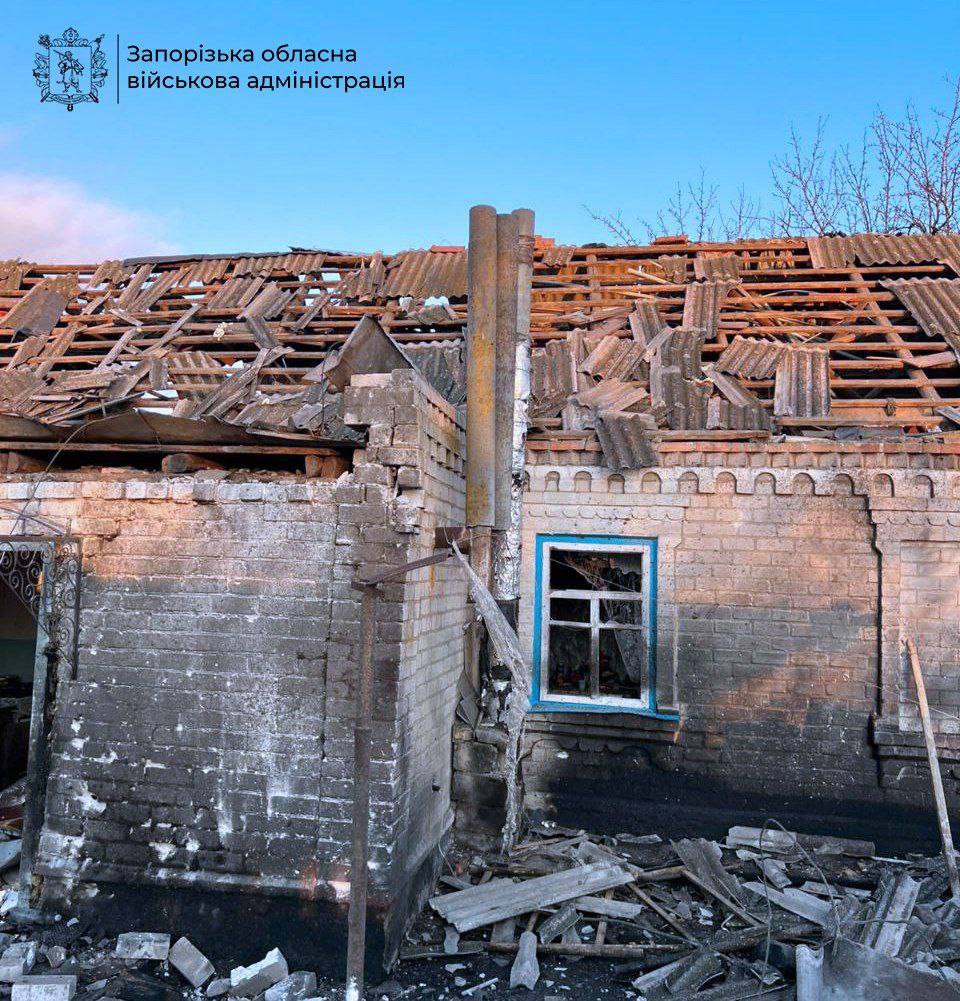
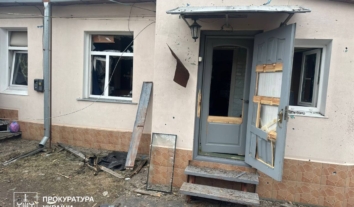
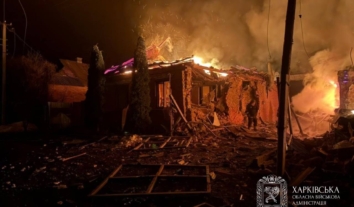
Russian attacks on Zaporizhzhia, Donetsk, Sumy, and Kharkiv Oblasts killed four people and injured 11 others over the course of March 22, according to Ivan Fedorov, head of the Zaporizhzhia Oblast Military Administration, Oleh Syniehubov, head of the Kharkiv Oblast Military Administration, the Sumy Oblast Military Administration, Vadym Filashkin, head of theDonetsk Oblast Military Administration.
Russian forces carried out 821 strikes on 40 settlements in Zaporizhzhia Oblast. Three people were killed, and three others were injured. Authorities also received 49 reports of damage to homes, outbuildings, vehicles, and infrastructure facilities.
Filashkin said Russian attacks killed one person in Druzhkivka, Donetsk Oblast, while four more people were injured across the region on March 22. Authorities said the overall casualty figures for Donetsk Oblast do not include Mariupol and Volnovakha.
In Sumy Oblast, three civilians were injured over the day. In the Bereza hromada, a drone strike on a car injured a 13-year-old boy and an 18-year-old girl. Another 14-year-old boy sought medical assistance after a drone strike on the Putyvl “hromada,” a local government area that includes one or more nearby settlements. In total, Russian forces carried out 80 attacks on 31 settlements across 17 hromadas in the region.
Nine settlements in Kharkiv Oblast came under attack. In the village of Staryi Saltiv, a 77-year-old woman suffered an acute stress reaction. Houses, outbuildings, power transmission lines, garages, warehouse premises, a hotel, and vehicles were damaged across the region.
Ukraine’s Air Force stated Russian forces attacked Ukraine with 251 drones of various types on the night of March 22-23.
“As of 8 a.m., Ukrainian air defense forces had destroyed or jammed 234 enemy drones. Seventeen UAVs hit 11 locations, and debris from downed aerial assets fell at eight locations,” the statement reads.
The Shahed, Gerbera, Italmas, and other types of drones were launched from the Russian cities of Bryansk, Oryol, Kursk, Millerovo, and Primorsko-Akhtarsk, as well as from Hvardiiske in temporarily occupied Crimea.
About 150 of the UAVs were Shahed loitering munitions.
In other news, Finnish President
Alexander Stubb has warned that the easing of U.S. sanctions on Russian oil will cause “significant harm.” In an interview with
The Telegraph, Stubb emphasized that the decision severely undermines Ukraine by effectively “fueling the Russian war machine.”
US Treasury Secretary
Scott Bessent said in an interview with NBC News that easing US sanctions on Russian oil could bring Moscow an additional $2 billion in revenue, which he described as insignificant.
“Which is better? Does Russia get more money if oil goes to $150 and they get 70% of that, that’s $105, or if oil stays below $100, so they’re getting less money? Our analysis shows that the maximum extra amount that Russia could get would be $2 billion, which is one day of the Russian Federation’s budget,” Bessent said.
He believes easing oil sanctions actually helps reduce Russia’s revenues, as the move stabilizes global oil prices and therefore limits Moscow’s potential income. Bessent also noted that China remains the main buyer of Russian oil, accounting for over 90% of Russia’s oil exports.
President
Volodymyr Zelenskyy stressed on March 22 that due to the easing of sanctions, Russia has increased oil sales in recent days to finance its war against Ukraine. He reported that Russia has launched nearly 1,550 attack drones, over 1,260 guided aerial bombs, and two missiles against Ukraine over the past week.
“Revenues give Russia a sense of impunity and the ability to continue the war. That is why pressure must continue, and sanctions must work. Russia’s shadow fleet must not feel safe in European waters or anywhere else. Tankers that serve the war budget can and must be stopped and blocked, not just let go,” the President highlighted.
Ukraine urges the international community to unite to restore global security under the
UN Charter and to strengthen
sanctions against Russia to enforce compliance with international law. Following Russia’s initial invasion in 2014, Ukraine has pursued the liberation of its territories within its internationally recognized 1991 borders while developing comprehensive
reintegration strategies and policies for all liberated areas.
Previously, the Ukrainian OSINT Varta team, in collaboration with the Lex Talionis project,
published an interactive map containing data on more than 6,000 enterprises of the Russian military-industrial complex and their 1.2 million employees. The interactive map provides descriptions of activities and specific developments for each enterprise, as well as a categorization system that allows filtering by type.
Stay connected with us via X and LinkedIn – and while you’re here, please spare five minutes to fill out our survey and tell us what you’d like to see next.