Russia threatens parents with loss of custody to enforce propaganda in occupied schools — Office of the UN High Commissioner for Human Rights
The Office of the UN High Commissioner for Human Rights (OHCHR) has documented Russia’s systematic violation of children’s rights in occupied Ukraine, where authorities have replaced Ukrainian education with propaganda, removed Ukrainian language from curricula, and threatened parents with losing custody if they don’t enroll children in Russian-run schools, according to the its report “Forced displacement from Ukrainina erritory occupied by the Russian Federation: forcible transfer and deportation, barriers to return, and the rights of internally displaced persons (IDPs), February 24, 2022 – December 31, 2025.
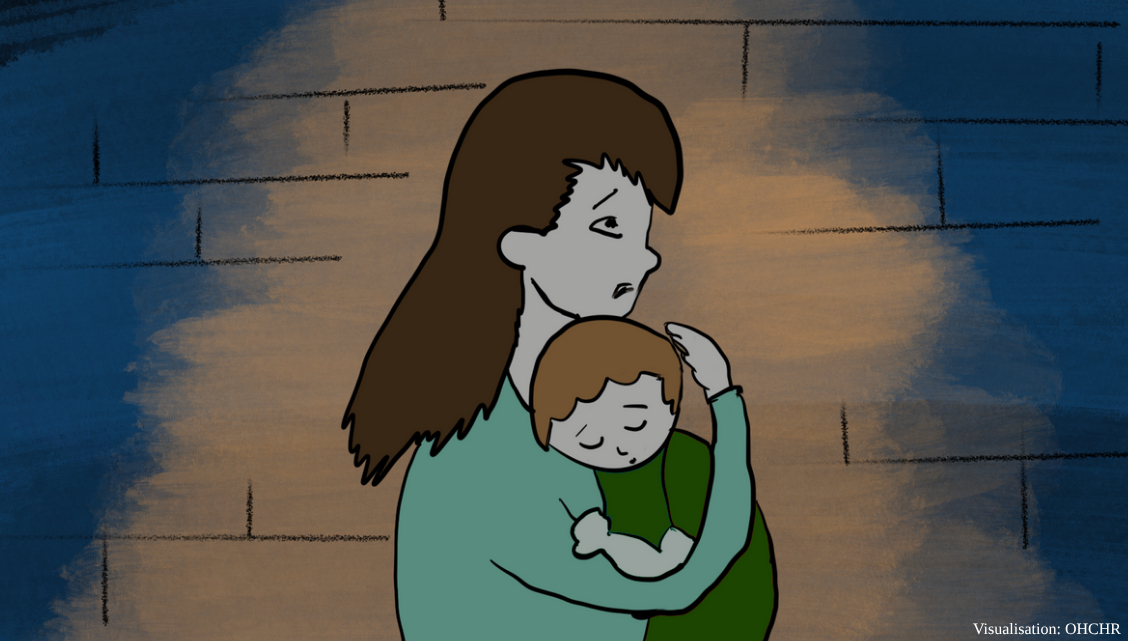
OHCHR in its monitoring report pointed out that, starting with the 2022-2023 academic year, the Russian education curriculum replaced the Ukrainian curriculum in all schools in the occupied territory, with classes taught in Russian. Russian narratives – justifying the war against Ukraine and glorifying Russian soldiers – were introduced, as were mandatory patriotic rituals and military patriotic programmes, as well as cadet classes, with these practices extending into extracurricular activities beyond the classroom, and affecting children from a very early age.
Moreover, amendments to Russian federal educational programmes removed Ukrainian language and literature from primary and basic general education.
OHCHR reported that Russian occupying authorities removed Ukrainian textbooks and literature from schools and libraries, blocked Ukrainian educational websites and digital platforms, and required “foreign” educational institutions, including Ukrainian, to close by 1 June 2023.
“These measures deprived children of an education respectful of their individual cultural identity, language, and values, and the national values of their country, in violation of international humanitarian law (IHL) and international human rights law (IHRL),” OHCHR stated.
To enforce compliance, occupation authorities resorted to threats and intimidation. The Russian occupying authorities enforced attendance in Russian-run schools through threats, and they searched children’s mobile phones for Ukrainian education apps. Meanwhile, parents who refused to enroll their children faced fines, referrals to child guardianship bodies and police, and the risk of losing parental rights.
OHCHR interviewed many parents and teachers who had fled the occupied territory for the Government-controlled area of Ukraine cited these education-related policies as a primary or contributing reason for their departure. For example, a mother of four children left the occupied Zaporizhzhia region in 2025 because her children were required to recite poems and sing songs glorifying the Russian Federation and justifying its invasion of Ukraine.
A teacher in the occupied Kherson Oblast left her post in 2022 rather than teach the Russian curriculum. She departed in 2025 because, as she stated, her “son’s education came first,” and he could no longer safely access online Ukrainian classes.
While Ukraine has established support programs for displaced children — including safe return, reintegration, and financial aid — the system faces challenges. A patchwork of legislation means displaced children from occupied territories may qualify for different legal statuses, creating uncertainty and unequal access to assistance.
Children fleeing occupation typically need help with official documentation, adapting to the Ukrainian curriculum, and psychological support. Young adults aged 18-23 face particular difficulties: they’re ineligible for assistance available to minors, yet many lack the independence to survive on limited adult IDP support. Some arrive alone, with family still in occupied territory, and no support network in government-controlled areas.
Although measures exist to facilitate access to higher education, many described practical obstacles: low stipends; limited tuition-free slots; banking restrictions that prevent receiving funds from relatives in occupied territory; and high housing costs. A draft law currently under consideration would extend support for displaced children to young adults up to age 23.
OHCHR continues to advocate for the implementation of recommendations in its past reports, most of which remain relevant, it added. Among its recommendations are for Ukraine and Russia to ensure that any peace negotiations include the meaningful consideration of the situations and interests of displaced persons, and address specifically their voluntary, safe, and dignified return to places of origin in occupied territory, with full respect for their human rights and international humanitarian law; the participation of IDPs and their representatives in such discussions is encouraged.
To Russia:
- Restore and ensure access to education in the occupied territory in accordance with the Ukrainian State curriculum, in the Ukrainian language, both in person and online;
- Protect the right of persons in the occupied territories to choose and express their identity, engage in the cultural practices of their choice, and use their own language;
- Ensure unhindered access by OHCHR to the occupied territory of Ukraine to enable firsthand monitoring and human rights protection.
To Ukraine:
- Review policies for IDPs to ensure that whatever the cause of their displacement, the specific needs of persons displaced from the occupied territory are adequately met, with a designated and sufficiently resourced entity responsible for coordination;
- Implement a simplified administrative procedure for registration of births and deaths occurring in occupied territory and issuance of Ukrainian documentation;
- Develop a comprehensive strategy to provide targeted support to all children and young adults arriving from occupied territory or Russia, including through the adoption of draft law No. 14251 on social protection and support for children affected by the armed conflict;
- Adopt a new State strategy and implementation plan on internal displacement, which takes into account the specific needs and vulnerabilities of persons displaced from occupied territory;
To the international community:
- Urge the Russian Federation to fulfill its obligations under international humanitarian law and international human rights law in the territory under its occupation, including by enabling the safe return of persons forcibly displaced from occupied territory;
s) Provide continued financial and technical assistance to the Government of Ukraine and NGOs to support programs that restore rights and facilitate the inclusion of IDPs from occupied territory, including targeted support for children and young adults.
Follow ZMINA on X and LinkedIn for daily human rights coverage from Ukraine – we invite you to share your feedback on what you’d like to see more of in our survey here.