How Russian archaeologists in occupied Crimea are violating international law
Since the beginning of the occupation of Crimea in 2014, the Russian Federation has actively leveraged archaeology as a tool for the political legitimisation of its occupation. Under the guise of “scientific research,” Russian archaeologists are systematically conducting excavations on Ukrainian cultural heritage sites, effectively appropriating or destroying them. These actions constitute a serious violation of international humanitarian law, as concluded by the Regional Center for Human Rights.
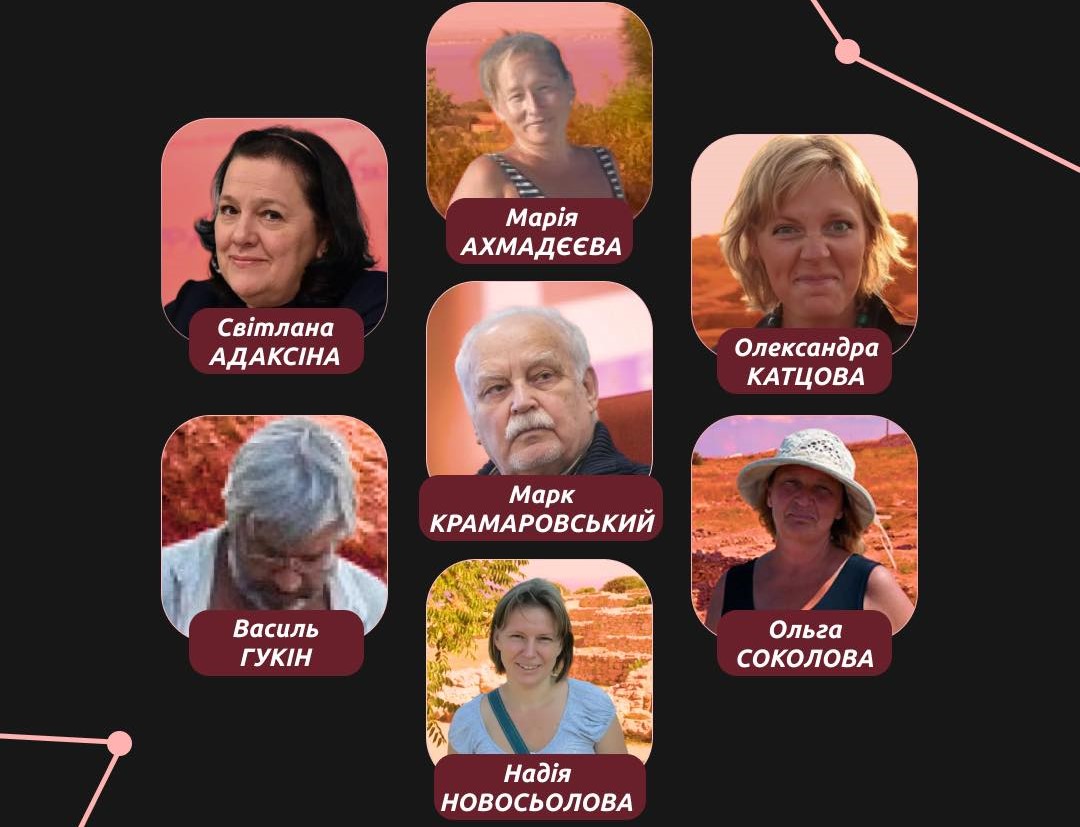 Source: Regional Center for Human Rights
This process is carried out with the backing of the Russian state, particularly the Ministry of Culture of the Russian Federation, which issues so-called “open letters”—permits for archaeological work. Some of these documents are personally signed by Deputy Minister of Culture of the Russian Federation, Vladimir Osintsev, underscoring the centralised coordination of these violations.
One of the most active participants in these processes is Olga Sokolova, a senior researcher at the Department of the Ancient World of the State Hermitage Museum. From 2014 to 2018, she led archaeological work at the “Ancient City of Nymphaeum” site in Kerch and continues to participate in research in that area.
Another figure implicated is Maria Akhmadeeva, who received seven permits for excavations in Crimea between 2017 and 2023. She heads the Hermitage’s Feodosia expedition and conducted work at the necropolis of the ancient city of the temporarily occupied Feodosia.
Another Hermitage employee, Svetlana Adaksina, was responsible for work within the “Cimmerian Coast” project, specifically in the territory of Myrmekion (Kerch). The project operated with direct support from the Ministry of Culture of the Russian Federation.
Mark Kramarovsky, a leading researcher at the Hermitage, regularly conducted archaeological research in Crimea, including at the Charax Archaeological Complex on the southern coast of the peninsula.
Nadezhda Novoselova, a junior researcher, participated in expeditions that conducted illegal excavations in the vicinity of Sevastopol. Her name is mentioned among those who received “open letters”—permits for work signed by the Russian Ministry of Culture.
Vasily Gukin, a researcher at the Hermitage, conducted illegal excavations in the territory of “Sudak Ancient Settlement” and “Sudak Fortress Complex” in Sudak.
Alexandra Katsova excavated the “Kytei Ancient Settlement” in the Leninsky District and the area between the village of Zapovitne and the Kyz-Aul lighthouse. Based on permits issued by the Ministry of Culture of the Russian Federation, her archaeological activities continued from 2014 to 2024.
The Regional Center for Human Rights asserts that archaeological excavations in Crimea are conducted under the aegis of Russian state institutions, particularly the Ministry of Culture of the Russian Federation, which coordinates the issuance of permits and directly supports such projects. This indicates a centralised policy of appropriating Ukrainian cultural heritage.
Thus, the involvement of State Hermitage Museum employees in archaeological excavations in Crimea not only facilitates cultural plunder but also serves as direct evidence of the participation of Russian state scientific institutions in the colonisation of Ukrainian territory.
By way of background, in April of this year, 2025, two rectors of Russian universities were subjected to Ukrainian sanctions due to illegal archaeological work in the occupied territories.