Crimean political prisoner Emil Ziyadinov has been held in AdSeg of a Russian colony for a year
Crimean Tatar activist and children’s coach Emil Ziyadinov, who was illegally sentenced by the occupying authorities to 17 years in prison, has been held for one year in administrative segregation (AdSeg) at correctional colony No. 5 in Koryazhma, Arkhangelsk region, the Russian Federation.
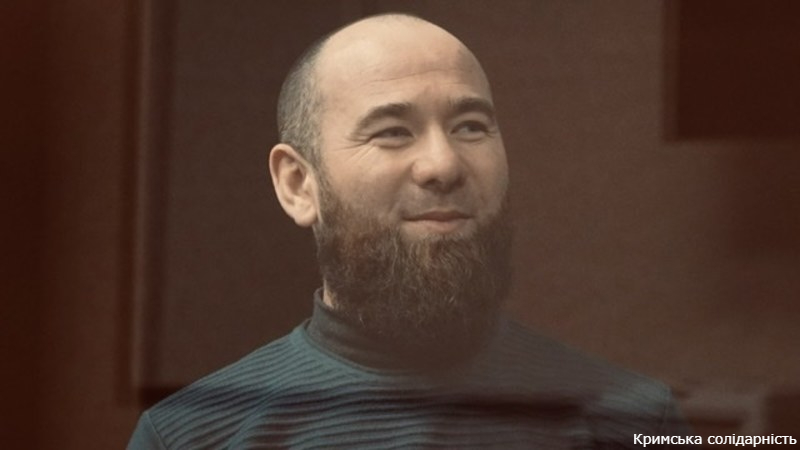 Emil Ziyadinov
His wife, Elviye Ziyadinova, told the grassroots human rights initiative Crimean Solidarity that immediately after being transferred to the colony in September 2024, her husband was immediately placed in isolation, spending the first two weeks in quarantine.
In April 2025, Ziyadinov was transferred to a hospital because he required surgery. He was returned to the colony in May 2025 and immediately sent back to the punitive isolation cell. Ziyadinova stressed that even her husband doesn’t know why he was sent there.
Due to his detention in the AdSeg, the political prisoner cannot receive family parcels or money transfers to buy food and other necessary items at the prison store. He is also denied visits with relatives.
Last year, Crimean Solidarity reported that after his transfer to Koryazhma, Ziyadinov was forced to shave despite his beard length being permissible under the internal regulations. Supervisors, however, claimed that wearing a beard was entirely prohibited.
Also, take a look at this photo project: “I will always wait for you, my child!”
Emil Ziyadinov was detained on July 7, 2020, following a search of his family’s home. The case materials indicated the accused had no weapons, explosives, or ammunition, and did not plan or call for a terrorist act. Despite this, the occupying authorities charged him with organizing the religious party Hizb ut-Tahrir and preparing to seize power. The organization has been banned in Russia since 2003; however, it operates legally in all territories of Ukraine, including the Autonomous Republic of Crimea, as well as in many other countries. Russia, in violation of the Geneva Conventions, applies its own criminal legislation to the temporarily occupied territories of Ukraine.
Earlier, Freedom House pointed out that following the Russian annexation of Crimea in 2014, allegations of membership in Hizb ut-Tahrir have become a common pretext for criminal prosecutions there, and are one of many abuses of anti-extremism legislation against civic activists and others.
According to the Mission of the President of Ukraine in the Autonomous Republic of Crimea, as of October 13, 2025, the occupying authorities have illegally imprisoned 222 individuals in the temporarily occupied peninsula, 133 of whom are Crimean Tatars.
Previously, ZMINA reported that Crimean activist Oleh Fedorov, who was illegally sentenced by the Russians to 13 years in prison, spent eight months in punitive isolation cells in colonies in Udmurtia.