China helps Russia strike on Ukraine’s energy sector — Zelenskyy
President of Ukraine Volodymyr Zelenskyy stated on X that intelligence is recording growing links between Russia and entities in China that may be providing space-based intelligence, with these data being connected to Russian strikes on energy facilities in Ukraine.
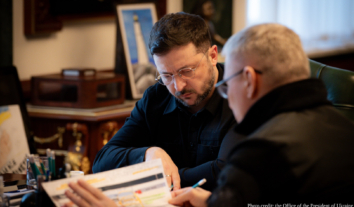
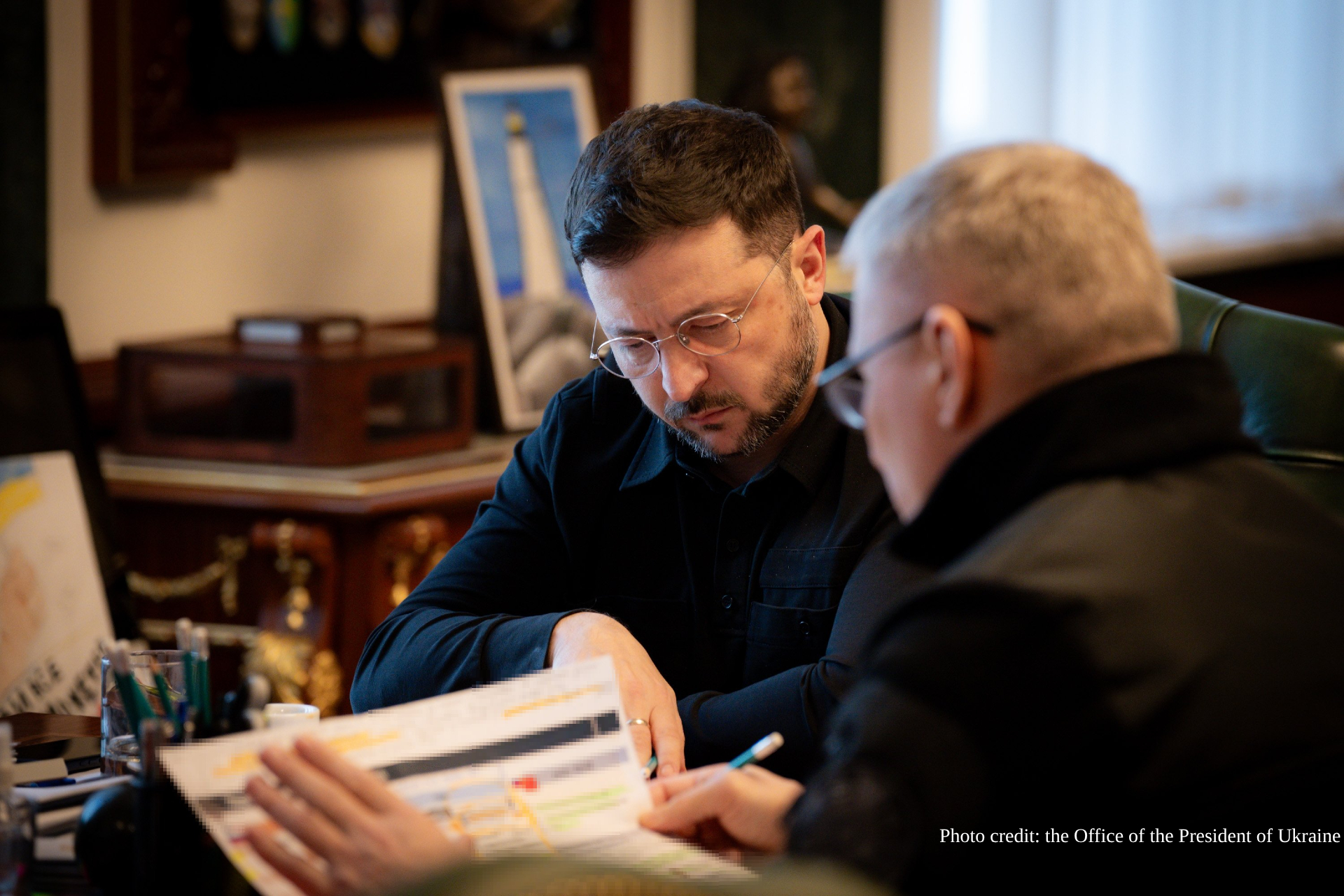 Volodymyr Zelenskyy and Oleh Ivashchenko
“We are recording increased ties between Russia and entities in China that may be providing space-based intelligence data. Unfortunately, there have been correlations between Chinese satellite imaging of Ukrainian territory and Russian strikes on the corresponding energy infrastructure facilities. We view such cases as activities that enable Russia to prolong the war and make diplomatic efforts less serious. We will also raise this issue with our partners,” Zelenskyy said following a report from Oleh Ivashchenko, head of the Foreign Intelligence Service.
He thanked everyone who is helping Ukraine resist Russia’s armed aggression.
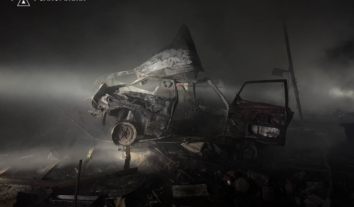
On Christmas, the Russian military killed one person and injured 13 others in targeted missile strikes on a combined heat and power plant in a suburb of Kharkiv, Oleh Syniehubov, Head of the Kharkiv Oblast Military Administration, and Kharkiv Mayor Ihor Terekhov reported.
Syniehubov specified that civilians sustained injuries of varying degrees of severity. They have been taken to the hospital and are receiving high-quality medical treatment.
The attack resulted in a significant drop in voltage across the city, impacting the heat supply and the operation of public transportation.
Specialist services are currently carrying out inspections and assessing the extent of the damage. Wherever technically possible, the power system is being switched to “island mode” to reduce the impact on residents.
The damage to the energy system caused temporary disruptions to electric-powered public transport services in the Rohan, KhTZ, Nova Bavariia, and Kholodna Hora districts. Metro services have since resumed.
In addition, emergency power outage schedules were introduced in the region by Kharkivoblenergo, the local branch of the Ukrainian state-run power distributor.
On December 23, ZMINA reported that as a result of recent Russian military shelling of energy infrastructure, NPPs were forced to reduce generation. From September 2025 to date, the Russian military has launched about two thousand strikes on Ukraine’s energy infrastructure.
Power outages caused by Russian strikes affect numerous aspects, including health and the rising cost of living, which is exacerbated by higher food expenses.
Moreover, analysts point out that this year, Russians want to destroy junction stations via shelling to paralyze the movement of all cargo.
Previously, the DTEK energy company filmed a Christmas musical performance, “Shchedryk,” in the machine hall of a thermal power plant (TPP) that was destroyed by Russian attacks, and called on the world to strengthen the protection of Ukrainian energy infrastructure.
By way of background, Ukrainian experts point out that China, North Korea, Hungary, Slovakia, Iran, and Brazil assist Moscow in killing citizens of Ukraine in Russia’s war, including funding the Russian budget through trade.
Previously, the Ministry of Foreign Affairs announced that Ukraine would close its embassy in Cuba and downgrade ties over Havana’s complicity in Russian aggression.
Newly appointed Ukrainian Ambassador to the UN Andriy Melnyk stated in an interview with Suspilne broadcaster that Brazil paid Russia almost $10 billion for 6.5 million tons of diesel.
Over the last three and a half years, China has become a critically important partner for the Russian Federation. While Beijing officially declares its neutrality, Western intelligence and analytical studies indicate otherwise. For instance, China does not supply weapons directly to Russia, but it provides critically important components, including machinery, microelectronics, specialized chemicals, optics, gunpowder, and ammunition components.
In 2024, then-U.S. Secretary of State Antony Blinken stated that 70% of heavy industrial equipment and 90% of all microelectronics are sourced from China, which then flow into Russia.
Furthermore, according to recent NATO intelligence data, 80% of all Russian drones consist of Chinese parts.
According to The Telegraph newspaper, Chinese firms supplied sanctioned Russian companies with at least £47 million ($57.4 million USD) worth of parts between 2023 and 2024. Almost a quarter of the value of these supplies went to firms that produce Shahed-type drones.
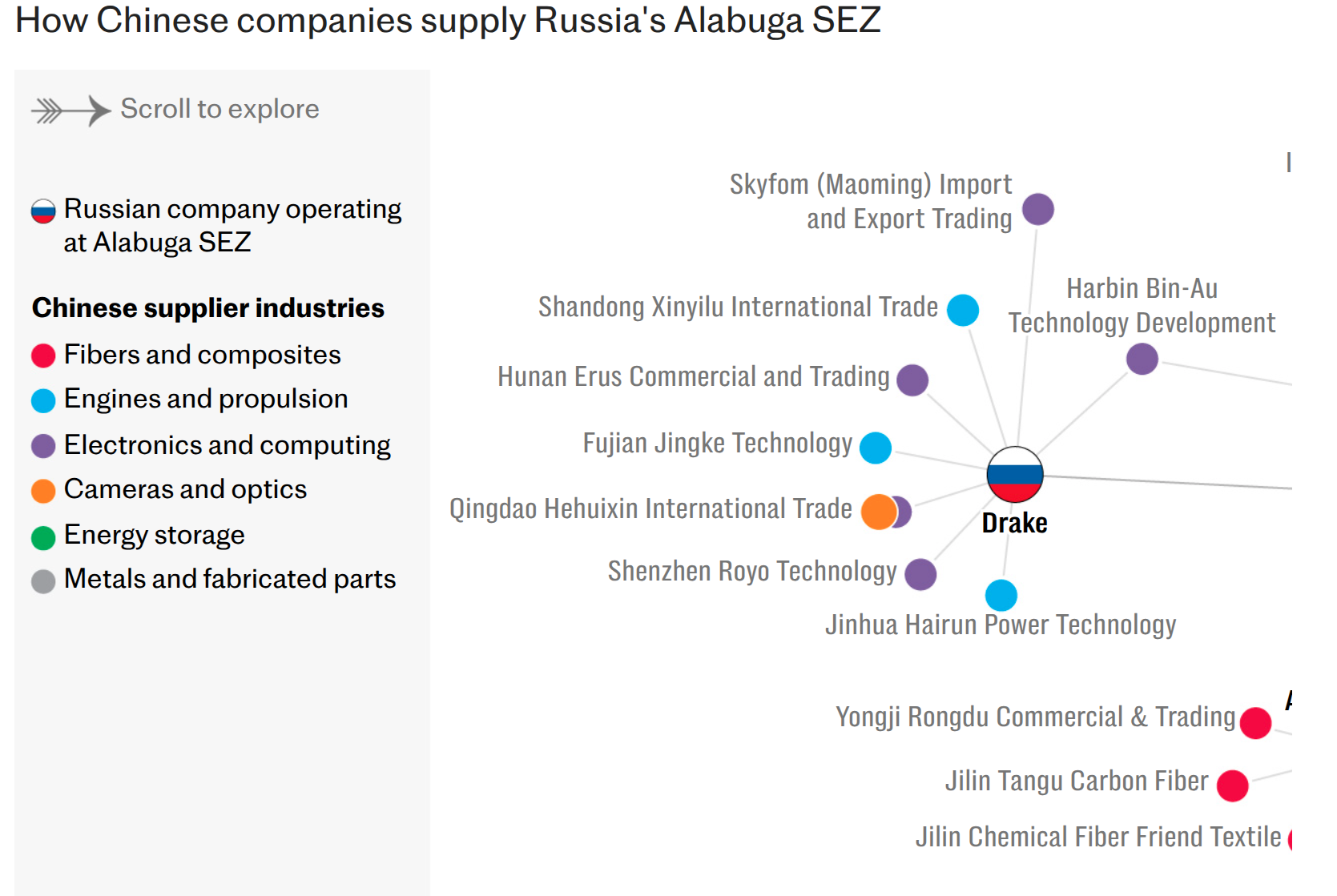
Moreover, the Foreign Intelligence Service of Ukraine stated that China is also providing intelligence to Russia. The Kremlin used this data to prepare missile strikes, particularly against objects belonging to foreign investors, though the specific targets were not clarified. China denies these accusations.
Following the imposition of Western sanctions, Beijing has become a key supplier to Russia of cars, clothing, raw materials, and a range of other goods. In 2023, Russia-China trade turnover set a historic record, exceeding $240 billion, which is more than 60% higher than before Russia’s invasion of Ukraine, according to Chinese customs data.
Reuters also reported that China is buying oil and gas from Russia. The average daily volume of oil is more than two million barrels per day. During Vladimir Putin’s visit to Beijing, the countries signed a document for the supply of 106 billion cubic meters of gas per year to China.
Stay connected via X and LinkedIn with ZMINA – and help build this platform with us by filling out our anonymous 5-minute survey here.