Not just Ukraine — Russia is preparing Ukrainian children for future wars elsewhere
The Center for Civic Education “Almenda” has documented cases of 18-year-olds from temporarily occupied territories (TOT) who died fighting for Russia against their own country — Ukraine. This is the end goal of Russian education policy in occupied territories: erase Ukrainian identity, train children to die for the Russian Federation, and prepare them as a mobilization reserve for wars anywhere Russia decides to invade next.
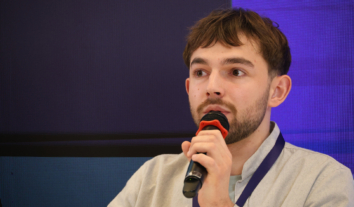
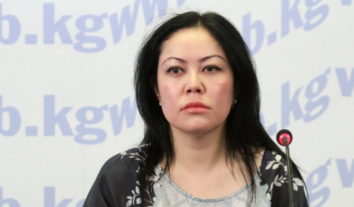
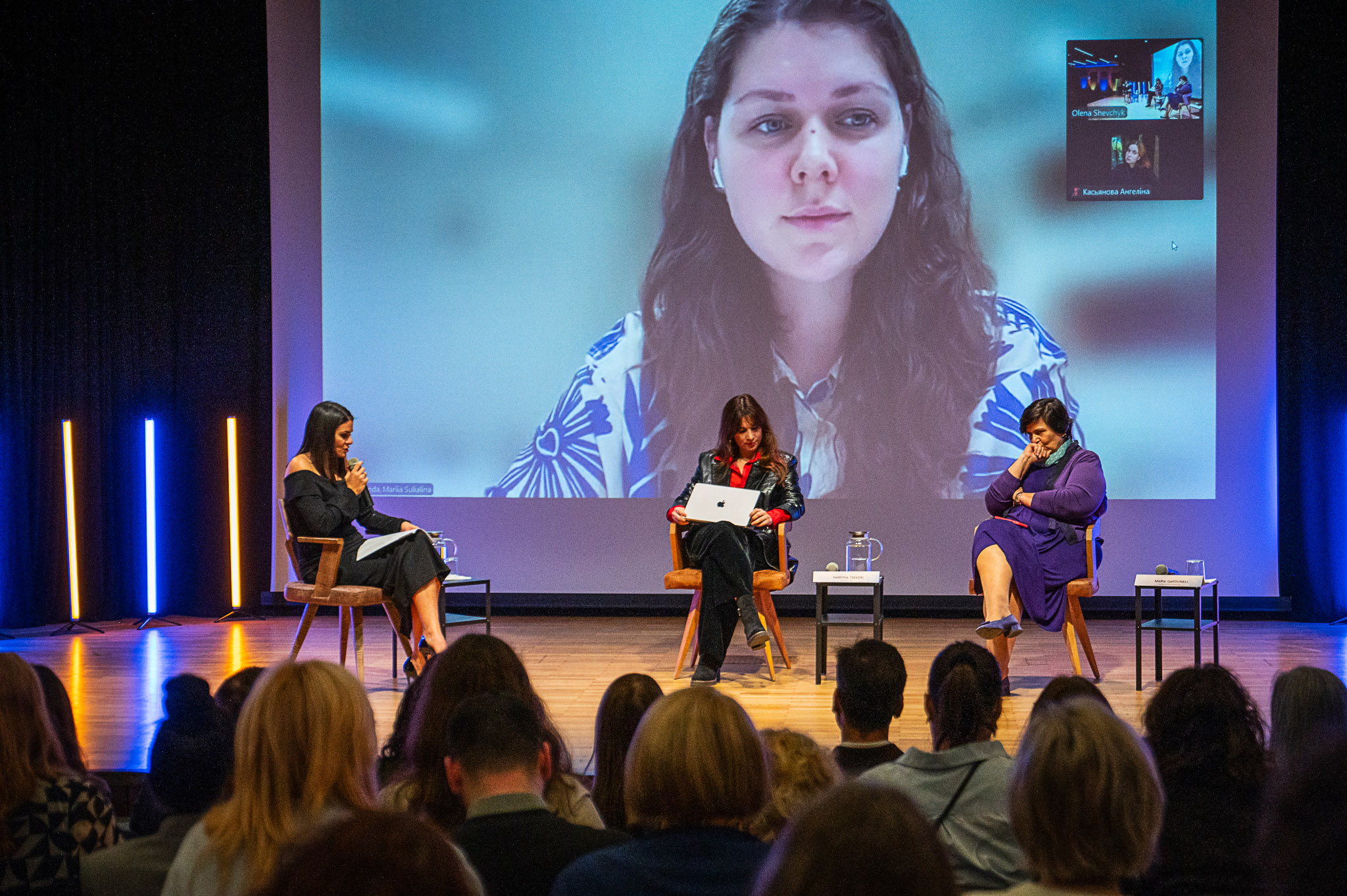
Speaking at the panel discussion “The War on Childhood: Forcible Transfer and Identity Erasure of Ukrainian Children” at the Goethe-Institut Athens on February 17, 2026, Mariia Sulialina, head of the Center for Civic Education “Almenda,” outlined Russia’s systematic approach to militarizing Ukrainian youth and called for international action to stop the forced destruction of their identity.
She calls out to the international community to act, calling to attention the lack of any real mechanism to pressure Russia or to stop Russia from implementing this forced destruction of their identity.
The event, “The War on Childhood: Forcible Transfer and Identity Erasure of Ukrainian Children by the Russian Federation,” was conceptualized and coordinated by independent researcher Olena Shevchyk on behalf of the Union of Ukrainian Women in Greece, moderated by Tina Michailidou, journalist of SKAI TV and founder of GR8Communication, in partnership with the Embassies of Canada and Ukraine and the Goethe-Institut in Athens, Greece.
ZMINA has recorded her speech at the conference. You may also want to read Almenda’s full analytical report, “Russia’s Policy of Eradicating the Identity of Children in the TOT of Ukraine: Results for 2025.”
 Mariia Sulialina
How are children’s identities being changed in occupied territories?
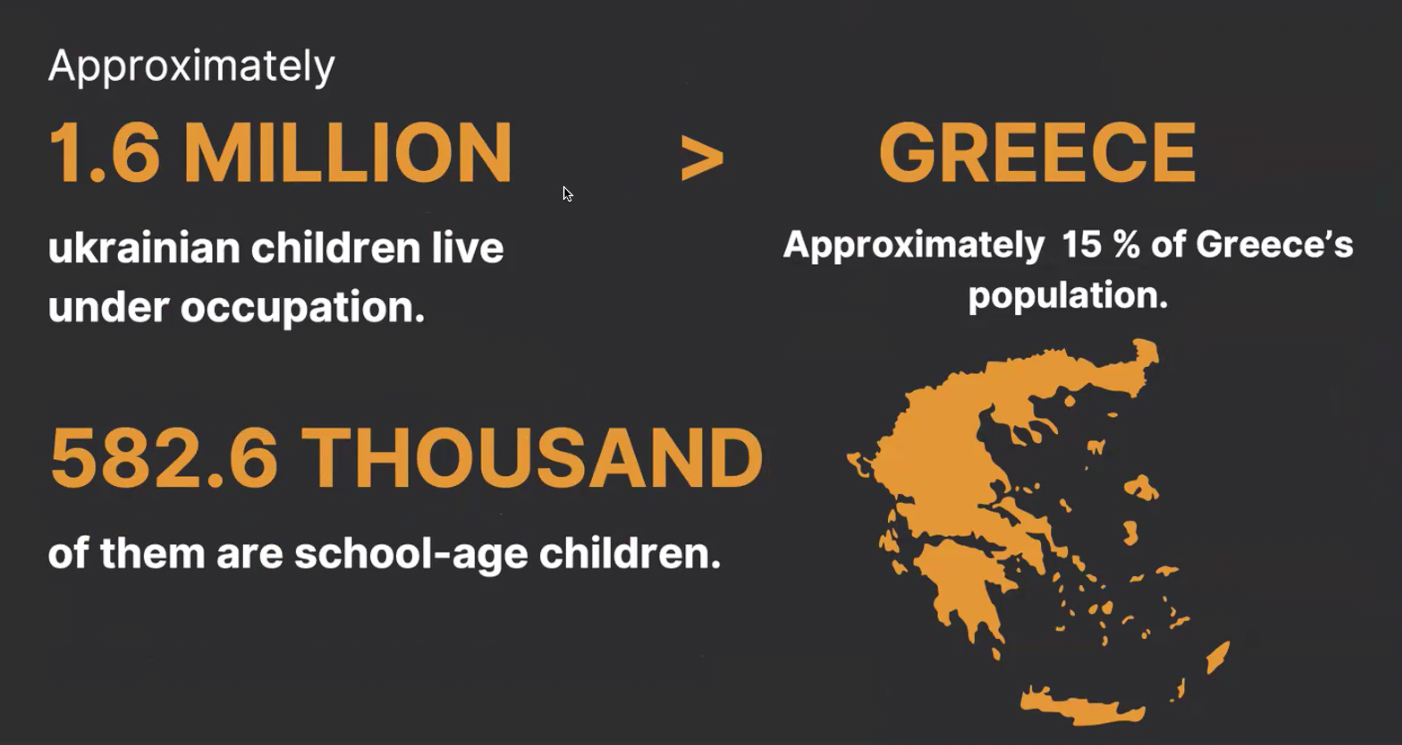
The exact number of children in the temporarily occupied territories is unknown. Russian registers are closed; Moscow does not provide any official information on how many Ukrainian children remain in the occupied territories. Approximately 1.6 million children live there.
Based on the information we gathered, at least 582,000 children are of school age. We are focusing on school-age children because the main political indoctrination and militarization of children happens through the school system.
Since the beginning of the war in 2014, Russia has been building this system — first in occupied Crimea, then in other territories occupied after 2022.
Why is this a system? This system has different forms of implementation and mechanisms. We can name at least four main layers:
- political indoctrination;
- militarization;
- destruction of the educational component in education;
- and propaganda of the service in the armed forces of the Russian Federation.
You may also want to read: Greece urges Russia to immediately return forcibly “transferred Ukrainian children”
Russia implements this system through multiple executors in the occupied territories. When we talk about the destruction of Ukrainian education and access to cultural rights, here is one example: In Crimea before the occupation, all children studied the Ukrainian language in schools.
This school year, according to Russian official data, only 988 children are studying Ukrainian as their native language—about 0.4% of the peninsula’s population. There is no real access to studying Ukrainian, and this has been the case for years. The same pattern exists in all other temporarily occupied territories.
Schools are the main tool of political indoctrination and militarization of Ukrainian children. Through schools, Russian occupiers are spreading false narratives. We identify at least three primary ways.
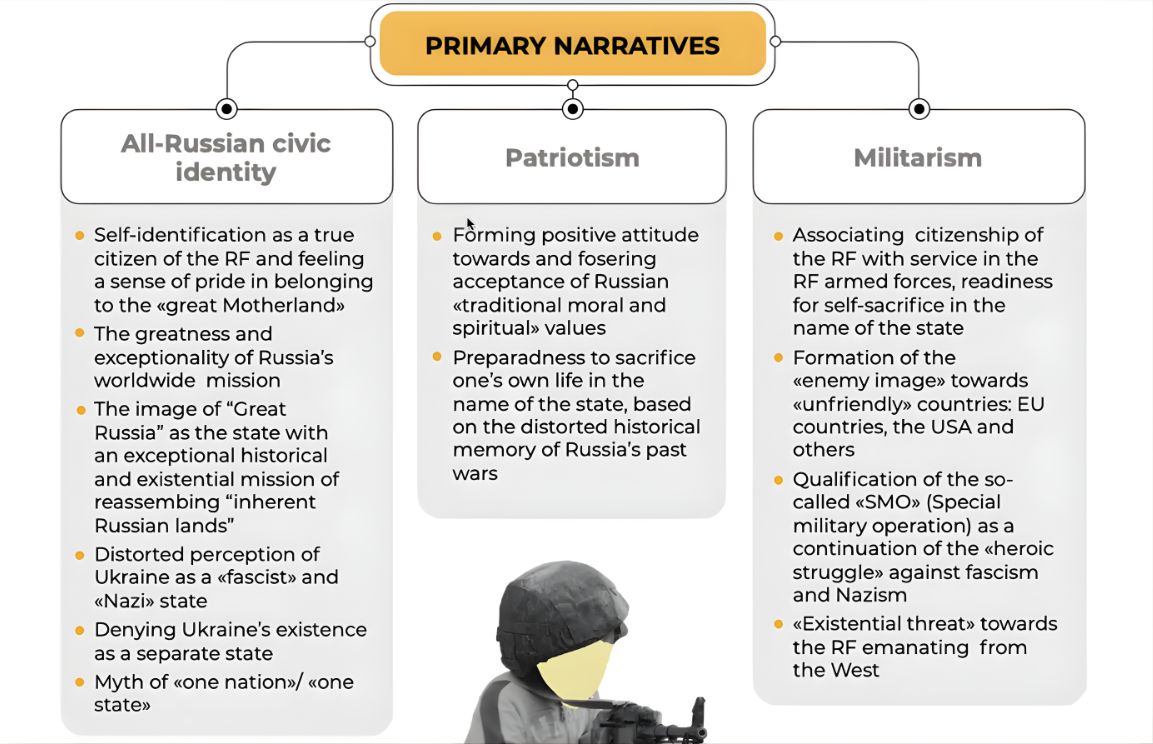
From first grade, the child is taught that there is no Ukraine — it’s an artificially created country — and the child can only identify as Russian.
We also see this narrative of patriotism, but in the Russian context, patriotism means being ready to protect the Russian Federation and to die for it.
Additionally, the narrative of militarism and the heroization of war is achieved through creating an enemy image of NATO, Western countries, and so-called Nazis in Ukraine. Russian occupiers say that Ukraine historically should be part of Russia, and that its territory is occupied by “Nazis” whom Russia must defeat. This is what Russia teaches our children, who are Ukrainians themselves, and how it shapes children’s identity.
War-oriented textbooks of the Russian Federation
Since 2022, Russia has changed its approach to education, now using only war-oriented textbooks. In them, Russian occupiers are building the image that Russia must defend itself, and children’s main duty is to defend themselves from the West, and the Russian Federation didn’t start the war — it was Western countries that started aggression against Russia, and Russia’s invasion was its only possible response to protect itself.
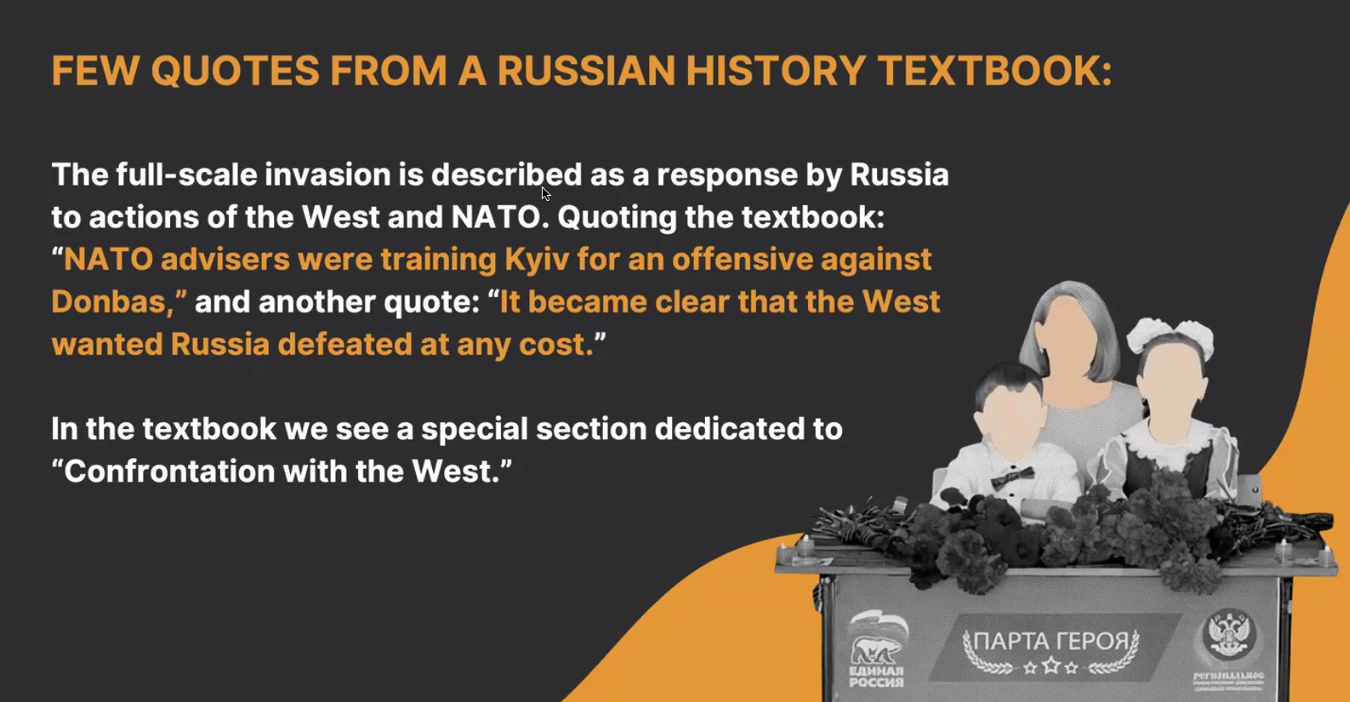
When we talk about this outside the occupied territories, we understand how bizarre it sounds. But when this is taught to our children in the occupied territories, who do not have any other information — when the internet is blocked, when there are no Ukrainian textbooks, no Ukrainian literature on the ground — over the years of occupation, children start to believe this information because they have no alternative sources.
‘Fundamentals of Security and Homeland Defence’ — new school curriculum
Moreover, we also see changes in the curriculum. Since last school year, a new subject has been introduced: “Fundamentals of Security and Homeland Defence.”
Since 2025, priority in teaching this subject has been given to former members of the so-called “special military operation”і .
They want to prepare our children for the mobilization reserve for Russian wars, not only in Ukraine, but also in any other part of the world where Russia decides to commit acts of aggression.
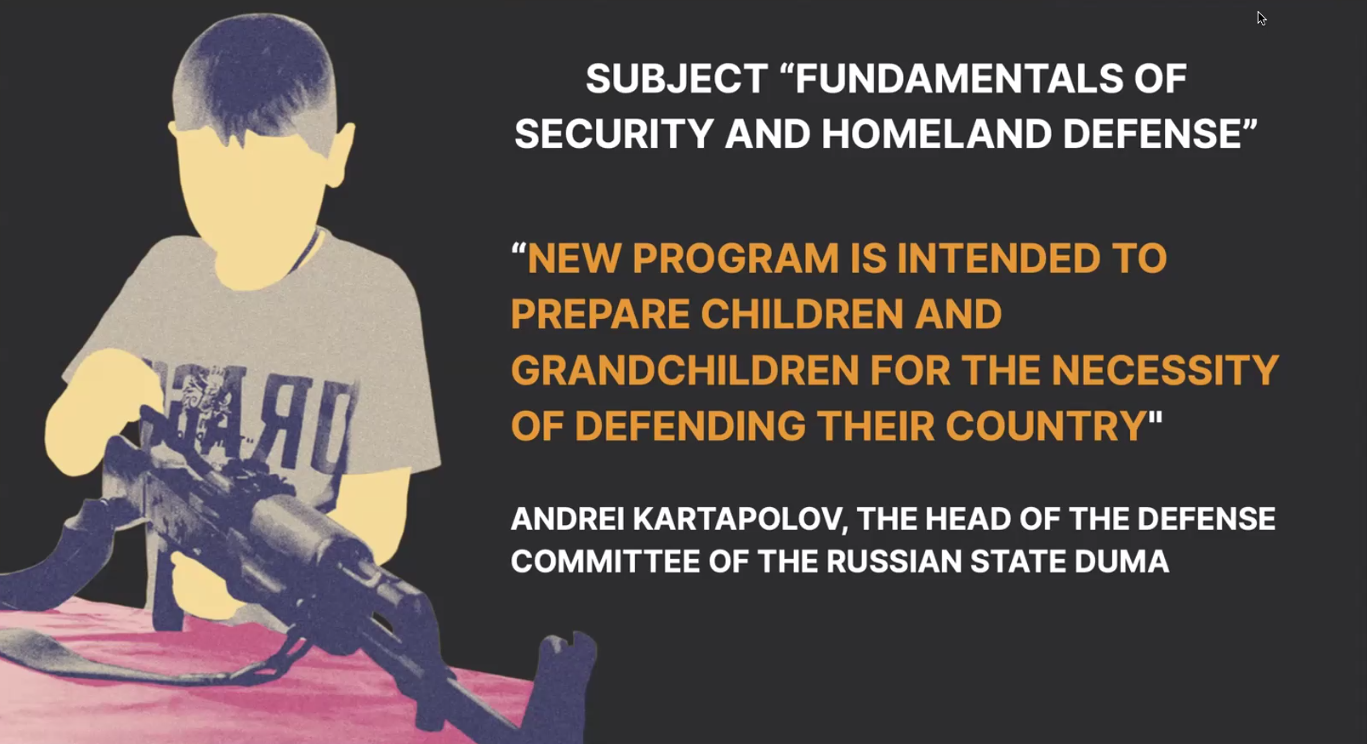
When we talk about these curriculum changes, we also see indoctrination increasing. Since this school year, war-oriented textbooks for fifth-grade students have been introduced, where previously they were only used in grades 10-11. These textbooks contain the same propagandistic narratives and have shifted responsibility for spreading this information away from teachers. Before, teachers could at least choose textbooks and somehow adapt. Now this possibility is gone.
Apart from this, Russia introduced a new historical model of the region in the temporarily occupied territories. This model specifically addresses their so-called historical and cultural dependence on the Russian Federation.
You may also want to read: From “soft power” to torture chambers: patterns of Russia’s seizure of new states based on Ukraine’s experience
Russia understands the value of this indoctrination because the number of hours for these lessons has increased this year.
Budget increase for youth policy
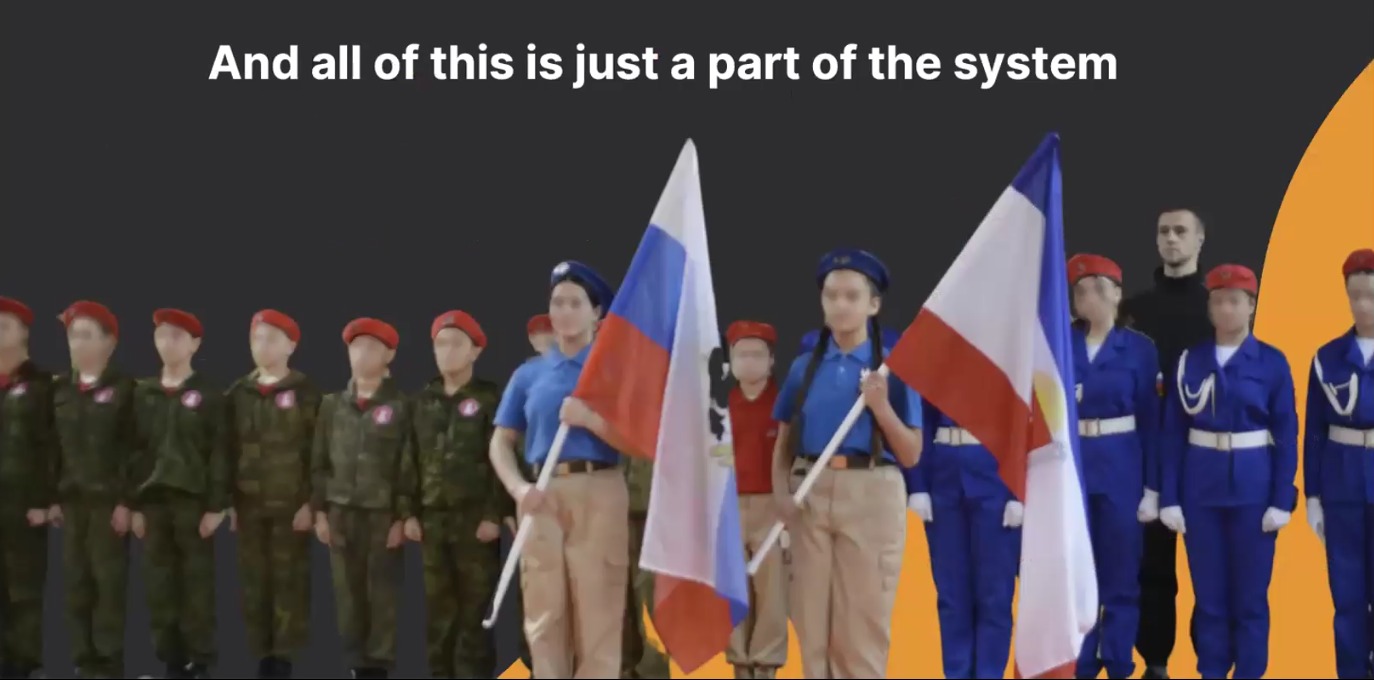
Russia has enhanced the military component in the occupied territories, increasing the number of cadet and special military classes. At least 479 cadet classes have been established in the temporarily occupied territories. Within the temporarily occupied territory of the Autonomous Republic of Crimea alone, the number of cadet classes increased 102-fold, from 3 in 2025 to 306 in 2025.
Furthermore, the costs that Russia is spending on the militarization and indoctrination of children are getting higher. 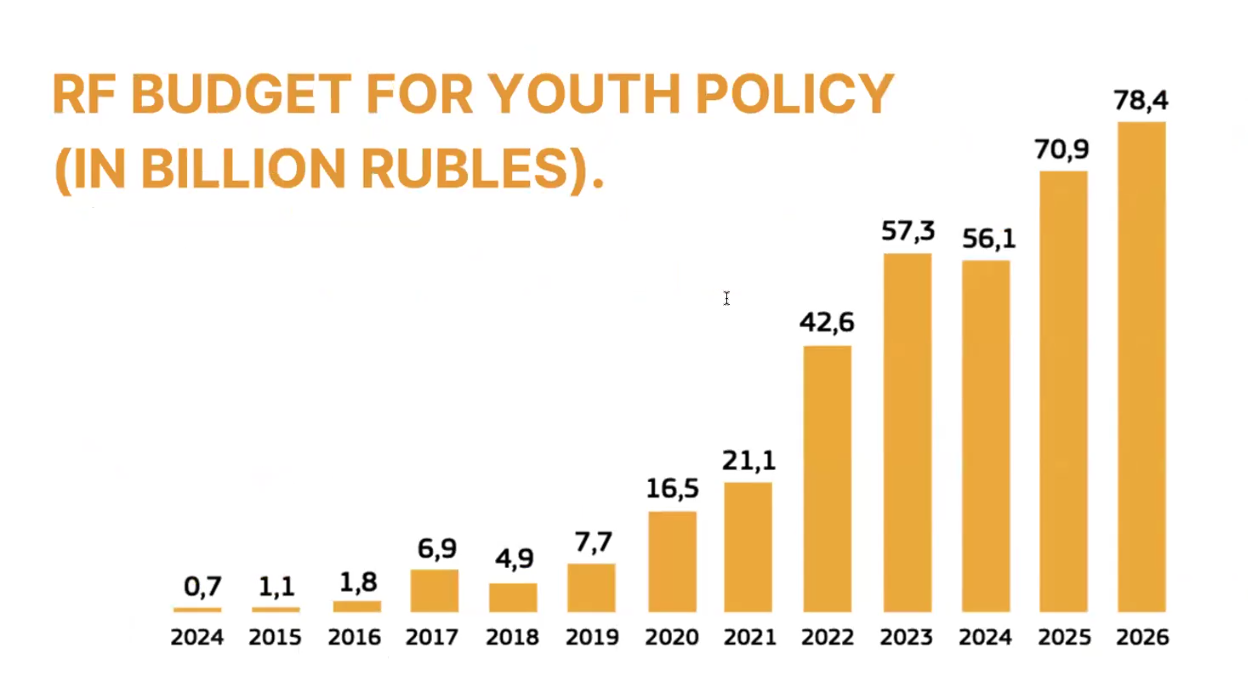
As of 2026, 44,000 children aged 8 to 18 from the temporarily occupied territories are members of the Young Army. In addition, over 344,600 children and young people aged six to 25 from the occupied territories are members of the “Movement of the Firstі “.
Unfortunately, we have documented youth who, at 18 years old, participated in the war against Ukraine — against their own country — and died on the battlefield fighting for the Russian Federation. This is what Russia wants to do with all our children: to put them in the fight against their own country. This is just part of the system.
For me, it’s always important to ask ourselves whether we have truly done everything possible to stop it, because I believe we have not. We do not have real numbers. We do not have real mechanisms to stop militarization and indoctrination. We do not have real mechanisms — even to pressure Russia to give our children access to Ukrainian education.
There is still a lot of room for us to do more.
Liked this column? Follow ZMINA on X and LinkedIn, and help shape our editorial focus by filling out our feedback form here.