Force cannot define international borders
The Fifth Summit of the International Crimean Platform was held at the U.N. headquarters in New York on September 24, 2025. More than 60 participants attended the event, including 19 heads of state and government, ministers, and high-level representatives from 34 countries across all continents and 7 international organizations.
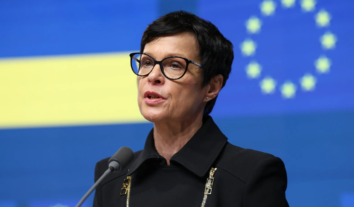
Among the speakers of the Summit was Taoiseachі of Ireland, Micheál Martin. He recalled that Russia’s aggression began with the illegal occupation of Crimea in 2014 and escalated into a full-scale war in 2022. According to him, Russia could end the conflict at once by halting its attacks and agreeing to a ceasefire, yet it continues to strike civilians and vital infrastructure.
ZMINA publishes his speech, which he gave during the Fifth Summit of the International Crimean Platform.
It has been over three years since the launch of Russia’s full-scale, unprovoked, and unjustified war of aggression against Ukraine. It’s been 11 years since this aggression began in Crimea with Russia’s illegal annexation.
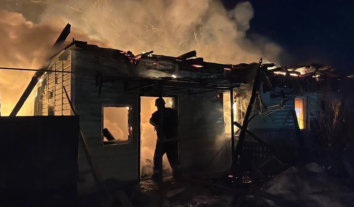
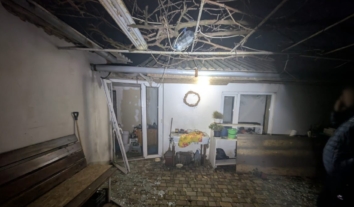
Russia could and should end its brutal war at this moment. All it has to do is halt its attacks, accept an unconditional ceasefire, and come to the negotiating table. But it chooses not to do so and instead intensifies its air attacks against Ukraine’s towns and cities, deliberately targeting civilians and essential infrastructure. These are not the actions of a country seeking peace.
Mr. President [Volodymyr Zelenskyy], you and the people of Ukraine have Ireland’s full support as you stand against this brutal Russian aggression. We cannot allow force to be the means by which international borders are defined. We cannot return to a world where we accept that might is right.
I hope that we have learned the painful lessons of history, not to allow this to happen. The international community must stand firm in our refusal to recognize the legitimacy of Russia’s actions.
When a state transgresses international law, as we have seen with Russia’s annexation of Crimea and its illegal full-scale war against Ukraine, it threatens not only the immediate victims and those on the front line but also unravels the fabric that binds our global community.
Ukraine is a sovereign, independent nation, and a full member of the United Nations. Like each one of us here, it must be afforded the fundamental right to peace and security and full respect for its internationally recognized borders.
Justice is not just a matter of principle; rather, it forms the very foundations from which we must build a comprehensive, just, and lasting peace for Ukraine.
Any peace agreement must uphold Ukraine’s sovereignty and territorial integrity based on respect for the principles of the UN Charter and international law. This includes continued recognition that Russia’s violation of these principles in Ukraine began not in 2022 but in 2014.
I am deeply concerned about the reports of human rights abuses in the occupied Crimea and in all the Ukrainian territories illegally held by Russia.
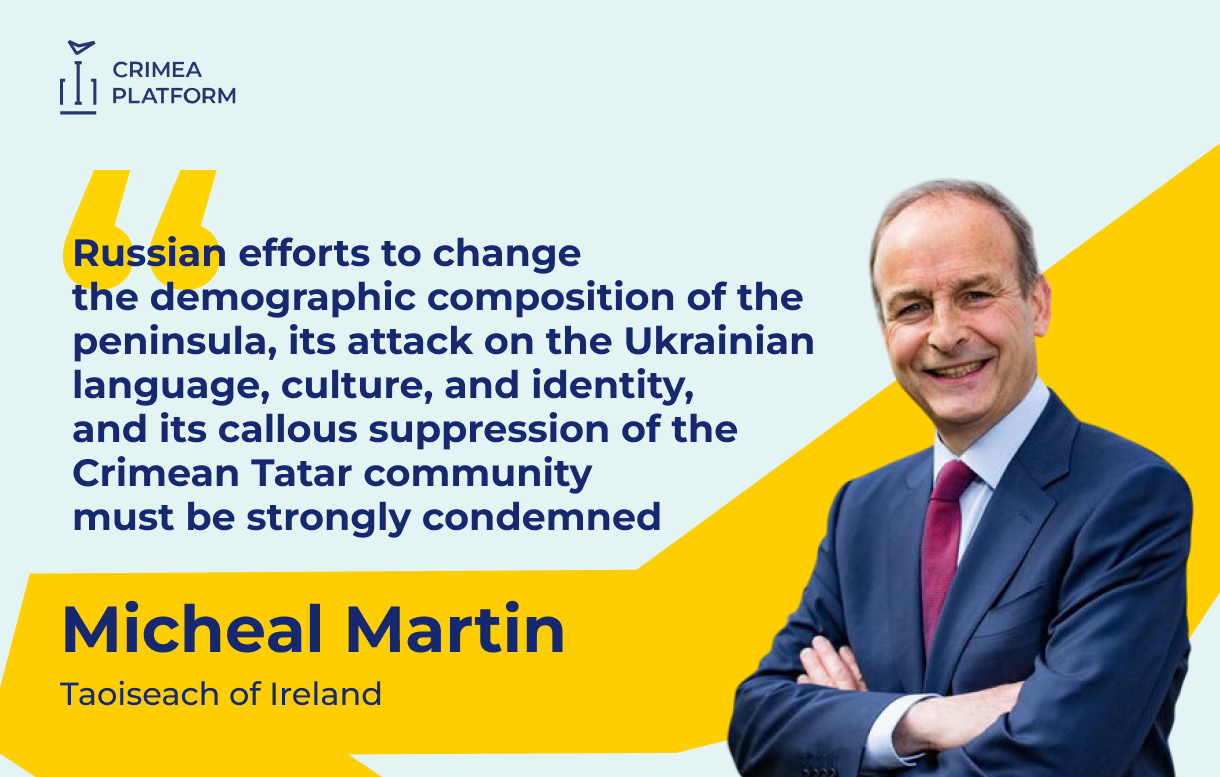
Russian efforts to change the demographic composition of the peninsula, its attack on the Ukrainian language, culture, and identity, and its callous suppression of the Crimean Tatar community must be strongly condemned.
Read also: 11 years of oppression and repression: how human rights in occupied Crimea are approaching zero
Ireland welcomes and supports the New York Declaration, and I use this opportunity again to reiterate Ireland’s firm condemnation of the Russian Federation’s continued aggression against Ukraine.
We salute you, President Zelenskyy, and your government for your leadership, resilience, and courage. It continues to inspire. Ireland and the European Union will always stand with the Ukrainian people for as long as it takes.
Slava Ukrayini.