“War is when your sister dies of her wounds in your arms while Russians torture your son for ten months”: how a mother searched for missing Ivan Zabavskyi in Russia
According to the Human Rights Centre ZMINA and the Media Initiative for Human Rights, the number of victims of politically motivated persecution by Russia may range from 5,000 to 6,000 Ukrainians. They include both service members and civilians. The occupation authorities stage sham trials over crimes they did not commit or for actions that should not be considered crimes at all.
These proceedings are marked by numerous human rights violations, including the use of evidence obtained under duress or through torture, as well as violations of the presumption of innocence and the right to counsel of choice.
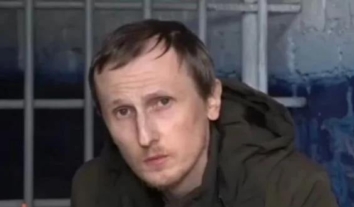
Ivan Zabavskyi, a resident of Tavilzhanka in the Kharkiv Region (Oblast), was subjected to such a Russian sham trial. He was abducted while travelling to pick up his mother from occupied territory and was subsequently held in basements, where he was tortured and forced to sign a “confession” to a crime he had not committed. He was later transferred to Russia, where he was accused of “espionage” on behalf of Ukraine and sentenced to 11 years’ imprisonment. Zabavskyi is currently being held in Penal Colony No. 4, a maximum-security correctional facility in the settlement of Fornosovo, Leningrad Oblast, Russia.
His mother, Maryna Zabavska from Tavilzhanka, learned about the trial through Russian propaganda media outlets. Before that, she had spent nearly two years unsuccessfully searching for her son in Russia and in the occupied territories, while risking persecution herself because she is a Jehovah’s Witness. Maryna spoke to ZMINA about her search for her son and the sham trial against Ivan Zabavskyi.
Her sister bled to death in occupied Tavilzhanka
On 24 February 2022, Russian forces occupied the village of Tavilzhanka in the Kharkiv Oblast. In September of the same year, the Ukrainian army launched a counteroffensive in the Kharkiv region, which led to the liberation of almost the entire Oblast.
During the breakthrough, the Armed Forces of Ukraine reached the Oskil River and began fighting in Tavilzhanka. Caught in the midst of the hostilities, Maryna took shelter in her sister’s basement.
“At that time, I was alone because my son was living in Kharkiv. Whenever I managed to get a signal in a field or somewhere on higher ground, I would call him. To survive the shelling, my sister and I hid in her cellar. She lived two houses away,” the woman recalls.
 Ivan Zabavskyi. Photo provided by Maryna Zabavska
The woman recalls enemy military vehicles moving through the village, while power lines lay scattered across the roads. Domestic animals [pigs, chickens, dogs, and cats] roamed around Tavilzhanka because houses and sheds had been destroyed. The village had neither electricity nor communication services.
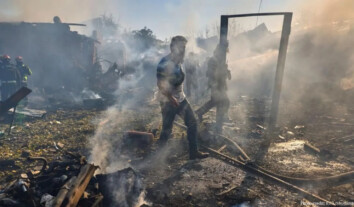
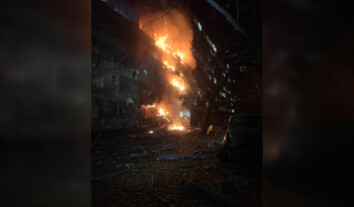
Due to the shelling, the village was left without gas, forcing her sister to cook outside on a barbecue grill. On 25 September 2022, during another round of shelling, she tripped and fell near her doorstep while running towards the house. At the same time, an explosion occurred near her home, leaving her with multiple shrapnel wounds.
“At the time, I was in the basement. I could hear an exchange of fire between our forces and the enemy. Then I heard my sister scream and ran outside. I saw her lying there covered in blood. She had massive lacerations on her thighs, legs and arms. Her jacket looked like a sieve. I dragged her inside. I understood that she needed help […] Everything was destroyed. Almost everyone had left. There was no one I could turn to,” the woman says.
In an attempt to save her sister, Maryna ran outside and saw a Russian tank. A Russian tank crew member climbed out and asked whether she needed help. She replied that it was not her but another person who needed assistance. The occupier promised to call someone over the radio, but no one ever arrived.
“My sister was dying for two and a half hours […] She was in shock and kept writhing in pain. We needed haemostatic supplies and anti-shock medication, but we had nothing like that. I took white bed sheets and pressed them against her wounds. She bled to death. Meanwhile, the fighting continued,” Maryna recalls.
For two consecutive nights, the woman dug a grave in her yard to bury her sister. Before laying her to rest, Maryna washed and changed her sister’s clothes.
On 28 September 2022, Zabavska decided to leave the occupied territory for Russia. Russian soldiers helped her do so by transporting her in an armoured personnel carrier to the outskirts of the village. From there, she travelled by various means of transport to Budyonivka, where she met acquaintances who gave her shelter.
The following day, the woman called her relatives, who informed her that her son had set out from the settlement of Dvorichne to Tavilzhanka to pick her up.
“I nearly lost consciousness […]. My God, where had he gone? According to the battlefield maps, our house was in the green zone on 30 September 2022. That meant it was supposedly under Ukrainian control, but in reality, the Russians were still there. I knew they had already been taking young men away from that area,” the woman says.
She later learned from witnesses that Ivan had delivered bread to Dvorichna in his car. After borrowing a bicycle from local residents, he set off for Tavilzhanka to collect his mother. Before leaving, he told the family he had planned to evacuate to Kharkiv to get ready because he would return shortly. However, he never came back, and Zabavskyi disappeared without a trace.
 Photo provided by Maryna Zabavska
According to Maryna, local residents often informed on people to the Russians. In one such case, the occupiers detained her neighbours – a father and son – at a checkpoint. They were held for two weeks before being released. According to reports, in the neighbouring village of Horobiivka, the occupiers killed a man whose naked body was later found by local residents. In 2023, Russian forces reportedly executed an elderly couple there because their sons were serving in the Armed Forces of Ukraine.
“They also took my niece from her home in December 2022. She spent a year and a half in Russian captivity… She was returned in May last year, weighing just 40 kilograms,” the woman says.
She spent eight months searching for her son in Russia and occupied Luhansk
According to Zabavska, before the full-scale invasion, her son sold shawarma from a kiosk in Tavilzhanka. From August 2022, while living in Kharkiv, Ivan began volunteering by delivering food and medicine to de-occupied areas of the Kupiansk District, Kharkiv Oblast.
After her son disappeared, Maryna travelled to the Voronezh Oblast. She feared not only for her son but also for herself, as she was a member of the Jehovah’s Witnesses, whose followers face persecution in Russia.
“I was frightened, but I endured it all for my son. I stayed in the Voronezh Oblast for eight and a half months. Three months later, I hitchhiked back to Tavilzhanka to collect some belongings,” the mother recalls.
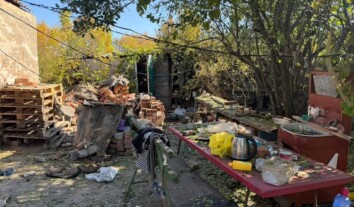
The woman barely recognised her half-destroyed and looted home. Most of the roof was gone, and fragments of missiles shot down by Russian air defence systems lay scattered across the yard. According to Maryna, the Russian occupiers had positioned an air defence system opposite her house, which intercepted targets above residential homes.
“They were stationed in the forest. Fragments of a downed missile were lying in both my sister’s yard and mine. I collected my documents and some belongings that had survived. As I was walking along the road, I met a neighbour riding a bicycle. He told me to visit Marusia because she had something to tell me about Ivan. When I went to see her, she said she had seen two Russian soldiers escorting my son. Ivan greeted her and told her that his surname was Zabavskyi,” she adds.
After hearing this, Maryna decided to visit her niece but did not find her at home. Neighbours told her that the occupiers had taken the young woman away. When she spotted a Russian patrol, Zabavska asked whether they knew where her niece had been taken. They replied that she had been transferred to the settlement of Troitske in the Luhansk Oblast.
“The occupiers were living in one of the local houses. I went there and asked them about Ivan, but no one knew anything. Later, I learned that they were members of the so-called DPRі forces,” the woman recalls.
She travelled three times from the Voronezh Oblast to Tavilzhanka to rescue her pets. The first time, she took her dog, and later she returned for her two cats.
During the “filtration” process at the Lohachivka checkpoint, Russian officials recovered all deleted files from Maryna’s phone, including a copy of the Bible. She was immediately taken to a separate room for questioning and held there for three hours. She was interrogated about her son, Jehovah’s Witnesses, religious literature, and her Zoom communications with fellow believers.
After returning to the Voronezh Oblast, Maryna continuously submitted enquiries to both the Russian Red Cross and the International Committee of the Red Cross. Two or three times a week, she called the hotline of Russia’s Human Rights Commissioner, Tetiana Moskalkova, hoping to obtain any information about her son. Zabavska also contacted the Russian Ministry of Defence to learn Ivan’s whereabouts.
In January 2023, Maryna filed a missing person report with the local police department regarding her son’s disappearance. She was told that “they do not search for foreigners” and was advised to contact the Red Cross instead.
In her search for Ivan, Maryna travelled from the Voronezh Oblast to occupied Luhansk. During the “filtration” process, she was asked whom she was visiting and for what purpose. She replied that she was travelling to see her sister.
“A fellow believer lived there and offered me a place to stay. In Luhansk, I went to see the so-called ‘DPR Human Rights Commissioner’, Serdiukova. Because the queue was enormous, I never managed to see her. There were many other people there searching for their relatives as well. I submitted a request regarding my son’s disappearance and left. Later, I received a reply saying that they had no record of him. The ‘DPR police’ refused to accept my report and simply took down my personal data. I also wrote to the so-called ‘DPR Ombudsperson’, Morozova, and to their ‘Ministry of Justice’. They, too, replied that they had no information about him,” the woman recalls.
In an effort to find her son, Zabavska travelled to the Belgorod Oblast. There, she also filed a missing person report with the Russian police but was told that Ivan was not in Russia.
The woman also submitted an enquiry to the FSB and later contacted Belgorod Pre-Trial Detention Centre No. 2. Staff at the facility told her that no such person was being held there. She then went to the military commandant’s office, where officials refused to accept her statement, claiming that they “knew nothing and had not detained anyone”.
“At the military commandant’s office, they invited me inside because I refused to leave. They asked where I lived and requested that I show the location on a map. Then they asked where exactly Ivan had intended to evacuate me – to Russia or to Ukraine. I replied that it was to Ukraine. In other words, they were interested in finding out whose side he supported,” the mother says.
At some institutions, Maryna was asked why she did not have a Russian passport. She replied that she had not had time to obtain one.
You may also want to read: From “soft power” to torture chambers: patterns of Russia’s seizure of new states based on Ukraine’s experience
On 12 March 2023, Maryna called her son’s phone number. An unknown man answered the call, and she asked him where Ivan was. He replied that Ivan had been detained and was being held at a police station. When she asked where exactly he was being held, the man instead asked where she was calling from. After Zabavska said she was calling from the Voronezh Oblast, the Russian man said he would get Ivan. However, her phone credit ran out, and the call was disconnected. After topping up her account, she called again, but this time no one answered.
On 23 May 2023, Maryna came across a list of detainees on the Telegram channel “Vernis Domoy”і , where she spotted her son’s surname. She contacted the channel administrator and asked about Ivan’s whereabouts. He replied that Ivan was being held in a pre-trial detention centre in Belgorod.
 Photo provided by Maryna Zabavska
“Then I received a response from the Russian Ministry of Defence stating that my son had been detained for opposing the ‘special military operation’. After that, I realised that no one was going to tell me anything more. On 13 June, I left through Kolotylivkaі and travelled to Sumy [Ukraine], and from there to Kharkiv [Ukraine]. When I was on the road, I had eight bags, a dog, and a carrier with two cats,” the woman says.
At the checkpoint in Kolotylivka, Russian officials threatened to shoot her dog if it got loose. They not only searched all of Maryna’s belongings but also forced her to show her kitchen appliances. The occupiers also confiscated old photos of her grandparents, although they later returned them.
“They said: ‘This is a family heirloom. We do not allow photos like these across the border.’ After a thorough inspection, they took me into a building where they were supposed to examine my phone. Since I only had a basic mobile phone, they simply asked me: ‘What do you think about the war?’ I replied: ‘I think it’s terrible because people are dying on both sides’,” she recalls.
When Zabavska reached the Sumy Oblast, Ukrainian border guards told her that all the fields on either side of the road had been mined. They also asked whether she realised that a single wrong step could have proved fatal.
“They saw me running through the bushes. But I was only tying up my dog so that he would not run off. I was fortunate that everything turned out all right. God was watching over me. They took me to Pokrovka [Sumy Oblast], where they fed my dog and cats. They even gave me a larger pet carrier for my furry companions. You know, I was so happy, and for the first time in a long while, I felt at peace,” the woman says.
From the Sumy Oblast, the woman was taken to Kharkiv, where she continues to live today.
Once back in Ukraine, the woman filed a missing person report with the police regarding her son. She also submitted requests concerning the search for Ivan to the Security Service of Ukraine, the Coordination Headquarters, the Ombudsperson, and the International Committee of the Red Cross.
During the first ten months of his captivity, Ivan was beaten and tortured every day
Later, in 2024, journalists from the Russian media outlet Mediazona contacted Maryna to inform her about the sham trial of her son. As it turned out, the Russian occupiers had convicted Ivan on “espionage” charges in Saint Petersburg, where he was being held in Pre-Trial Detention Centre No. 3.
“Imagine that – it came completely out of the blue. I started searching social media and found articles about him, along with his photos. The reports said that he was on trial. It was a terrible shock for me. I cried and screamed,” the woman recalls in horror.
After that, Zabavska was advised to hire a lawyer to represent her son in court. However, the Russian authorities were reluctant to allow Ivan to replace his state-appointed lawyer with privately retained counsel. Eventually, the lawyer was replaced after the appropriate motion had been submitted.
“Ivan was threatened that if he signed his consent to replace the lawyer, his detention conditions would worsen”, the mother says.
Russian investigators allowed Maryna to speak with her son by telephone twice while he was being held in Pre-Trial Detention Centre No. 3 in Saint Petersburg. Ivan told her that he was all right, that he was being fed and allowed to use the bathhouse. He also managed to say that he had only wanted to take her out of the occupied territory. In turn, his mother told him about all the places where she had searched for him.
 Photo provided by Maryna Zabavska
“He told me that he had spent eight or nine months in the same clothes in Stary Oskol. In other words, he was wearing the same black T-shirt and tracksuit bottoms that he had on when he left Dvorichna to come and get me. I also learned that he had been held in a filtration camp in Shebekino,” she adds.
In July 2024, Ivan was transferred from Pre-Trial Detention Centre No. 3 in Saint Petersburg to Pre-Trial Detention Centre No. 6 in Gorelovo.
In his letters, Ivan wrote to his mother that he was being held in a cell with 60 Russians. After two years in Russian captivity, he was finally allowed outside for walks. Before that, Zabavskyi had been kept in complete isolation and had not seen either the sun or the sky.
“He says: ‘Mum, it feels so good just to see the sky. I hadn’t seen the sky for two years because I was kept in a cellar.’ He has suffered from allergies since childhood. I used to buy him expensive vitamins, and the symptoms would go away. Now Ivan’s body is covered with non-healing wounds. After the beatings, he developed problems with his legs, joints and teeth. He is in a very poor psychological and emotional state, and red blotches have appeared all over his body. Sometimes the medication sent to him is delivered, and sometimes it is not,” the woman says.
During the sentencing hearing, Ivan stated in his final address to the court that during the first ten months of his captivity, he had been beaten every day and subjected to electric shocks.
“During the first eight days after his detention, he was tortured continuously. With his face covered in blood, the Russians thrust documents in front of him and forced him to sign them. He told me that in Stary Oskol, he was brutally beaten two or three times every day. His legs were covered in bruises of different colours. There were constant interrogations. There was lice and dysentery. They were starved, receiving only 150 grams of food a day. He said he wanted to die. It was incredibly painful for me to read about what they had done to him,” the woman recalls.
In his statement, Ivan said that the Russians had “liberated” him from his brothers, sisters, car and home. All because the occupiers had found what they considered “toxic” photos on his phone.
He was unlawfully convicted under Article 276 (“Espionage”) of the Criminal Code of the Russian Federation and sentenced to 11 years’ imprisonment, without credit for the ten months he had already spent in basements and in Stary Oskol.
Zabavskyi is currently being unlawfully held in Penal Colony No. 4, a maximum-security correctional facility in the settlement of Fornosovo, Leningrad Oblast. The cell where he is being held houses 40 prisoners at a time, the majority of whom are criminal prisoners, while only three are Ukrainians.
The woman believes that the Russians took Ivan to his home in order to verify whether he had indeed been on his way to collect his mother. When they arrived at the Zabavskyi family home, they found that no one was there.
“I left home on 28 September, and they brought him there on the 29th. His friends told him not to go, but he could not sleep or find peace knowing that I was still under occupation. He told one of his friends: ‘You see, I am so worried about my mum that I haven’t slept for a week’,” she recalls sadly.
According to Maryna, Ivan is a very active, cheerful and positive person. He always supported her and tried to help her in every way he could.
“He built his business entirely on his own, purchasing all the equipment needed to make shawarma. He was only 22 at the time. Now he is 29. My son and I are very close, and I love him very much. Because he is in captivity, I am in such a depressed psychological state that I struggle even to carry out simple household tasks,” his mother says sadly.
The woman appealed to the Ukrainian authorities to help bring back her only son. Like many other captives, he has been unlawfully imprisoned in Russia, where his health is deteriorating because of inhumane detention conditions and torture. In her view, the Russian occupiers are sentencing Ukrainian civilians simply because they are Ukrainians.
“Very few captives from our community, “Tsyvilni v poloni”і , have been released. We organise public actions, travel abroad, and regularly meet with representatives of the Coordination Headquarters. I have travelled from Kharkiv to Kyiv 17 times to remind officials about my son. Yet nothing changes. The authorities must not forget about civilians who are Ukrainian citizens. They must continue fighting for them and for their return,” Zabavska says.
Join us on X, BlueSky, and LinkedIn for daily human-rights updates – and help shape ZMINA’s English coverage by sharing your thoughts here.