Repression of political prisoners in Belarus: five Ukrainians remain behind bars
Solitary confinement. Punishment for suicide attempts. Denial of medical care. This is how UN experts have characterised detention conditions in Belarus, where people are held without access to lawyers and subjected to inhuman treatment that sometimes results in deaths in custody.
There are currently around 842 known political prisoners in Belarus. Many were arrested after the rigged 2020 presidential election, which triggered mass protests, while others have been persecuted for opposing Russia’s invasion of Ukraine, which Belarusian dictator Alexander Lukashenko has actively supported.
According to the Belarusian human rights organisation Viasna, more than 20 foreign nationals are currently imprisoned in Belarus on politically motivated charges. Those serving sentences include a Lithuanian and a French national, a Latvian, several Poles and Russians, and at least five Ukrainians. Ukrainian nationals are most commonly accused of “espionage”, “agent activity”, “sabotage” and “cooperation with Ukrainian intelligence services”.
A year ago, ZMINA published the stories of 15 Ukrainian citizens who had been detained and imprisoned in Belarus.
In this article, we look at the cases of Ukrainians who remain imprisoned in Belarus and share the testimonies of those who were released through US mediation in exchange for the easing of sanctions.
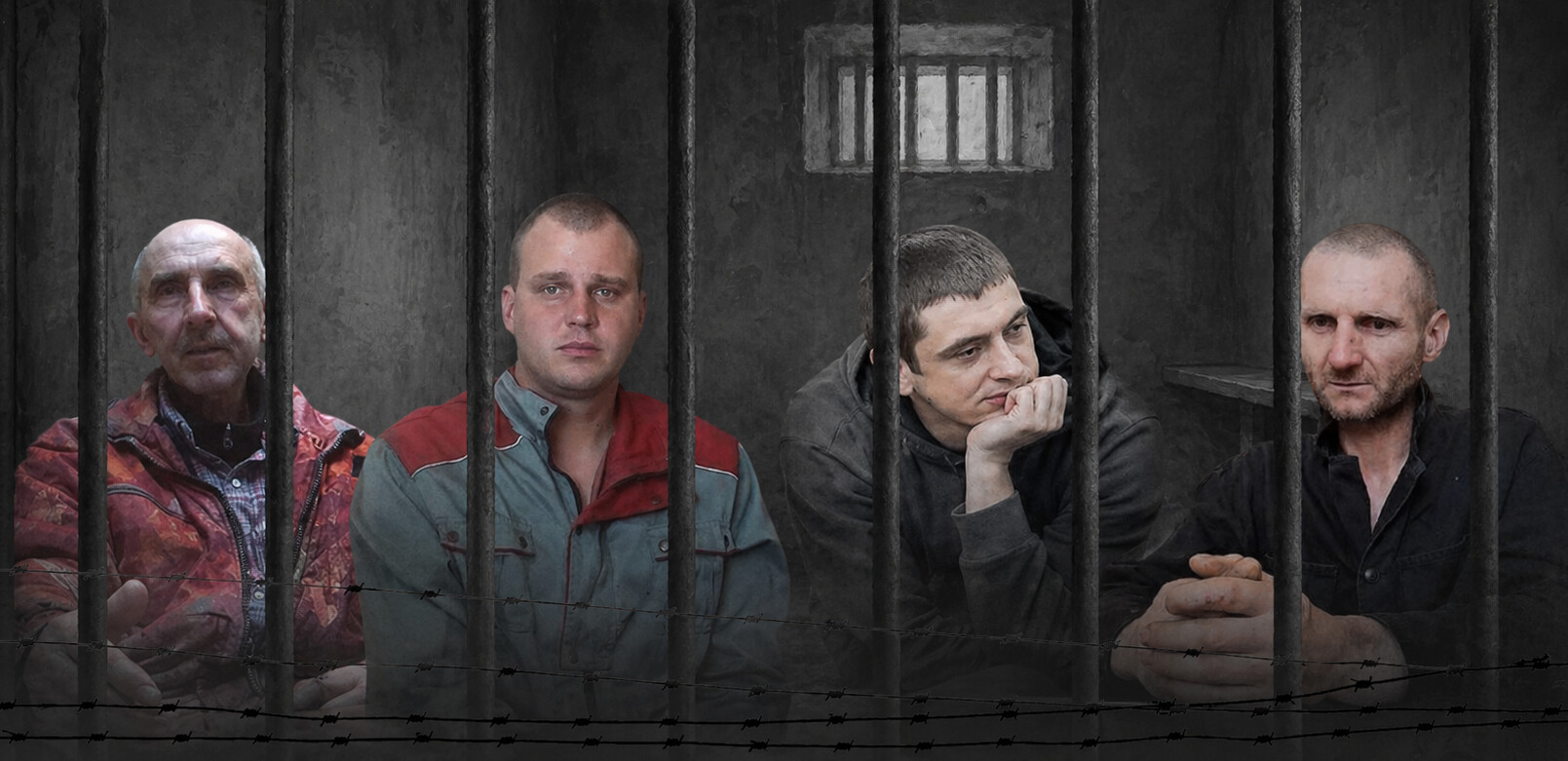
At least five Ukrainians remain imprisoned in Belarus on politically motivated charges
Thirty-nine-year-old Ukrainian citizen Serhii Boiko has remained in detention for a third consecutive year. He lived in the Belarusian city of Narowlya. In the summer of 2023, he was sentenced to seven years’ imprisonment on charges of “agent activity” (Article 358-1 of the Criminal Code of Belarus). He was also added to the list of individuals allegedly involved in extremist activities. He is currently being held in Correctional Colony No. 1 in Belarus.
Ukrainian gamekeeper Viacheslav Borodii faced an even longer list of accusations. In December 2024, he was sentenced to 10 years in prison for alleged “agent activity” (Article 358-1 of the Criminal Code of Belarus), “illegal handling of firearms” (Part 4 of Article 295), “illegal crossing of the state border” (Part 3 of Article 371), and several other fabricated offences. The 44-year-old was detained in Belarus’s Yelsk District, which borders Ukraine’s Zhytomyr region. Details of his case emerged from a propaganda film claiming that Borodii had “undergone training at a Defence Intelligence of Ukraine training centre” and had also “cooperated with the Security Service of Ukraine”. He is currently being held in Correctional Colony No. 17.
 Photo: Viacheslav Borodii
A father and son, Serhii and Pavlo Kabarchuk, received a combined sentence of 40 years in prison. Former Ukrainian border guard Serhii Kabarchuk, 61, and his 31-year-old son Pavlo were detained in Belarus’s Lyelchytsy District in February 2024. In October 2024, a court found the father and son guilty of being “members of a sabotage and reconnaissance group who, acting on instructions from the Security Service of Ukraine, transported explosives intended for future terrorist attacks in Russia and Belarus”. They were charged with preparing an act of terrorism (Part 1 of Article 13 and Part 3 of Article 289), illegal handling of firearms, ammunition and explosives as part of an organised group (Part 4 of Article 295), agent activity (Article 358-1), and the illegal cross-border transportation of toxic substances, firearms, ammunition and explosives (Part 3 of Article 333-1). Each of the Kabarchuks was sentenced to 20 years in a high-security penal colony and fined 28,000 Belarusian roubles. While in pre-trial detention, Serhii was diagnosed with cancer and is currently serving his sentence in Correctional Colony No. 8. Pavlo was tortured and deliberately starved in the KGB pre-trial detention centre and is now being held in Correctional Colony No. 4.
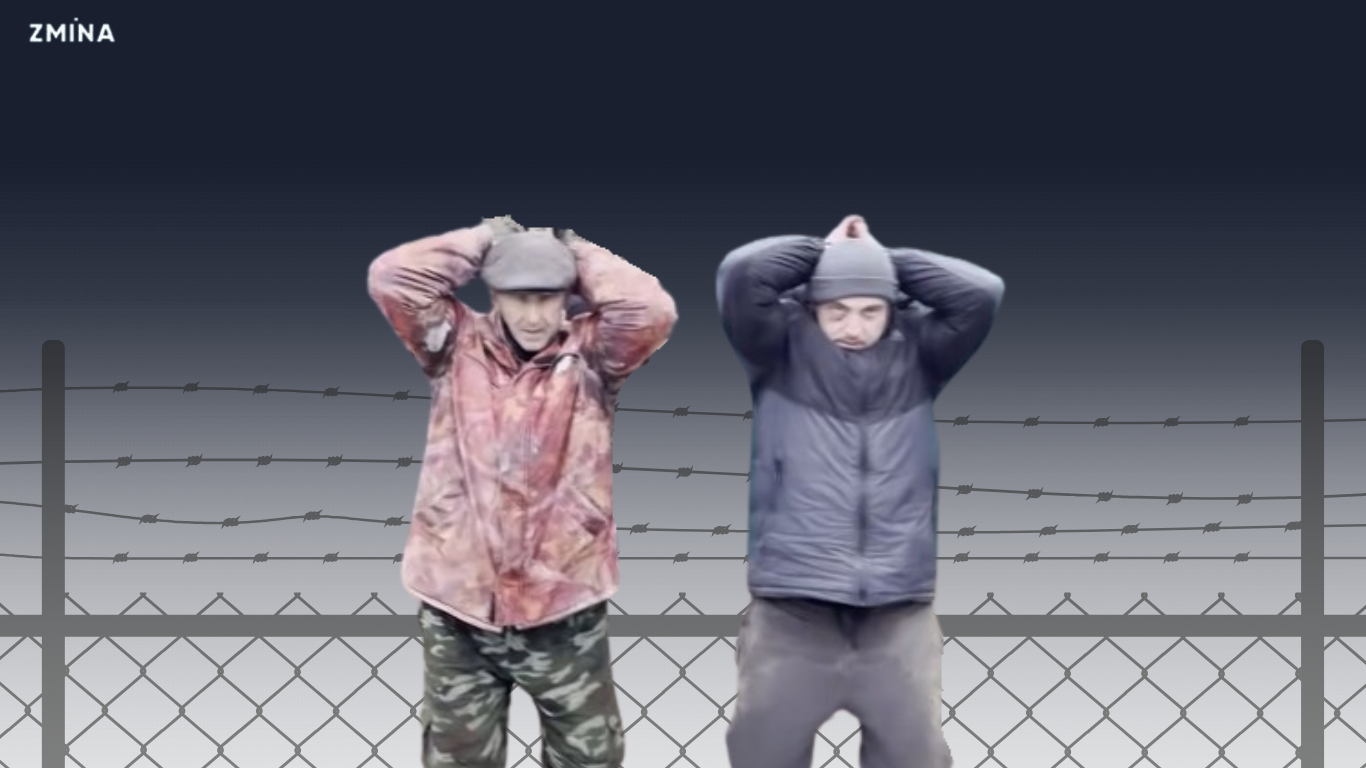 Photo: Serhii and Pavlo Kabarchuk
Ivan Lykholat was also sentenced to 20 years in prison. The Ukrainian had been living in Belarus since 2013. He was married to a Belarusian woman and raising minor children when he was detained for allegedly “cooperating with the Security Service of Ukraine”. In October 2024, he went on trial alongside two Belarusian nationals, Barys Pukhalski and Ivan Barodych, in a case concerning the alleged “preparation of a railway bombing”.
The prosecution alleged that Lykholat had “established contact with the Security Service of Ukraine, which instructed him to blow up railway tracks, and that he, in turn, recruited Barodych and Pukhalski, who allegedly had expertise in explosives”. Ivan Lykholat’s place of detention is currently unknown.
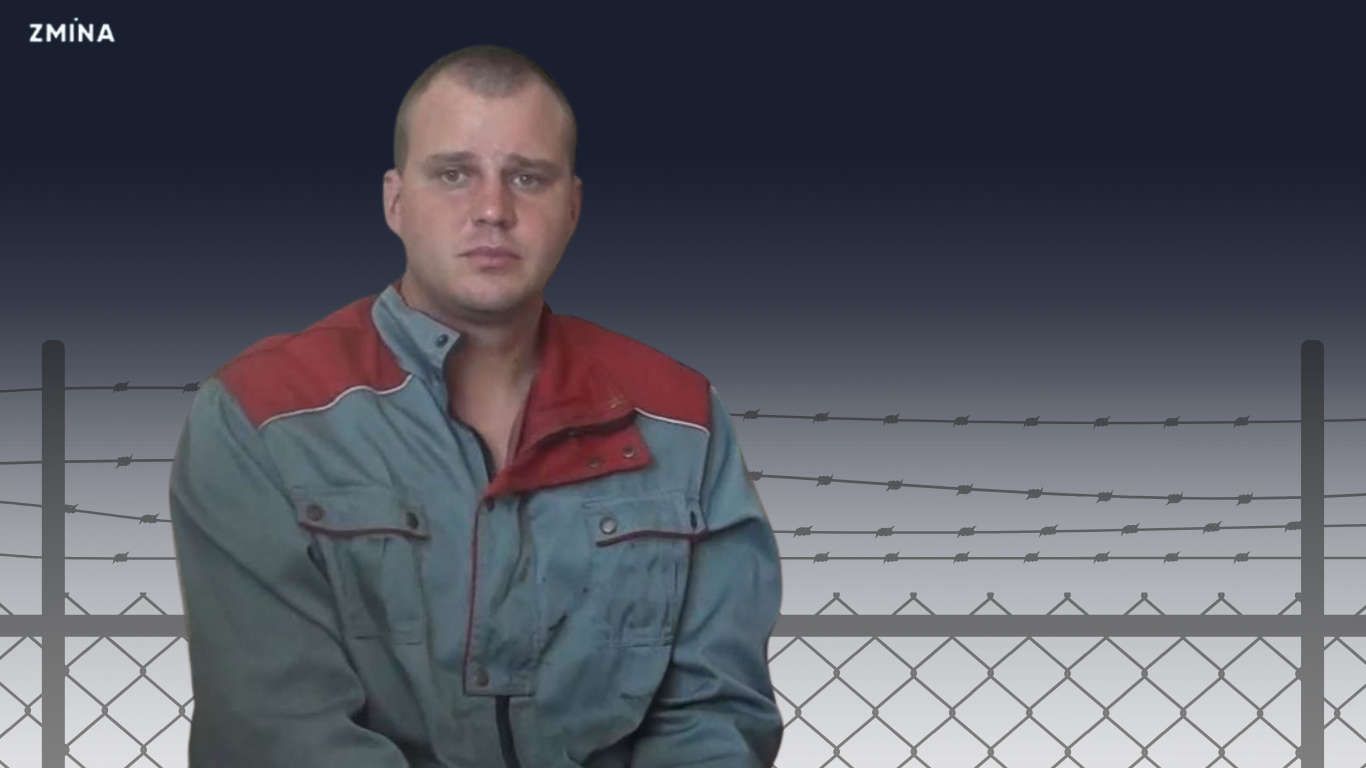 Photo: Ivan Lykholat
Torture, blackmail and “special” treatment of Ukrainians in prison
Political prisoners in Belarus are subjected to torture, blackmail and constant pressure. Having a Ukrainian passport only makes the situation worse: Ukrainians are often labelled as “agents”, persecuted, forced to give false confessions and subjected to abuse behind bars.
Ukrainians Olha and Mykola (names changed for security reasons) described to the human rights organisation Viasna what they had endured in Belarusian detention.
The couple arrived in Belarus from a European country where they had been living since 2023. Their hometown in Ukraine is currently occupied by Russia, and Russian soldiers are living in their house. Olha and Mykola planned to settle in a village in Belarus, find simple jobs and be able to see their son, who remains in Russian-occupied territory.
Shortly after their arrival, however, the couple were detained and accused of agent activity, espionage, terrorism and other serious offences.
After the couple had found work, Mykola received a call from the migration service and was asked to come in to sign some paperwork. When they arrived, armed special forces officers seized them, put them in handcuffs and drove them in an unmarked minibus to a basement for questioning. They were interrogated separately.
“A KGB officer told me that I was facing 24 years in prison for espionage, extremism and terrorism. They supposedly had all the evidence and claimed that my husband had confessed, so I had to cooperate with them; otherwise, something very bad would happen to my child. I told them that my husband, my son and I were not spies and had never cooperated with any intelligence service in the world, but they put me through a polygraph test and checked every word I said. The KGB officers told me, “You [ethnic slur for a Ukrainian woman], we don’t believe you”. So it was all because I had a Ukrainian passport“, Olha says.
Olha and Mykola were held in inhuman conditions for six months without a change of underwear, hygiene products or any opportunity to contact a lawyer or their family. Mykola was tortured, forced to sign fabricated charges, and threatened with sexual violence against his wife and the imprisonment of his son, which ultimately caused serious damage to his mental health.
“I do not even know how to describe it all so that people can read it and understand… I would go to the toilet, and they would pour urine over me. During interrogations, they would sit me on a chair with a hole in the middle and kick me or beat me in the groin with sticks“, Mykola recalls of the abuse he endured.
In late November 2025, after six months of torture, Olha was taken somewhere in a minibus while handcuffed and blindfolded. When the blindfold was removed, she saw a Ukrainian bus bearing the words “Coordination Headquarters for Prisoners of War”. Her release came as a complete surprise.
“I did not know that any exchanges were taking place. In the pre-trial detention centre, they told me that Kyiv had already been bombed out, that half of Ukraine no longer existed and that Russia had taken over the country. But then we arrived in Kyiv by bus, and I looked around and saw life everywhere – people were out on the streets and everything was functioning“, she says.
A few weeks later, her husband was released in the same way. Olha and Mykola are now undergoing rehabilitation with the support of Ukrainian specialists.
They hope that their interview will help as many people as possible learn what is really happening in Belarus. Hardly anyone talks about it. Even in Ukraine, many people are surprised to hear that we came from Belarusian captivity while Russia’s war against Ukraine is still ongoing.
“Before going to Belarus, I spoke to Ukrainians who live there, and for some reason not a single person told me that things like this were happening. I had no idea. Everyone wrote about how great it was there, that there was work, and that people were kind and liked Ukrainians. It was as though they had all copied the same script. But once I saw what was really happening there, how the law is enforced and how much power the police and the KGB have… People are imprisoned on fabricated grounds. It is a police state“, Olha says.
As Viasna explained, this practice is characteristic of the Lukashenko regime: it first imprisons innocent people and keeps them in prison for months or even years in an attempt to break them, before releasing them in exchange for the easing of sanctions against Belarus.
 Photo: Lidiia Hruk at the time of her release. Photo credit: Serhii Nuzhnenko / Radio Svoboda
According to Anastasiia Vasylchuk of the Belarusian human rights organisation Viasna, 342 people were “pardoned” with US mediation during 2025, the majority of them political prisoners.
Ukrainians have also been returned from Belarusian captivity. Five civilians were released in 2024, 31 people returned home in November 2025, and another five former political prisoners were released in December of the same year. They ranged in age from 18 to over 50 and included people with serious illnesses, including cancer.
Among those released on 22 November 2025 was 18-year-old Mariia Misiuk, who had spent two years behind bars on charges of “creating an anarchist cell to prepare terrorist attacks”. Mykhailo Stoliarchuk was also released after being sentenced to six years in a penal colony for allegedly “collecting information about military equipment on the territory of Belarus”.
Thirty-year-old Lidiia Hruk, a mother of four, has also returned to Ukraine. She was sentenced in 2024 to four years in prison for “agent activity”. Her husband, Belarusian national Yevhen Hruk, was sentenced to 24 years for “helping Ukraine” and is serving his “sentence” in Correctional Colony No. 17 in Belarus.
Many political prisoners, including five Ukrainian citizens, remain behind bars in Belarus, facing fabricated charges, abuse and inadequate conditions of detention. Human rights defenders continue to document their cases, while the issue of their release and return home remains a matter of international concern.
This article was produced with the informational support of the NGO Viasna and the Office of the Belarusian Democratic Forces.