Komyshuvakha death toll rises to 33 after Russian airstrikes
The death toll from Russian airstrikes on the settlement of Komyshuvakha in Zaporizhzhia Region (Oblast) has risen to 29 people, president of Ukraine Volodymyr Zelenskyy stated during a joint press conference with German Chancellor Friedrich Merz on 3 November 2026.
At least five more people were injured, and more than 50 are considered missing. Search-and-rescue operations are under way at the site.
“Behind every figure is a human life, a family that has lost those dearest to them or is still waiting for news about their loved ones,” the acting head of the Zaporizhzhia Oblast Military Administration, Mykhailo Semikin, said in a social media post.
The official said the scale of the tragedy is significant, and rescuers continue to search for people whose fate remains unknown.
The National Police of Ukraine reported the deaths of four of its personnel during the Russian airstrike on Komyshuvakha on 2 November 2026.
During the attack, police officers were helping local residents get to a shelter, which was an underground school. A Russian double-tap strike trapped people inside. Four law enforcement officers, two rescuers and several dozen people, including staff of the Administrative Service Centre and community representatives, died under the rubble.
The police officers who died are Mykhailo Buzhenko, Mykola Balanda,Mykhailo Romanov and Dmytro Biesiedin. They had dedicated themselves between 10 and 23 years to police service.
Three of the four law enforcement officers had been forced to leave their homes temporarily due to the occupation of part of Zaporizhzhia Oblast, but continued their service in other frontline hromadas, local government areas that each include one or more settlements.
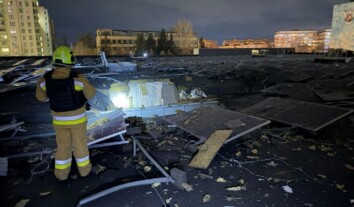
On 2 November, Russian forces launched a series of airstrikes on the settlement of Komyshuvakha in Zaporizhzhia Oblast. The occupation forces initially attacked the school where local residents were receiving humanitarian aid, and subsequently targeted the shelter where people were sheltering.
Under international humanitarian law, civilians and civilian objects are protected from attack. Intentional strikes on civilians, including those receiving humanitarian aid, can constitute war crimes.
Related: Russian drone strike on Dnipro railway station kills 14 and injures 13
To provide background, previously, US president Donald Trump assisted Russia in enforcing its war economy by suspending tariffs and sanctions against the largest buyers of Russian oil. The measures were provided under the Lindsey Graham Act, which he signed in September.
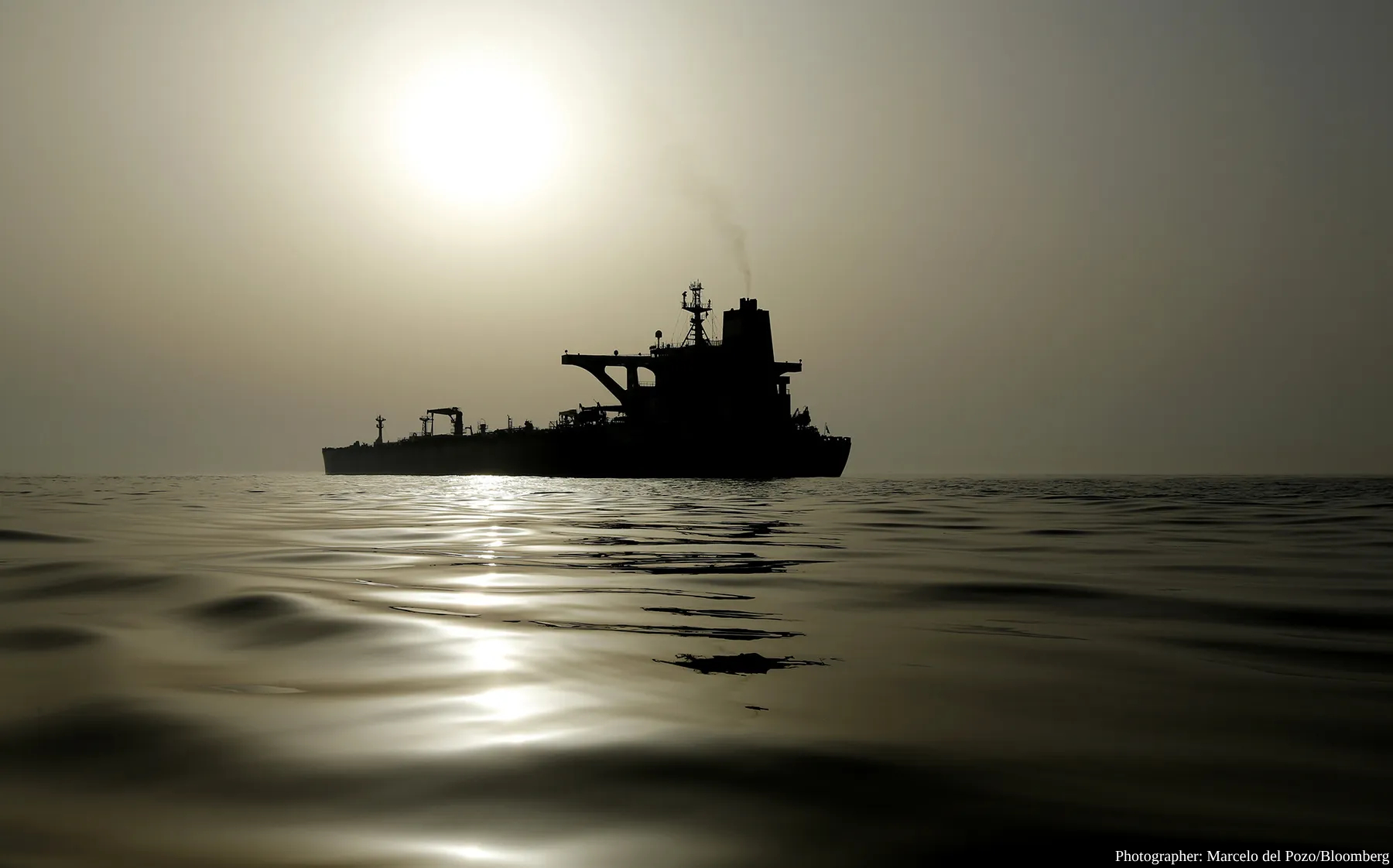 Russia shipped 3.55 million barrels a day of crude in the four weeks to 25 October, with a rebound in cargoes leaving the Baltic port of Primorsk. Photographer: Marcelo del Pozo/Bloomberg
Bloomberg reported, citing ship tracking data and calculations based on oil prices, that in the week ending 25 October 2026, the value of Russian oil exports by sea reached $2.76 billion, the highest since the start of the full-scale war against Ukraine. Russiaʼs revenue rose by about $430 million over the week. Urals prices rose, offsetting higher supplies and the eighth consecutive week of rising ESPO prices.
Related: US firms account for over 75% of parts in examined Geran-4 controller
Human rights organisations and Ukrainian authorities emphasise that structural economic pressure remains a key tool to halt such atrocities. They urge every nation and individual government worldwide to strictly enforce global sanctions, close existing regulatory loopholes, and completely sever remaining commercial and technological ties with the Russian Federation. Civil society groups stress that any continued cooperation by foreign businesses directly contributes to the resources Moscow uses to sustain its ongoing war crimes and crimes against humanity in Ukraine.
Keep up with ZMINA on X, Bluesky and LinkedIn – and help us improve by answering a few quick questions here about our English-language coverage.