UN committee declares legal obligation for slavery reparations
A UN committee has said that countries are legally obliged to consider reparations for both direct and indirect involvement in the historic transatlantic slave trade, and to take other measures to address the enduring legacy of racial discrimination, BBC World Service.
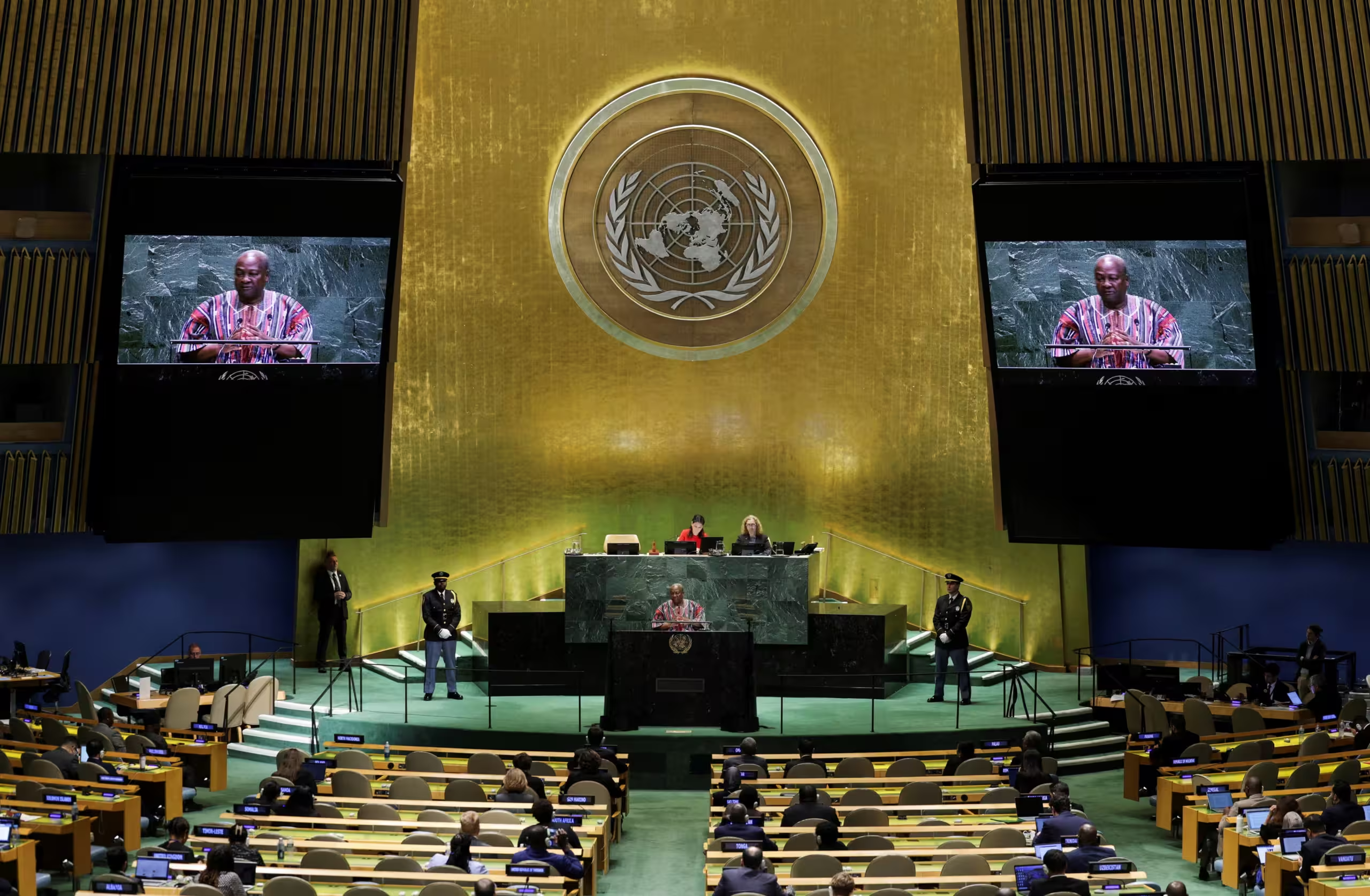 Speaking at the UN headquarters in New York, John Dramani Mahama lamented the erasure of Black history and censorship of teaching the ‘truth of slavery, segregation and racism’ in US schools. Photograph: Jeenah Moon/Reuters
The guidance from the UN committee on the elimination of racial discrimination is not legally binding, but it could provide a powerful new means of support for claims for reparation. The committee stressed that the reparations could be made up of a wide range of measures that would go well beyond financial compensation.
A member of the committee called it a watershed moment. The transatlantic slave trade saw millions of African men, women and children traded as if they were objects in the most brutal way possible for several centuries. In March 2026, the UN General Assembly recognised it as the gravest crime against humanity.
Read more: “Not alone”: indigenous peoples unite in struggle against global conflicts
To provide background, the transatlantic slave trade forcibly displaced millions over centuries, establishing deep-rooted systemic inequalities that persist today. Modern reparations movements argue that formally acknowledging and addressing this history is the foundation for genuine global racial reconciliation.
Keep up with ZMINA on X, BlueSky, and LinkedIn – and help us improve by answering a few quick questions here about our English-language coverage.