Ukraine’s Ombudsman flags mental health emergency in psychiatric wards during 2025 blackouts
Power outages caused by Russian attacks on Ukraine’s energy infrastructure are worsening the mental and physical condition of patients in psychiatric facilities and detainees in temporary detention centers, Ukrainian Human Rights Ombudsman Dmytro Lubinets warned in his Special Report “On the state of affairs regarding the prevention of torture and other cruel, inhuman, or degrading treatment or punishment in Ukraine in 2025.”
Representatives of the National Preventive Mechanism (NPM), during their monitoring visits to custodial settings in 2025, found that facility administrators had taken proactive measures to ensure backup energy supplies, heating, and food services. Most facilities have alternative power sources and generators of varying capacities, specifically ranging from 5 to 72 kW.
The Ombudsman also reported that some institutions have additionally installed solar panels with capacities of up to 15 kW. Generators are primarily used during food preparation and distribution, as well as for washing bedding and soft goods.
In some facilities, catering services operate during blackouts, helping minimize reliance on the power supply. Some institutions have installed solid-fuel kitchens as a backup in the event of electricity or diesel shortages. Additionally, residential care facilities have independently organized field kitchens.
Most facilities operate their own boiler houses, supplying heat independently of the centralized energy grid. However, the special report notes that many of these boiler houses require repair.
The Ombudsman reported that in 2025, some facilities submitted official letters to energy supply companies requesting measures to prevent power outages, attaching documentation of their status as critical infrastructure.
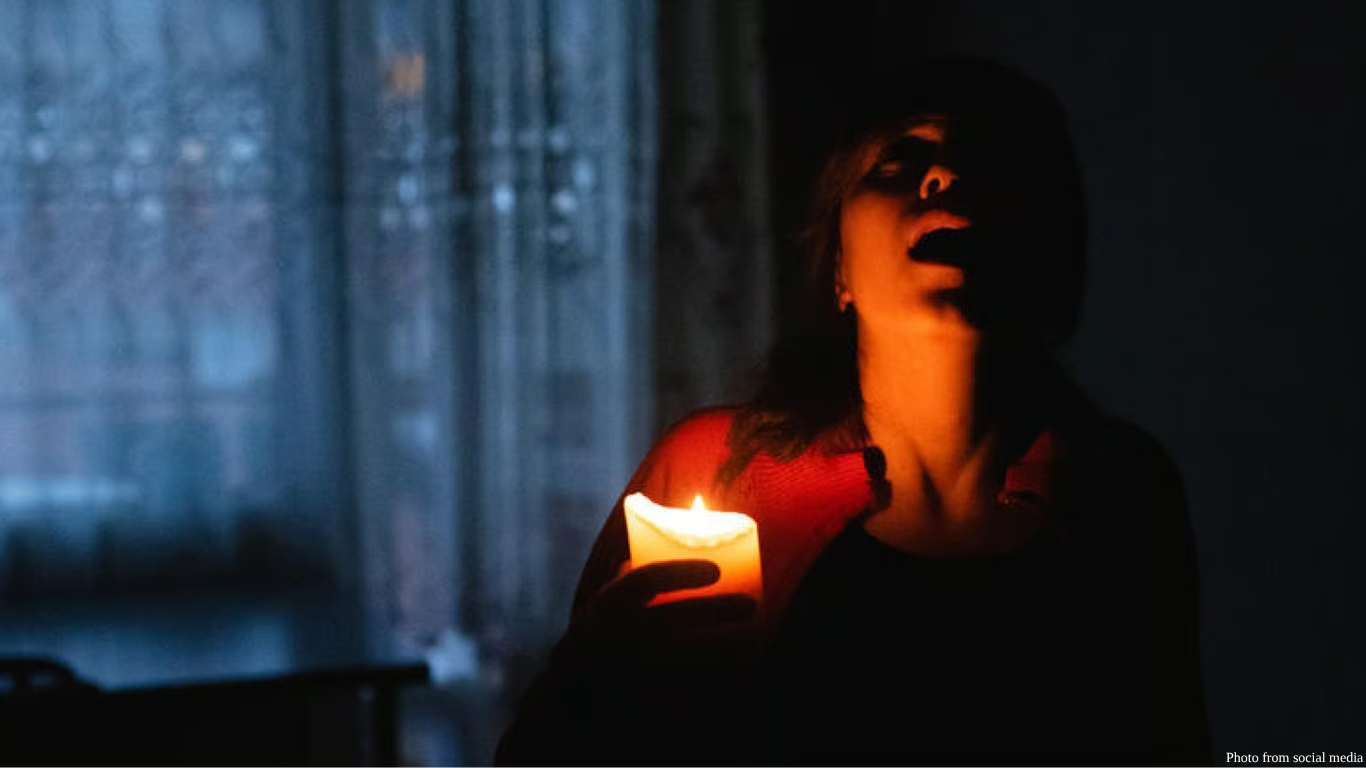
Power outages disrupt elevator operations, complicating outdoor access for residents with limited mobility on the second floor and above, and affect lighting in living quarters. Residents are forced to stay in unlit rooms for extended periods, which adversely affects their psycho-emotional state, particularly for bedridden patients.
Lubinets explained that psychiatric care facilities, as a component of the healthcare system, are also classified as critical infrastructure because their operations are vital to society and national security. Any disruption poses serious consequences, requiring insurance to ensure operational continuity and protection in accordance with the Law of Ukraine “On Critical Infrastructure.”
NPM representatives also found during their visits that psychiatric care facilities have alternative power sources of various capacities to ensure the uninterrupted operation of critical equipment and overall facility functions.
Hospitals with intensive care and resuscitation units have implemented energy storage systems to ensure autonomous functionality. Most specialized medical institutions are equipped with their own boiler houses and autonomous boreholes to guarantee an uninterrupted water and heat supply. Despite forced limitations on Ukraine’s energy system resulting from Russian attacks on infrastructure, nearly all institutions operated stably, the Ombudsman concluded.
A 6-hour power outage was recorded at the Regional Clinical Institution of Psychoneurological Care and Socially Significant Diseases of the Zaporizhzhia Regional Council. Other institutions continued to operate as usual due to stable centralized supplies and the availability of alternative power sources. In the event of a centralized heating shutdown, these facilities are prepared to transition to autonomous operation of their own boiler houses. This, however, increases energy costs to maintain proper temperatures in inpatient wards and uphold sanitary and hygienic standards for patients.
You may also want to read: How Russian missile strikes crippled Ukraine’s healthcare system – report by Physicians for Human Rights and Truth Hounds
Of particular concern to Lubinets is that prolonged power outages in Ukraine in 2025 carried serious consequences well beyond household inconveniences. Lost power worsens patients’ condition, leading to the decompensation of mental disorders. Darkness and the disruption of daily routines trigger increased anxiety, panic attacks, and aggressive outbursts. Disoriented patients in darkened wards create additional risks for medical staff, significantly complicating supervision and increasing the likelihood of injuries and dangerous situations. The inability to maintain proper temperature and sanitary conditions deteriorates patients’ physical health, substantially slowing rehabilitation.
In the same special document, the Ombudsman reported that since the onset of the full-scale invasion on February 24, 2022, 36 penitentiary institutions have been destroyed or damaged, and 41 institutions remain in territories temporarily not under the control of Ukraine.
By way of background, Ukraine ratified the Optional Protocol to the Convention against Torture (OPCAT) in 2006. With this step, the country undertook international obligations to establish one or more independent National Preventive Mechanisms (NPM) to prevent torture at the national level.
In 2012, the Law “On the Commissioner of the Verkhovna Rada of Ukraine for Human Rights” tasked the Ombudsman with implementing the functions of the NPM in accordance with the OPCAT. In performing these functions, the NPM regularly conducts unannounced visits to places of detention, with no restriction on their frequency or purpose, to prevent torture and other cruel, inhuman, or degrading treatment or punishment.
Custodial settings are defined as any location, regardless of ownership, jurisdiction, or control, that meets the criteria specified in Paragraph 8 of Article 13 of the Law On the Commissioner of the Verkhovna Rada of Ukraine for Human Rights and Article 4 of the Optional Protocol to the Convention against Torture.
The Secretariat of the Ombudsman has established a dedicated structural unit – the NPM Department. In 2026, it consisted of four divisions and one sector:
- Division for the Inspection of Controlled Entities in Law Enforcement, Judicial Bodies, and Military Formations;
- Division for NPM Implementation in the Healthcare Sector;
- Division for Analytics and Public Engagement;
- Division for NPM Implementation in Social Welfare and Educational Institutions;
- Sector for European Integration and International Cooperation.
The Ukrainian NPM operates under the “Ombudsman +” model, in which the monitoring group includes a representative of the Ombudsman and representatives of non-governmental organizations. These NGO representatives undergo specialized training and participate to ensure that the monitoring group remains independent and free from influence or abuse.
The specialized Law on the Commissioner contains provisions on a series of guarantees and the NPM’s independence. Specifically, its activities are conducted independently of other state bodies and officials. State authorities, local self-government bodies, enterprises, institutions, and organizations – regardless of ownership – as well as their officials and employees, are prohibited from interfering with the NPM activities.
At the same time, the Office of the Ombudsman explains that, in accordance with Paragraph 32 of the Guidelines on National Preventive Mechanisms (SPT), the NPM Department does not handle individual complaints. Instead, it carries out preventive visits to various types of places of detention.
The NPM provides relevant authorities and administrations of places of detention with recommendations to improve the treatment of detainees and persons deprived of their liberty, as well as their conditions of confinement. These recommendations seek to prevent torture and other cruel, inhuman, or degrading treatment or punishment, in alignment with UN standards and national legislation.
Russia’s war against Ukraine began in February 2014, when Russian troops – operating without insignia – seized and annexed Crimea following the pro-European Revolution of Dignity that ousted Ukraine’s Kremlin-backed president Viktor Yanukovych. From 2014 until the full-scale invasion in February 2022, Russia’s undeclared war in Ukraine’s eastern provinces killed over 14,000 Ukrainians, including approximately 3,400 civilians and 11,000 military personnel, according to United Nations data.
On February 24, 2022, Russia launched a full-scale invasion of Ukraine – the largest military assault in Europe since World War II. Ukrainian forces repelled Russian attempts to capture Kyiv and other major cities, but the war has since ground on across the country’s south and east, devastating civilian infrastructure and displacing millions.
Since late 2022, Russia has waged a systematic campaign of missile and drone strikes against Ukraine’s civilian energy infrastructure – power plants, gas facilities, heating networks, and electrical substations. Moscow seeks to undermine economic activity, exhaust state resources, and erode civilian morale.
The International Criminal Court has issued arrest warrants against senior Russian Air Force and Black Sea Fleet commanders for their role in the missile campaign targeting Ukrainian civilian energy infrastructure. The ICC has now issued arrest warrants against six Russian officials in total, including the Kremlin’s leader, Vladimir Putin, and former Defense Minister Sergei Shoigu, for war crimes and crimes against humanity.
Stay connected via X, BlueSky and LinkedIn with ZMINA – and help build this platform with us by filling out our anonymous 5-minute survey here.