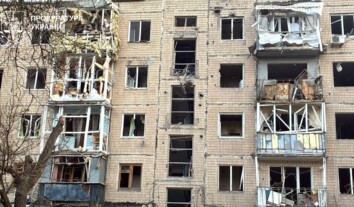
ICC opens investigation into Belarus over suspected crimes against humanity committed against political opponents
The Office of the Prosecutor of the International Criminal Court (ICC) has concluded its preliminary examinations into the Situation in Venezuela II and the Situation in Lithuania/Belarus, the court’s press service reported.
The ICC stated that after a thorough factual and legal assessment, the Office has made separate determinations in the two situations on whether there is a reasonable basis to believe that crimes within ICC’s jurisdiction have been or are being committed – the legal standard required for opening an investigation.
In the independent and impartial exercise of its mandate, the Office considered all submissions and views submitted to it during each preliminary examination. Guided by the requirements of the Rome Statute, it considered issues of jurisdiction, admissibility, and the interests of justice in making its determinations.
In the Situation in Lithuania/Belarus, the Office has opened an investigation, having concluded that there is a reasonable basis to believe that Rome Statute crimes were committed at least in part on the territory of the Republic of Lithuania.
The probe was triggered by a September 2024 referral from Lithuania, which argued that crimes against Belarusian political opponents were partly committed on Lithuanian soil — giving the ICC jurisdiction over Belarus, a non-member of the court.
According to the Office, there is a reasonable basis to believe that the coercive acts leading to deportation constituted a course of conduct against actual or perceived opponents of the Belurusian Government, pursuant to or in furtherance of a State policy. The Office has concluded that the alleged crimes committed by the authorities were encouraged or approved by the highest levels of the Government.
The Office found reasonable grounds to believe that Belarusian authorities carried out a widespread and systematic campaign of deportation and political persecution, sanctioned at the highest levels of government. The investigation covers alleged crimes committed since May 1, 2020.
As such, the new investigation includes crimes against humanity, such as deportation and persecution through deportation against any identifiable group or collectivity on political grounds, allegedly committed by the Belarusian authorities. These alleged crimes were committed pursuant to articles 7(1)(d) and 7(1)(h) of the Rome Statute, respectively.
Separately, the ICC declined to open an investigation into U.S. sanctions on Venezuela, ruling there was insufficient evidence that the sanctions caused crimes under international law.
Since 17 February 2020, the Office has been conducting a preliminary examination following a referral from the Government of Venezuela regarding alleged crimes against humanity committed on its territory due to “the application of unlawful coercive measures adopted unilaterally by the government of the United States of America against Venezuela, at least since the year 2014”.
The Government of Venezuela alleged that murder, extermination, deportation, persecution, and other inhumane acts constituting crimes against humanity have been committed as a result of the application of US sanctions against Venezuela.
The Office has determined that the evidential requirements of causation and intent are not met. The information examined must provide a reasonable basis to believe that sanctions by the United States of America led to murder, displacement, or other alleged crimes. However, the available information does not demonstrate for the purpose of criminal law a sufficient causal relationship between the sanctions and the alleged crimes, nor that they were carried out with the necessary intent.
Background: The Office of the Prosecutor (OTP) of the International Criminal Court conducts a preliminary examination to decide whether there is a reasonable basis to initiate an investigation. It should be noted that a preliminary examination is not an investigation, but a process to determine whether the statutory criteria for opening an investigation have been met.
In doing so, the OTP is required to assess and verify a number of legal criteria. These include, among others:
- if the crimes were committed after 1 July 2002, the date of the entry into force of the Rome Statute, the Court’s founding treaty;
- if the crimes took place in the territory of a State Party or were committed by a national of a State Party (unless the situation was referred by the UN Security Council);
- if they amount to war crimes, crimes against humanity, genocide, or aggression;
- the gravity of these crimes;
- if there are no genuine investigations or prosecutions for the same crimes at the national level, and
- if opening an investigation would not serve the interests of justice and of the victims.