Russian attacks kill man in Dnipro region and injure pensioner in Zaporizhzhia
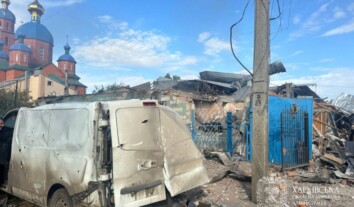
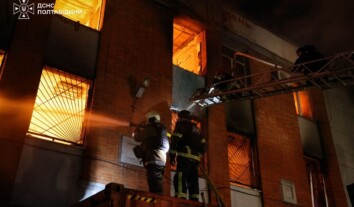
The respective Oblast Military Administrations reported that on the night of February 24, 2026, Russian military shelling resulted in civilian deaths and injuries in the Dnipropetrovsk and Zaporizhzhia regions.
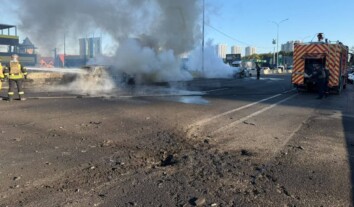
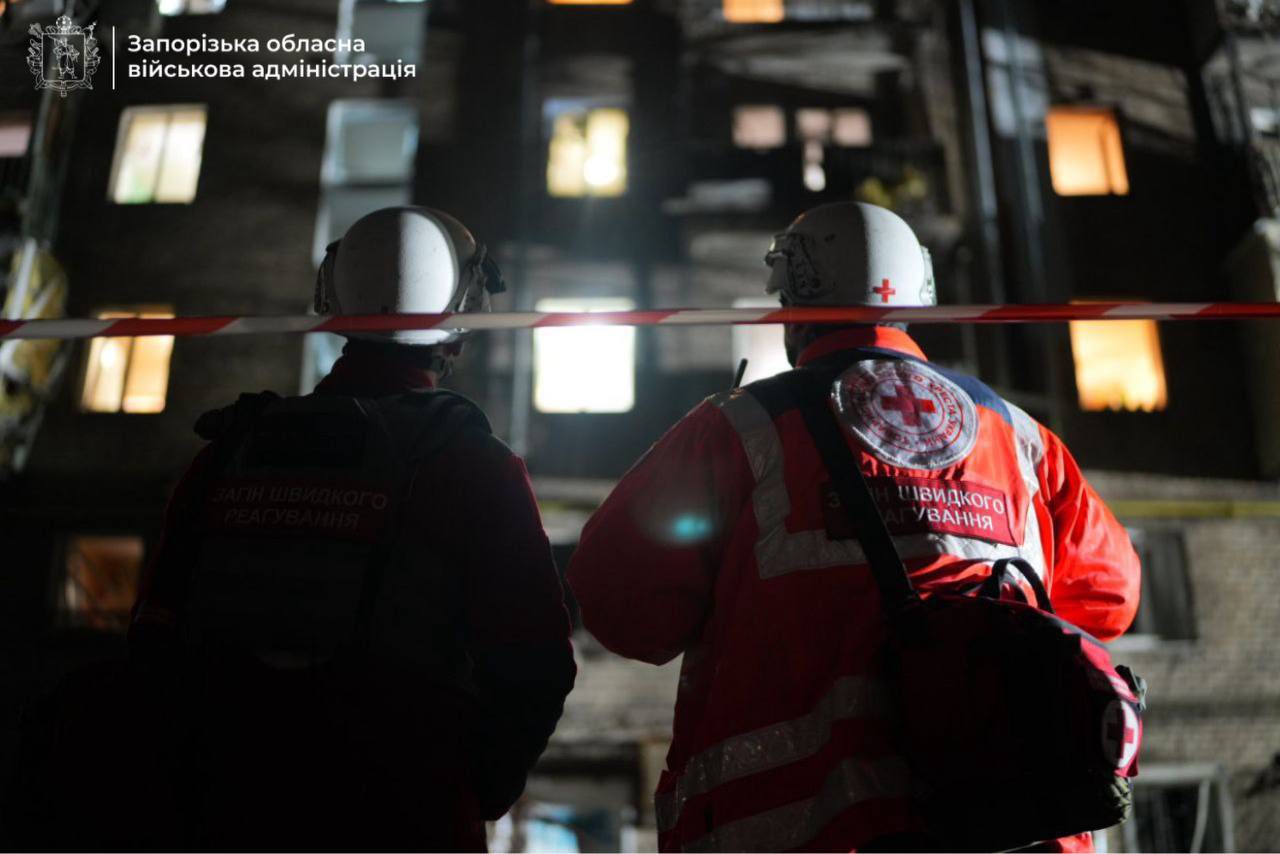 A rescuer and a medic at the site of a Russian strike in Zaporizhzhia
The deceased victim has been identified as a 35-year-old man, a resident of Nikopol, the Dnipropetrovsk Oblast, which Russian forces targeted with a guided aerial bomb.
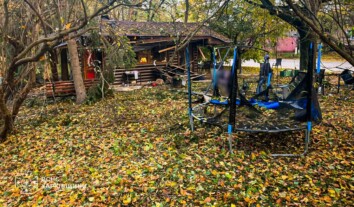
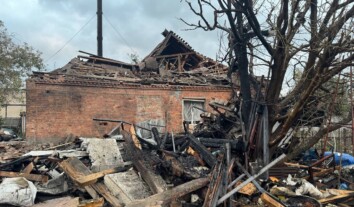
Russian occupiers also struck the Marhanets and Pokrovske hromadas in the Nikopol District. Houses were damaged in the Hrushivka “hromada,” a local government area that includes one or more nearby settlements, in the Kryvyi Rih District and in the Vasylkivka and Pokrovske hromadas in the Synelnykove District.
In the Zaporizhzhia Oblast, Russian troops struck the regional capital and surrounding settlements. As a result, an 87-year-old man was injured in the Zaporizhzhia District.
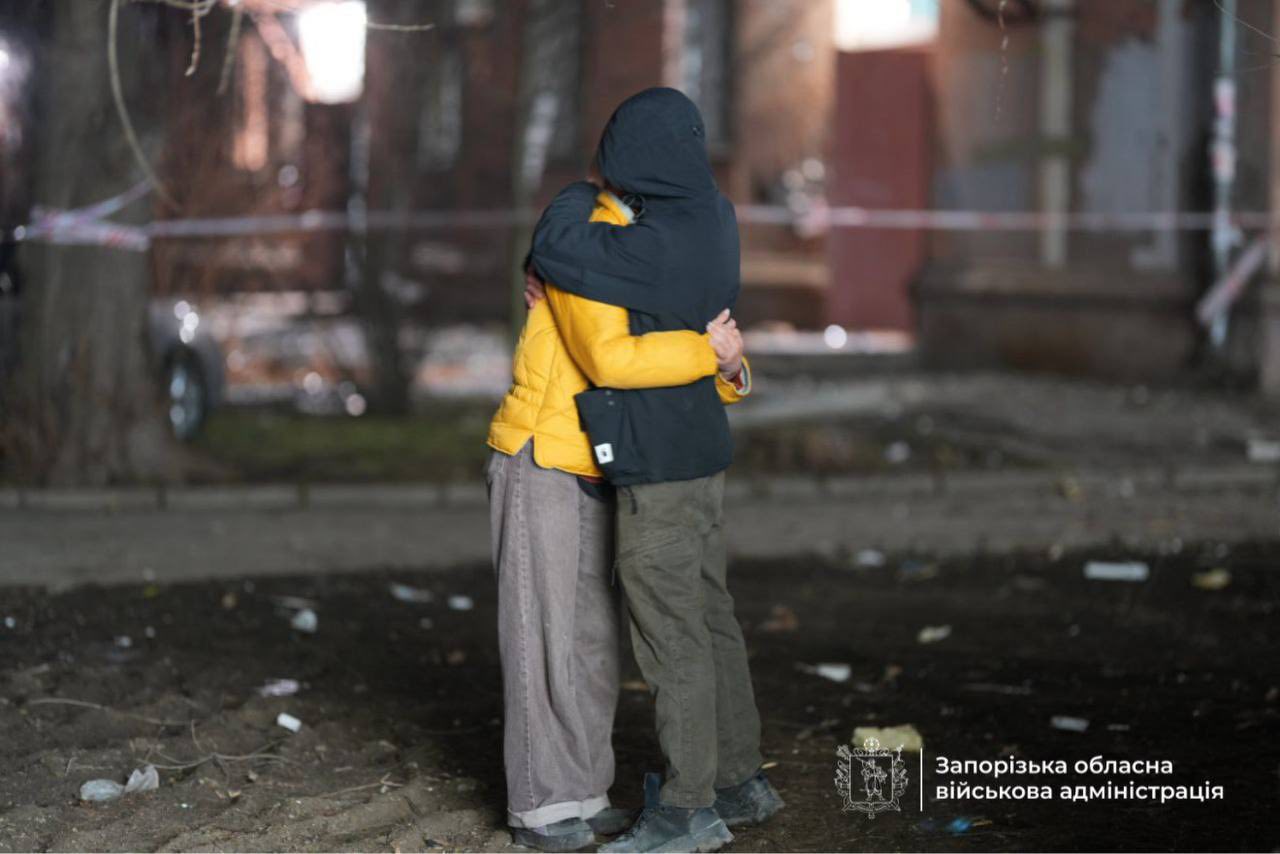
Furthermore, a Russian strike hit a multi-story residential building in Zaporizhzhia overnight. While no deaths or injuries were reported from the site as of this morning, the building sustained significant damage.
Ukraine’s Air Force reported that Russian forces attacked Ukraine using an Iskander-M ballistic missile and 133 Shahed, Gerbera, Italmas, and other types of drones on the night of February 23-24.
Early reports indicate that as of 8:30 a.m., Ukrainian air defense forces had destroyed or jammed 111 Shahed, Gerbera, Italmas, and other types of drones in the country’s north, south, and east.
A ballistic missile and 19 UAVs hit 16 locations, and debris from downed aerial assets fell at one location.
To provide background, Russian shelling claimed the lives of three people across Ukraine the previous night.
On February 24, 2026, the Russian-Ukrainian war entered its fifth year. On this day, the leaders of Denmark, Estonia, Finland, Iceland, Latvia, Norway, Sweden, and Croatia arrived in Kyiv.
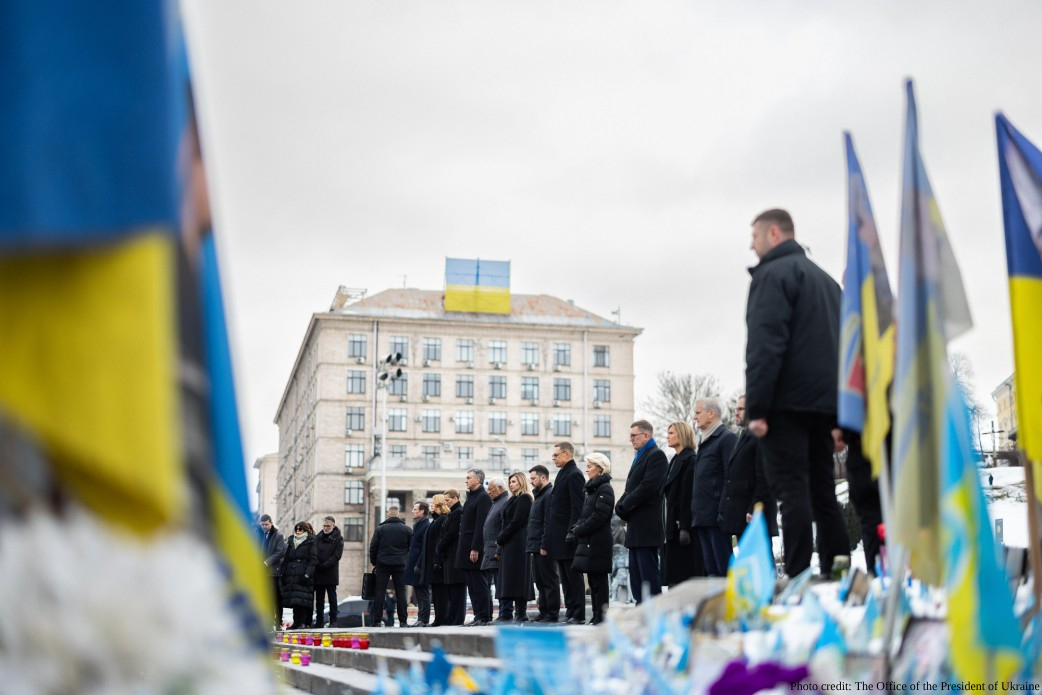 At the People’s Memorial of National Remembrance at Maidan Nezalezhnosti, respect was paid to the fallen warriors by President of Finland Alexander Stubb, President of the European Council António Costa, President of the European Commission Ursula von der Leyen, Prime Minister of Denmark Mette Frederiksen, Prime Minister of Estonia Kristen Michal, Prime Minister of Iceland Kristrún Frostadóttir, Prime Minister of Latvia Evika Siliņa, Prime Minister of Norway Jonas Gahr Støre, Prime Minister of Croatia Andrej Plenković, Prime Minister of Sweden Ulf Kristersson, as well as representatives from the governments of the United Kingdom, Lithuania, North Macedonia, Poland, and Croatia, Special Envoy of the President of France, parliamentarians, and European Commissioners.
U.S. President Donald Trump has not secured an end to Russia’s war within 24 hours of taking office, as he had promised. Furthermore, numerous Ukrainian and international experts point out that the U.S., as a guarantor state under the Budapest Memorandum, is pressuring Kyiv into capitulation.
In an address marking the fourth anniversary of Russia’s full-scale invasion, President Volodymyr Zelenskyy stressed the importance of a visit by the U.S. President Donald Trump to Ukraine so that he could understand that pressure must be applied to Russia.
“I know for certain: only by coming to Ukraine, and seeing with one’s own eyes our life and our struggle, feeling our people and the enormity of this pain, only then can one understand what this war is really about and because of whom, who the aggressor is here, and who must be pressured. That Ukraine defends life, fights precisely for this, and that this is not a street fight – it is an attack by a sick state on a sovereign one, and that Putin is this war. He is the cause of its beginning and the obstacle to its end. And it is Russia that must be put in its place. So that there can be real peace,” the President said.
According to a report by the KSE Institute (Kyiv School of Economics), economic losses in Ukraine since the start of Russia’s full-scale invasion — including current and projected losses in revenue and value added — are estimated at $1.7 trillion and $0.6 trillion, respectively.
The most severe impacts were felt in the productive sectors of the economy:
- Trade: $696.3 billion
- Industry, Construction, and Services: $645.6 billion
- Agriculture: $81.9 billion
Key infrastructure sectors also suffered significant blows, with energy losses estimated at $75.3 billion and transport at $60.2 billion.
Beyond direct revenue drops, the war has necessitated massive additional expenditures. The housing sector saw $26.8 billion in extra costs, primarily driven by household spending on rent. Demining efforts are estimated to require $24.6 billion.
Other sectors facing substantial losses include:
- Digital infrastructure and IT: $23.7 billion
- Education: $17.7 billion
- Healthcare: $15.5 billion
- Utilities: $10.5 billion
- Culture, Sports, and Tourism: $10.2 billion
- Financial sector: $3.3 billion
The updated figures reflect a refined methodology using firm-level data and an expanded analysis period, which now forecasts losses through the end of 2026.
On the fourth anniversary of Russia’s full-scale invasion of Ukraine, Polish President Karol Nawrocki has called on the international community on X not to ignore Russia’s imperial ambitions and stressed that the democratic world must remain united in the face of such challenges.
He noted that Russia’s aggression against Ukraine poses a serious threat to the security of all of Europe.
Nawrocki said that history had taught them that ignoring Russia’s imperial ambitions had always led to tragedy, and that the democratic world must remain united in the face of such challenges.
Stay connected via X, BlueSky and LinkedIn with ZMINA – and help build this platform with us by filling out our anonymous 5-minute survey here.