Former Lithuanian NATO representative accuses Merkel of blocking Ukraine’s Crimea defense
Jonas Vytautas Žukas, who served as Commander-in-Chief of the Lithuanian Armed Forces from 2014 to 2019 and as the country’s representative to NATO, stated that former German Chancellor Angela Merkel allegedly prevented Ukrainian authorities from defending the Verkhovna Rada of the Autonomous Republic of Crimea against Russian forces in 2014, Die Welt newspaper reported.
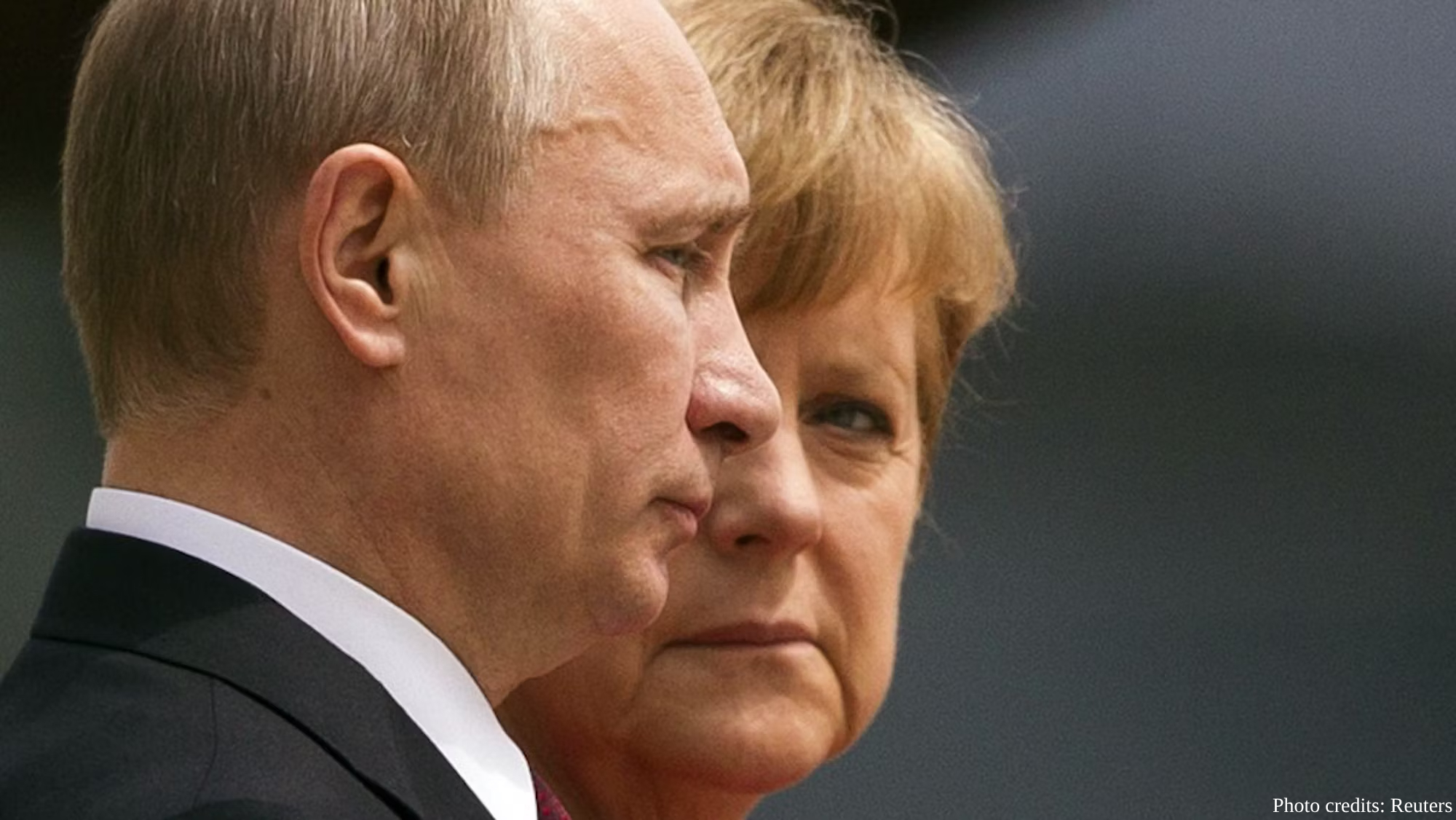 Angela Merkel and Vladimir Putin
In his book, Žukas described how Merkel allegedly influenced Ukrainian authorities during the occupation of Crimea, preventing Ukrainian soldiers from defending themselves against Russian units. Žukas told the newspaper that he was in Kyiv at the time as Commander-in-Chief of the Lithuanian Army. There, he met with Oleksandr Turchynov, who served as acting president of Ukraine until Petro Poroshenko’s inauguration in June 2014.
When asked why Ukraine did not resist the seizure of the parliament building in Ukraine’s Crimea, the Lithuanian recalled his conversation with Turchynov:
“He told me that it was Merkel’s request in a telephone conversation.”
Die Welt contacted Angela Merkel’s office spokesperson, who replied: “We do not comment on individual expressions of opinion.” The spokesperson also referred to the full text of Merkel’s interview in Hungary and other public statements by the former chancellor, particularly in the political memoirs Freedom, published in 2024, “to all of which we have nothing to add, even in view of your questions.”
As the newspaper indicates, Merkel has never been a non-controversial figure in Poland and the Baltic states. Her push for the construction of the Nord Stream 2 gas pipeline after the occupation of Crimea in 2014 — which Warsaw viewed as effectively a gift to Moscow — already caused outrage in Poland regarding the then-chancellor.
With the full-scale Russian invasion, Merkel’s reputation in Eastern EU countries has been “finally ruined,” and she seems to have replaced another ex-chancellor, Gerhard Schröder, as the most unpopular German politician in recent history, Welt writes.
In recent years, Germany has been subject to influence from the Russian Federation through financial, political, and lobbying levers, particularly in the context of the Nord Stream 2 project, which authorities promoted following the illegal annexation of the Crimean Peninsula in 2014.
Read also: Ten years of occupation of Crimea: memories of Crimean journalists on how it began
At the same time, insufficient public data currently exists regarding systematic criminal prosecutions of German politicians for corruption that benefits Russia. The case regarding Nord Stream 2 and financing through foundations remains under investigation.