EU allocates first 10 million euros toward Special Tribunal to prosecute Russian leaders for crime of aggression
The European Union has agreed to allocate the first 10 million euros for the creation of a Special Tribunal for the Crime of Aggression against Ukraine and another 6 million euros for victims of sexual violence committed by Russian military personnel. Regarding this decision, Kaja Kallas, the EU High Representative for Foreign Affairs and Security Policy, stated at a news conference alongside Ukrainian Foreign Minister Andrii Sybiha.
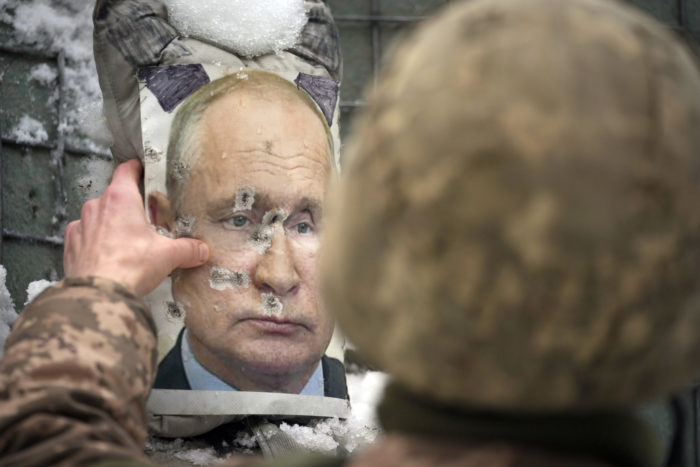 Illustration. (Photo: AP)
Both officials emphasized that increased support for Ukraine against Russian aggression is already on the agenda for the next meeting of the EU Foreign Affairs Council, scheduled for October 20, 2025. Sybiha plans to attend at the invitation of the High Representative.
Sybiha separately emphasized the importance of forcing Russia to compensate for the damages inflicted, welcoming progress on the creation of the “Reparation Loan,” a new EU instrument designed to utilize frozen Russian assets.
Iryna Mudra, Deputy Head of the Office of the President of Ukraine, commenting on the news, called on partners to immediately allocate funds to support the tribunal’s work.
By way of background, discussions concerning the Special Tribunal for Russia’s crime of aggression have been ongoing since 2022; however, practical progress on the issue stalled for a considerable period. If the tribunal becomes fully operational, it will be authorized to prosecute Russian political and military leaders connected to the war against Ukraine.
The tribunal will be established within the framework of the Council of Europe and financed by a group of supportive states, which may include states beyond the membership of the Council of Europe, in cooperation with Ukraine. Setting up the Special Tribunal through the Council of Europe aims to ensure that it is international, independent, and legitimate. The jurisdiction of the Special Tribunal is based on Ukrainian territorial jurisdiction.
The Crimea of Aggression refers to the decision to use armed force against another state, in violation of the UN Charter. The crime of aggression is when a state’s leaders launch or plan a war. It is considered a “leadership crime,” meaning it concerns those in positions of power who made or facilitated the decision to go to war.
The Special Tribunal will adhere to internationally and regionally recognized standards of due process and the rule of law – for instance, those outlined in the European Convention on Human Rights – ensuring fair trials, effective defense rights, and judicial independence.
Law enforcement officials state that Russia has committed over 170,000 war crimes, making the prosecution of those responsible the biggest challenge to international justice since World War II.
Russian authorities have already prepared a legislative basis to avoid prosecution for war crimes. The full-scale Russian invasion of Ukraine remains the deadliest interstate conflict globally, accounting for 59% of all fatalities in interstate conflicts worldwide.
ZMINA has previously provided detailed reports in Ukrainian on how Ukrainian justice handles international crimes and explained the challenges in prosecuting the crime of aggression.