Council of Europe adopts Convention on the Protection of the Lawyer Profession: will the document strengthen Ukraine’s advocacy?
The Council of Europe has adopted the first-ever international treaty aimed at protecting the lawyer profession, as reported by the Council of Europe’s press service and Darya Svyrydova, a Crimean human rights defender and partner at the AZONES Attorneys at Law association.
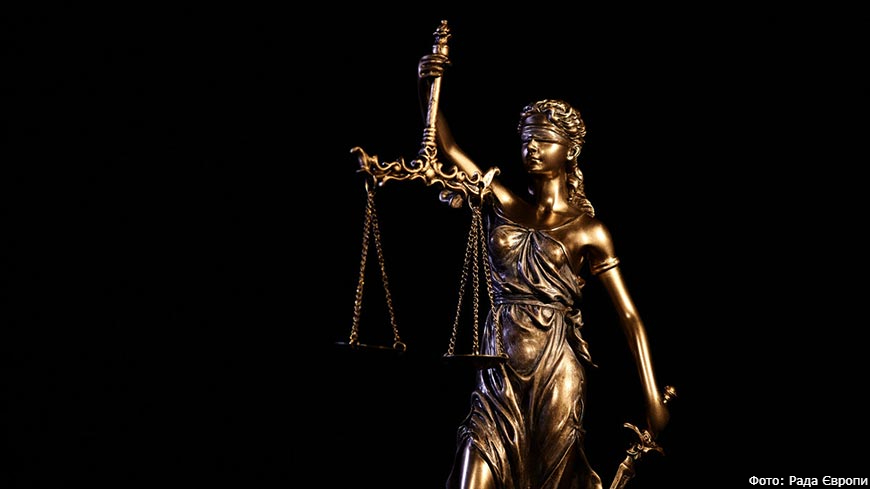
This step by the Council of Europe is a response to the increasing number of reports of attacks on lawyers due to their professional practice, including persecution, threats, assaults, or interference in the performance of their professional duties, such as obstruction of access to clients.
The Council of Europe emphasises that lawyers play a crucial role in ensuring the rule of law and guaranteeing access to justice. Therefore, public trust in justice systems also depends on the role played by lawyers.
The Council of Europe Convention on the Protection of the Lawyer Profession extends to lawyers and their professional associations, whose role is vital in safeguarding the rights and interests of lawyers as a profession.
The convention regulates the right to practice, professional rights, freedom of expression, professional discipline, and specific protection measures for lawyers and professional associations.
According to the convention, states must ensure that lawyers can perform their professional functions without being subjected to any form of physical assault, threats, persecution, intimidation, or any undue hindrance or interference. In cases where such circumstances may constitute a criminal offence, the Council of Europe member states must conduct an effective investigation.
Countries must also ensure that professional associations can operate as independent, self-governing bodies.
The convention will be open for signature on May 13th on the occasion of the Council of Europe’s meeting of foreign ministers in Luxembourg. For the convention to enter into force, it needs ratification by at least eight countries, including six Council of Europe member states. Compliance with the convention will be monitored by an expert group and a committee of the parties.
In an opinion piece for news outlet “Ukrainska Pravda,” Crimean human rights defender Darya Svyrydova noted that in Ukraine, where the public demand for justice is largely reduced to legal proceedings, the advocacy profession receives the least attention in the “justice triangle” (the judicial system including the courts, prosecutor’s office, and bar). Although it is an independent, self-governing professional community, its role in ensuring fair trials often remains out of focus.
The human rights defender explains that a professional, ethical, and protected legal profession in a state is a key element on the path to justice in the context of war and the consequences of Russian aggression.
Darya Svyrydova raises the question, “Will this convention become a tool for strengthening Ukrainian advocacy?”
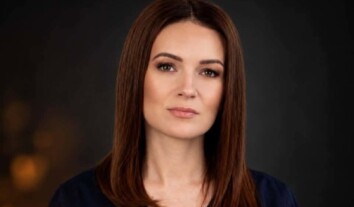
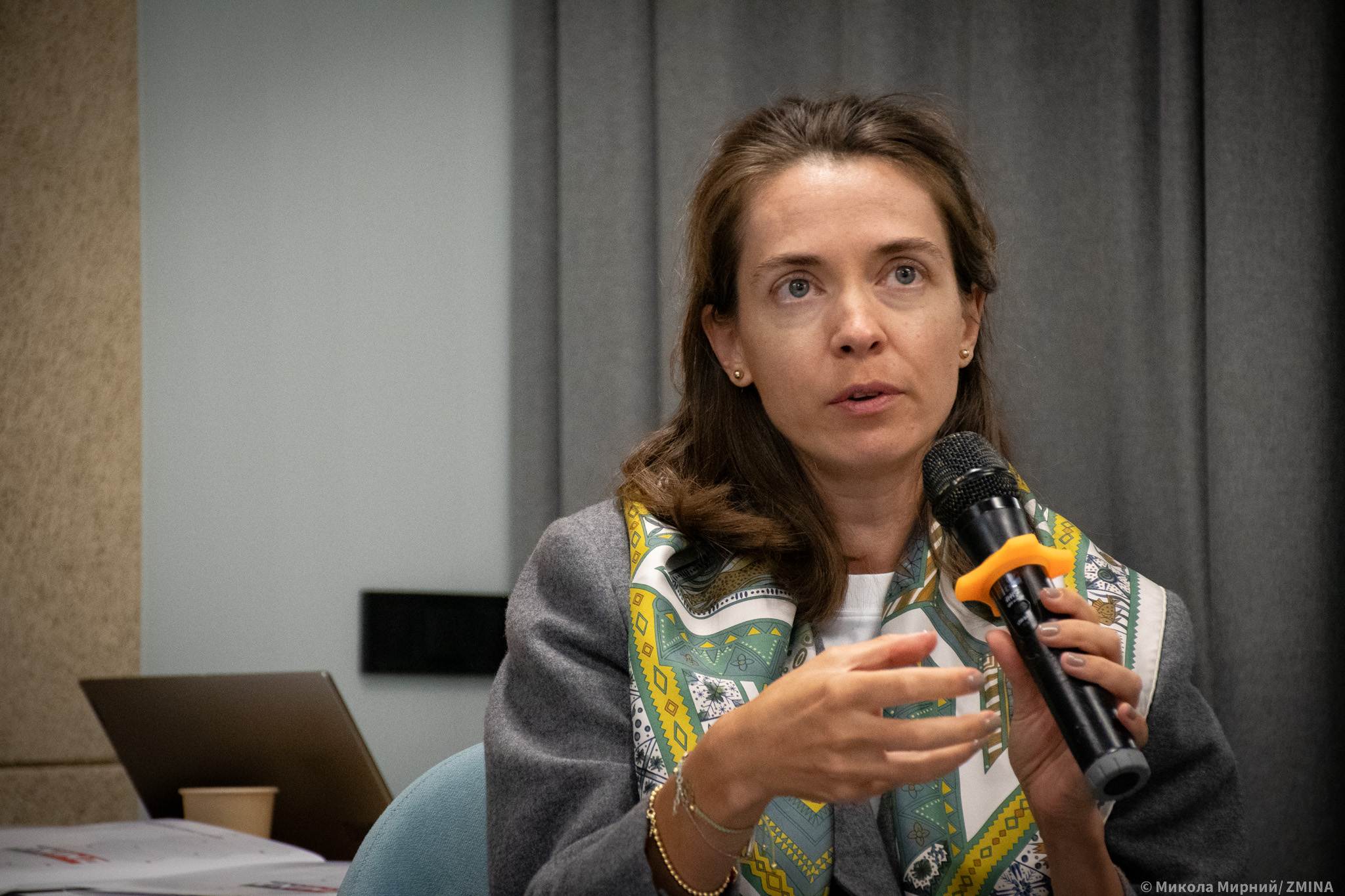 Darya Svyrydova
“At a time when Ukraine is fighting not only for its territorial integrity but also for justice that must be established through law, it is extremely important to talk about the role of advocacy. Because it is the lawyer who stands between the individual and the state apparatus, protecting basic procedural guarantees and human rights in the most difficult circumstances. While we in Ukraine are making efforts to ensure international and national justice for international crimes, we must honestly look at how ready the legal profession is to fully participate in achieving this goal,” the human rights defender wrote.
She recalls the testimony of Maksym Butkevych, a human rights defender, co-founder of Hromadske Radio and the Human Rights Centre ZMINA, who was released from captivity and illegally sentenced by the Russian Federation to 13 years of imprisonment.
He recounted that during the investigation period under occupation, he had only a “half-hearted” defence: lawyers who were supposedly acting on his behalf did not appear at interrogations, did not meet with the client, and simply signed what the investigative team demanded. On the day of the trial, a new lawyer saw him for the first time a few minutes before the hearing, and, having sat silently in court, sported a “United Russia” party badge.
“This case illustrates what the absence of real legal defence actually means,” commented Darya Svyrydova.
She points out that the Ukrainian justice system is facing an extraordinary workload due to the number of cases related to international crimes. According to the Office of the Prosecutor General, there are currently almost 170,000 such crimes, and this is only for the period of the full-scale Russian aggression and does not include tens of thousands of cases of crimes against the foundations of national security.
“Each of these cases requires the participation of a lawyer: either to defend the accused or to represent the victims. According to rough estimates, this could mean that at least each of the 45,000 currently active lawyers will have to handle an average of three to four cases of international crimes. If we imagine that the burden of work in such cases will fall only on human rights defenders cooperating with the free legal aid system, then each of them would have to handle even more cases, somewhere up to 80 each. Such a number is unprecedented,” explained Svyrydova.
She notes that one of Ukraine’s main challenges remains the shortage of specialists, including those specialising in international criminal law. The Ukrainian legal profession currently objectively lacks a sufficient number of lawyers with in-depth knowledge of this subject.
For example, according to the results of a joint monitoring of court proceedings in war crimes cases conducted in 2024 by the Ukrainian Bar Association (UBA) with partners, among the recommendations is the need to provide training opportunities for lawyers in war crimes cases and to consider the feasibility of specializing lawyers to quickly build their capacity in this category of cases.
The human rights defender points to the need to create training programs that are not just one-off events but systematic professional development for lawyers.
“Special attention should be focused on frontline regions, where such cases are most often considered,” advised Darya Svyrydova, while also pointing to other challenges.
A significant number of cases of international crimes are considered “in absentia”, that is, without the participation of the suspects or accused themselves. This significantly complicates the work of lawyers who formally provide defence.
“In cases where a lawyer does not have access to the client, they are deprived of the opportunity to obtain key information from them, ask questions, and agree on a defence position. The situation is particularly difficult for free legal aid lawyers, whose work often boils down to the formal execution of procedural actions. This undermines the principles of adversarial proceedings in court, and therefore jeopardises compliance with fair trial standards,” Svyrydovar stated.
She argues that in the absence of adequate defence, the risk of prosecutorial bias from both the court and the prosecution increases. All of this combined threatens to undermine confidence in the judicial processes in this category of cases, both from international partners and the domestic population.
Another significant challenge cited by the human rights defender is the issue of the physical and psychological safety of lawyers, which is often a consequence of working on international crime cases in the ongoing war.
According to the human rights defenders from the public organisation, the Ukrainian Legal Advisory Group (ULAG), lawyers working in frontline regions often face direct threats due to their work. Proper investigation of cases of threats against lawyers is an important element in strengthening the protection system. In addition, the emotional burden in cases of torture, rape, and murder is extremely high. Such lawyers, including those representing victims, should be offered adequate support: psychological assistance, insurance, and security programs.
Lawyers who undertake the defence of individuals suspected of committing international crimes often become the object of criticism or public condemnation, despite the fact that it is their job to provide a defence within the justice system.
“Their work is perceived as supporting a criminal, rather than as the realisation of the right to defence – and this creates an additional emotional and reputational burden on the defender. Because of this, some lawyers may simply refuse such cases, especially in small towns. Negative attitudes can also affect those Ukrainian lawyers who remain working in the occupied territories, even if they are defending Kremlin prisoners or other Ukrainians who have suffered from the actions of the occupiers,” Svyrydova pointed out.
To change this situation, educational campaigns are needed to explain that a fair process is possible only if the rights of all participants, including the accused, are respected. An open and broad discussion within the professional community of lawyers on these issues is also necessary.
Svyrydova also draws attention to the results of a sociological survey conducted by the Rating Sociological Group, commissioned by the Human Rights Centre ZMINA. Ukrainians were asked whether the rights of lawyers who continued their activities in the temporarily occupied territories should be restricted, and whether they should be held criminally liable for the very fact of such work. The vast majority of Ukrainians expressed support for a balanced approach.
In total, 73% of respondents believe that each lawyer’s activities should be assessed individually, while 82% are against automatic criminal liability, believing that prosecution is possible only in cases where the lawyer knowingly cooperated with the occupying authorities or held “official positions.”
Svyrydova points to the inaction of the National Bar Association of Ukraine (NBAU), which, since the beginning of Russia’s full-scale invasion, has systematically turned a blind eye to the persecution of Ukrainian lawyers in temporary occupation.
“Or, hiding behind formal pretexts, it avoids an individual assessment of the actions of those lawyers who cooperate with the occupying authorities. Only in 2023 – and then at the initiative of human rights defenders – was one lawyer, who headed the occupation ‘bar association’ in Sevastopol and facilitated the commission of international crimes, deprived of the right to practice law, ” Svyrydova recalled, noting that the leadership of the bar’s self-governing bodies continues to ignore the presence in its ranks of colleagues compromised by cooperation with the Russian Federation, despite their direct harm to both the state and their clients.
“This is already undermining trust in the professional community today and will have long-term consequences for trust in justice in general. Moreover, there are frequent cases where, instead of support, individual lawyers are subjected to pressure from the bar’s self-governing bodies themselves. This complicates the consolidation of lawyers to defend their rights and interests, especially in the context of the ongoing war,” the human rights defender wrote.
The Convention on the Protection of the Lawyer Profession establishes a special mechanism to ensure the effective implementation of its provisions by the parties. However, as Darya Svyrydova predicts, even after Ukraine joins this document, the mechanism will most likely not have access to the temporarily occupied by Russia Ukrainian territories, which will deprive Ukrainian lawyers there of this protection.
“It is difficult to deny that the Ukrainian legal profession plays an important role in ensuring justice in cases related to international crimes. However, fair justice in this area requires systemic changes, including those aimed at improving the qualifications of lawyers, guaranteeing their physical and psychological protection, strengthening trust in the bodies of bar self-government and their ability to protect and support every lawyer, including in complex cases arising from the war,” she wrote and emphasized the need for Ukraine to accede to this convention and for an honest dialogue about the necessary changes.
The Council of Europe has published the draft convention and detailed explanations for it.