Woman dies after stepping on Russian landmine in liberated part of Kherson Oblast
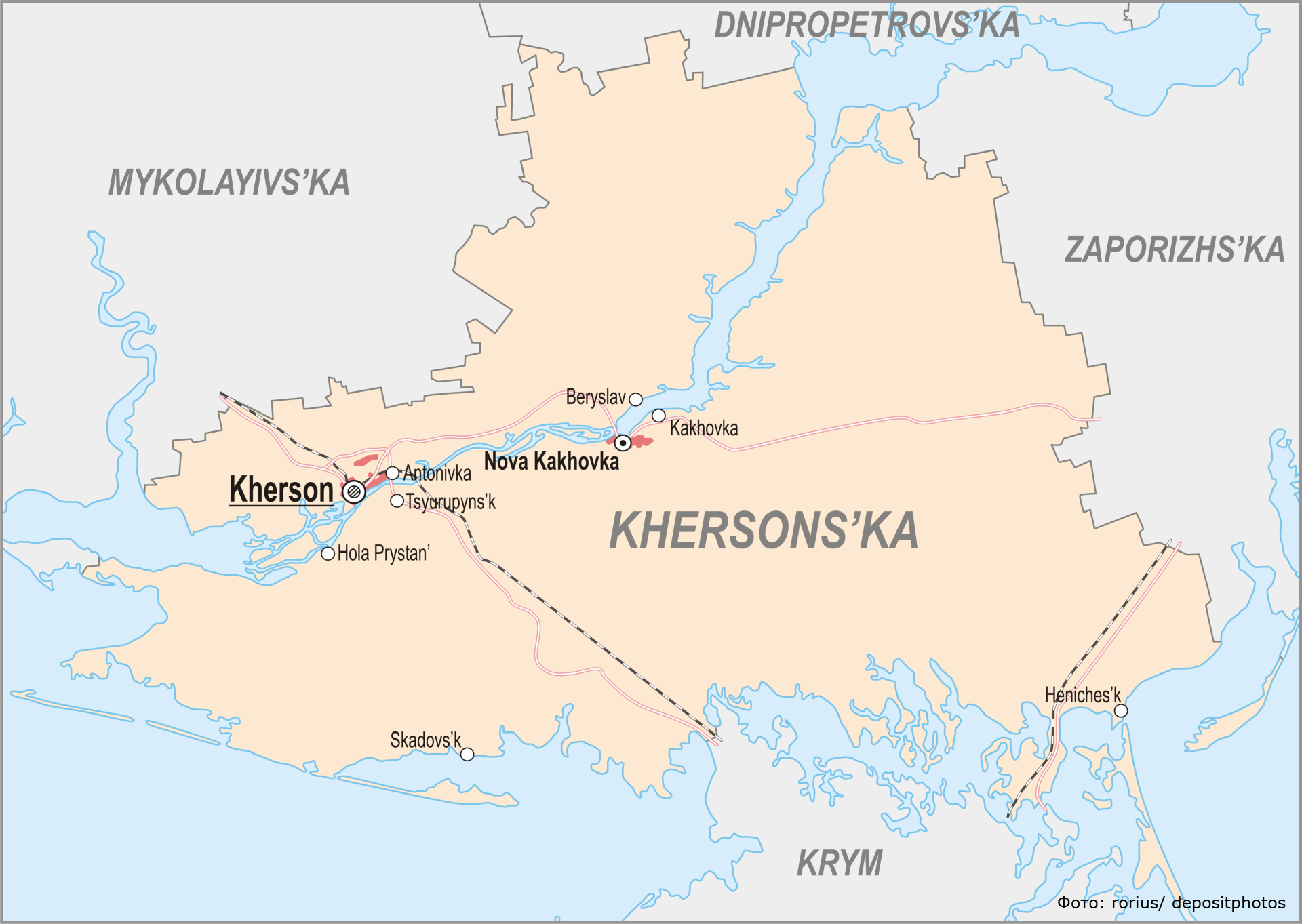
A civilian was killed in a land mine explosion in Beryslav, the Kherson Oblast, on July 18, 2025, according to Oleksandr Prokudin, Head of the Kherson Oblast Military Administration.
A 65-year-old woman stepped on a mine, causing an explosion. She suffered fatal injuries.
“A local resident has died in Beryslav due to a mine explosion. The tragedy happened last night. As a result of the detonation, a 65-year-old woman sustained fatal injuries,” Prokudin said.
The Kherson Oblast Military Administration also reported that three volunteers were injured when they drove over a Russian landmine in the village of Veletenske in the Kherson Oblast on the evening of July 18.
The volunteers – men aged 30, 32, and 57 – suffered blast injuries and concussion. They are in moderate condition.
In total, one person was killed and another 12 injured as a result of Russian aggression over the past day.
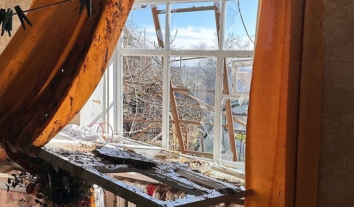
The Kherson Oblast Military Administration reported that Russian forces had targeted critical and social infrastructure as well as populated areas of settlements in the oblast, including damaging a high-rise building and nine houses.
By way of background, Russian army personnel frequently target civilians in the Kherson Oblast with drone attacks. Local authorities regularly report casualties caused by explosives dropped from drones. Previously, the Financial Times reported that Russia may be using these strikes to train operators of kamikaze drones.
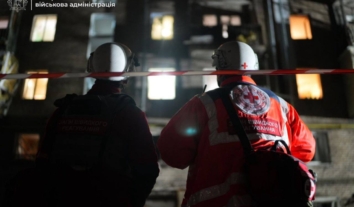
Previously, Prokudin reported that the emergency workers retrieved the body of a woman from under the rubble of a healthcare facility in the settlement of Bilozerka, which was struck by Russian military on the morning of July 11. Three other people were injured in that strike.
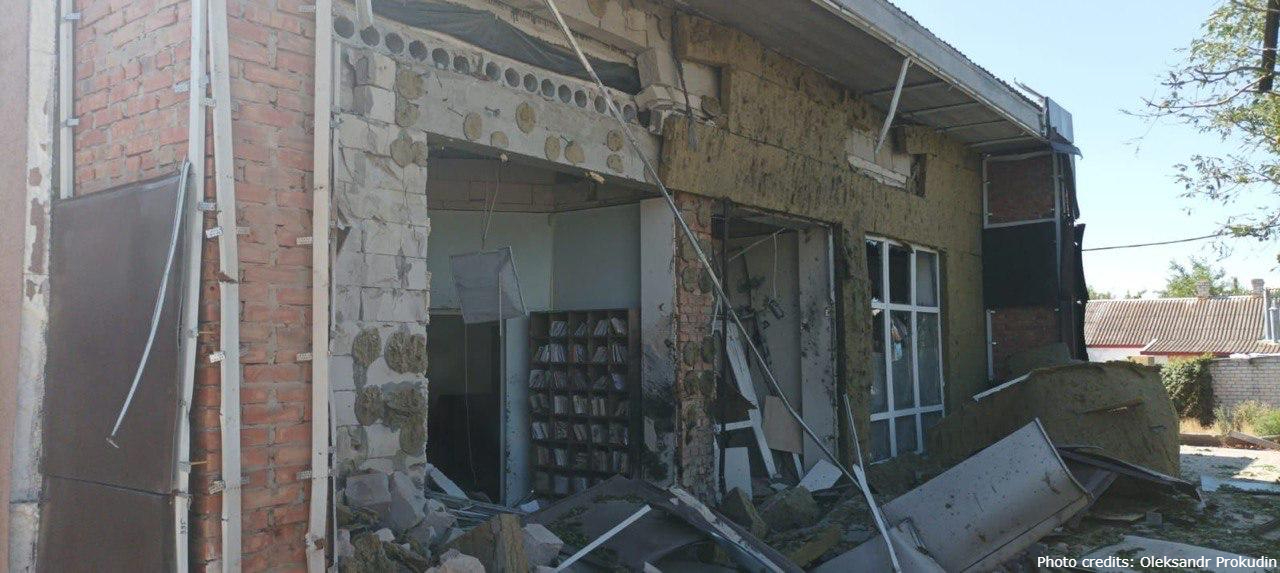
In Kherson Oblast, Russians also targeted critical and social infrastructure, as well as residential areas of settlements on July 12 and 13. Five apartment buildings and 16 houses were damaged. The attack also damaged a gas pipeline, an outbuilding, and cars.
On July 12, one person was killed, and four others were injured in the Oblast.
On the morning of July 13, two residents of Kherson sought medical assistance after a Russian overnight strike on the city’s Korabelnyi district.
A 75-year-old woman and a 44-year-old man sustained blast and head injuries and concussions.
On 11 April, the Russian military personnel injured eight people in Kherson, according to the Kherson Oblast Military Administration.
In Kherson Oblast, Russians targeted critical infrastructure and residential areas of settlements, damaging eight high-rise buildings and six houses. The Russians also destroyed a bank institution and a car.
Eight people were injured in those Russian attacks.
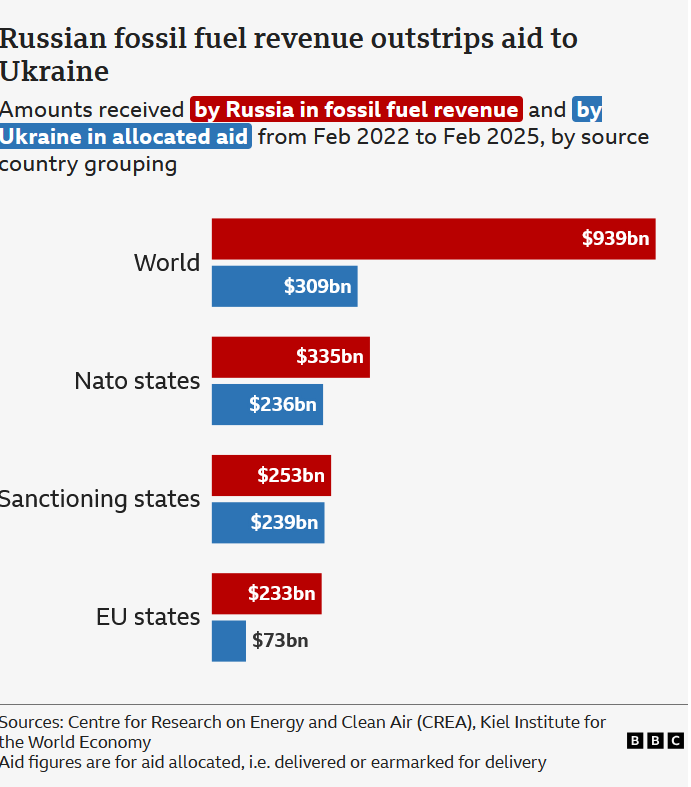
Earlier, BBC’s Russia editor Vitaly Shevchenko pointed out that Russia has continued to make billions from fossil fuel exports to the West, data shows, helping to finance its full-scale invasion of Ukraine, now in its fourth year.
Since the start of that invasion in February 2022, Russia has made more than three times as much money by exporting hydrocarbons as Ukraine has received in aid allocated by its allies.
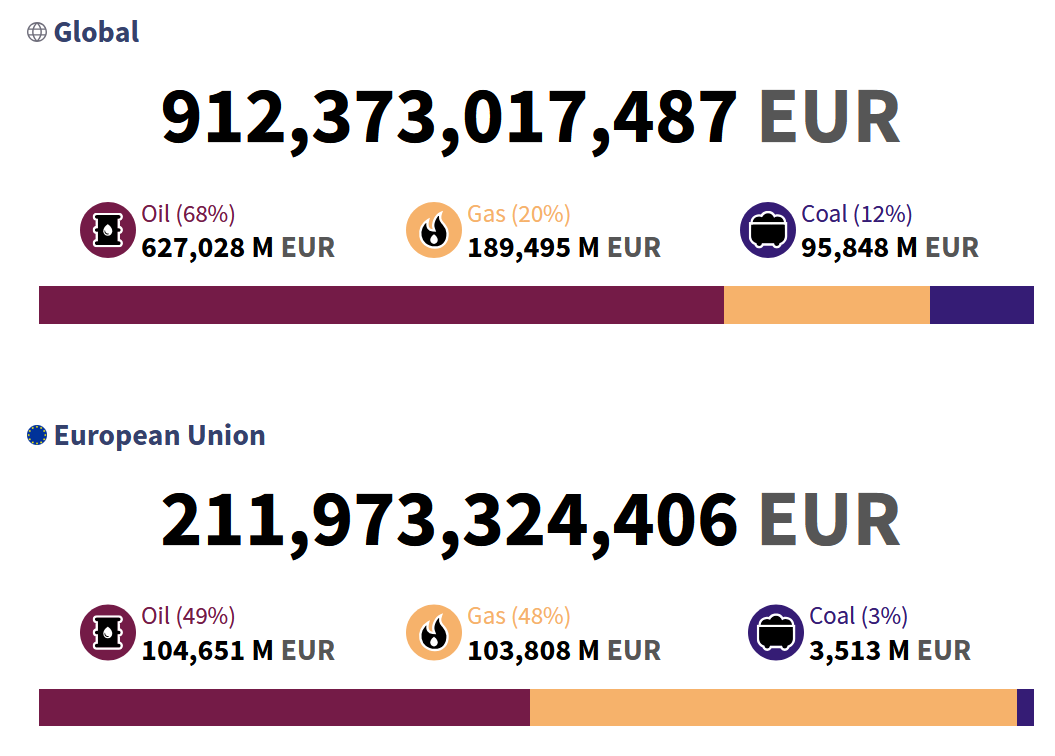
Despite the sanctions imposed on Russia, by July 19, Russia had made more than €912bn in revenue from fossil fuel exports since the start of the full-scale invasion, according to the Centre for Research on Energy and Clean Air (CREA).
Hungary and Slovakia also fund Russia’s war, receiving Russian pipeline gas via Türkiye.
Despite Western efforts, Russia’s fossil fuel revenues in 2024 fell by only 5% compared to 2023, along with a similar 6% drop in export volumes, according to CREA. Last year also saw a 6% increase in Russian revenue from crude oil exports, and a 9% year-on-year increase in revenue from pipeline gas.
Russian estimates say gas exports to Europe rose by up to 20% in 2024, with liquefied natural gas (LNG) exports reaching record levels. Currently, half of Russia’s LNG exports go to the EU, CREA says.
Mai Rosner, a senior campaigner from the pressure group Global Witness, says many Western policymakers fear that cutting imports of Russian fuels will lead to higher energy prices.
“There’s no real desire in many governments to actually limit Russia’s ability to produce and sell oil. There is way too much fear about what that would mean for global energy markets. There’s a line drawn under where energy markets would be too undermined or too thrown off kilter,” she told the BBC.
In addition to direct sales, some of the oil exported by Russia ends up in the West after being processed into fuel products in third countries via what is known as “the refining loophole”. Sometimes it gets diluted with crude from other countries, too.
CREA says it has identified three “laundromat refineries” in Türkiye and three in India, processing Russian crude and selling the resulting fuel to other countries. It says they have used €6.1bn worth of Russian crude to make products, while evading sanctions.
“[These countries] know that sanctioning countries are willing to accept this. This is a loophole. It’s entirely legal. Everyone’s aware of it, but nobody is doing much to actually tackle it in a big way,” says Vaibhav Raghunandan, an analyst at CREA.
Campaigners and experts argue that Western governments have the tools and means available to stem the flow of oil and gas revenue into the Kremlin’s coffers.