Ukraine proposes a leaders’ summit with Trump and Erdoğan by end of August, amidst direct talks with Russia in Istanbul
Ukraine has proposed a meeting between Ukrainian, Russian, Turkish, and U.S. leaders to be held before the end of August, seeking to elevate peace negotiations to the highest level.
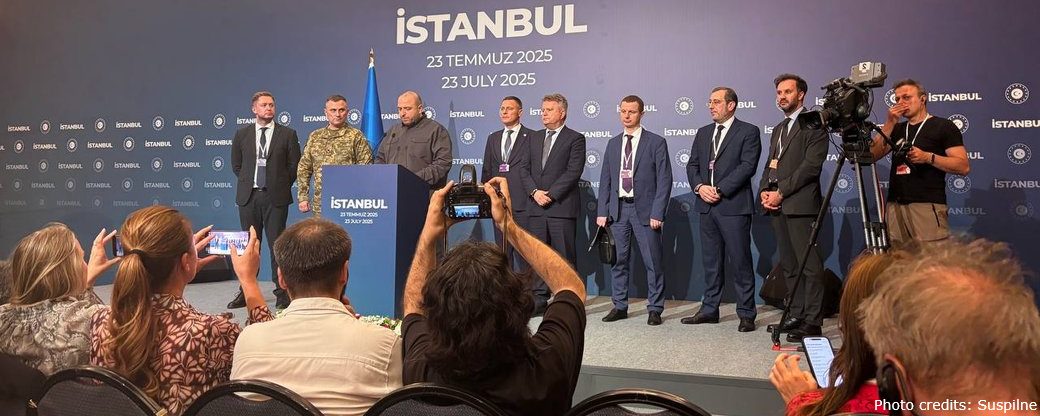
“This time, we also proposed to hold a meeting of leaders, because we understand that fundamental issues can only be resolved at this level,” the freelance advisor to the head of the Ukrainian President’s Office, Alexander Bevz, said at the briefing following the direct talks between Ukraine and Russia in Istanbul, as reported by the Suspilne public broadcaster.
“The Ukrainian delegation proposed to hold this meeting in August,” Bevz stated. “Why? Because any day within this period aligns with the vision of our partners, particularly the U.S., and the deadline set by President Donald Trump for finding a solution.”
The initiative aims to build on the talks and find a decisive path to peace, tying the timeline to a 50-day period previously mentioned by U.S. President Donald Trump for reaching a peace deal.
Turkish news agency Anadolu reported that the talks were preceded by an opening statement from Turkish Foreign Minister Hakan Fidan. He said that the ultimate goal of these negotiations is a ceasefire that would pave the way for peace.
The Ukrainian delegation, led by Rustem Umerov, secretary of the National Security and Defence Council (NSDC), also affirmed its readiness for a ceasefire, including a halt to strikes on critical and civilian infrastructure.
Umerov reported on Facebook that Ukraine has clearly outlined three key priorities set by the head of state. He detailed the non-negotiable points:
1. A complete and unconditional ceasefire, including a halt to all strikes on civilian and critical infrastructure. This halt is a necessary step to begin meaningful diplomacy.
2. The organization of a leaders’ summit between the presidents of Ukraine and Russia, with the participation of other countries, specifically U.S. President Trump and Turkish President Erdoğan. “We have proposed to hold such a meeting by the end of August, taking into account the important timeframes proposed by our partners,” the statement clarified.
3. Continuation of the humanitarian track, focusing on the return of all Ukrainian prisoners, including civilians and children who were illegally transported to the Russian Federation.
Umerov reiterated that Ukraine is ready for an immediate ceasefire and stated that the “technical mechanisms are known,” while the only obstacle is the lack of a political decision in the Kremlin.
“Peace is possible. But for this to happen, Moscow must change its approach: from ultimatums to responsibility, from war to solutions,” the NSDC Secretary noted.
According to Umerov, the parties discussed further stages of prisoner and civilian exchanges. The Russian side reportedly agreed to the return of individuals who have been in captivity for more than three years, including the severely wounded and young people.
Umerov also mentioned that a humanitarian exchange involving more than 1,200 people was discussed. However, he noted that there has been no breakthrough on a broader ceasefire, and working groups continue to prioritize humanitarian issues and the potential leaders’ summit.
In the meantime, in the evening of July 23, the President of Ukraine, Volodymyr Zelenskyy, reported that the ninth stage of the prisoner exchange took place, bringing 1000 seriously ill and gravely injured soldiers back home.
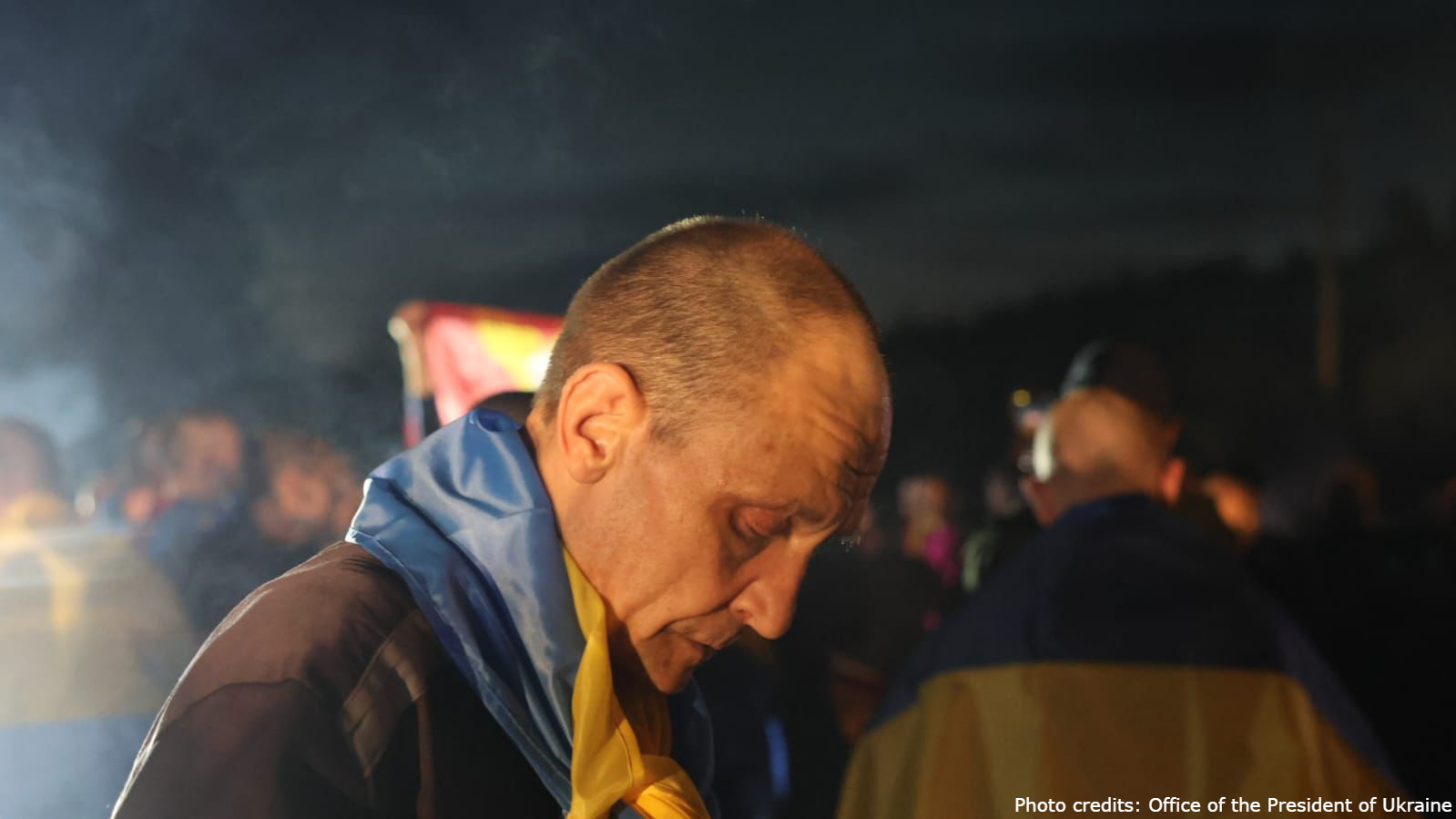
The President added that these soldiers defended Ukraine across various frontline sectors, with a notable number held captive for over three years. All will receive essential support and medical care.
At the same time, Vladimir Medynskyi, a historian and the head of the Russian delegation, told journalists after the talks concluded that around 250 persons from each side had been exchanged. He claimed it was the final exchange within the scope of previously established agreements.
After the talks between the two countries, Russian state propaganda media, including pro-Kremlin Meduza, reported that Medinskyi announced that Ukraine and the Russian Federation’s positions in the memorandum are “quite far from each other.” Earlier, Volodymyr Zelenskyy called this document an ultimatum.
“We agreed to continue contacts both at the delegation level, and yes, we hope, at the level of working groups,” Medinskyi stated.
He also pointed out that apparently, 101 points of agreement from Ukraine remain unfulfilled, as not all residents of Russia’s Kursk Oblast, allegedly “evacuated by the Armed Forces of Ukraine,” have returned home.
Additionally, he confirmed that sanitary exchanges – where both sides hand over seriously wounded individuals directly on the front line – will continue, and he addressed the return of deported children to Ukraine.
Russia appears to have “fully processed” the complete list of 339 surnames of Ukrainian children removed from Ukrainian territory, with some already returned, while work on the remainder continues, the Russian official noted. Andriy Yermak, the head of the President’s Office, refuted Medinskyi’s claims of “fully processing” the list of abducted Ukrainian children.
Previously, the Guardian reported that as many as 35,000 Ukrainian children are still missing and thought to be held in Russia or Russian-occupied territories, according to an American team of experts at Yale University, with families saying they are being forced to take desperate and risky measures to try to rescue them. So far, just 1,366 children have been returned or escaped back to Ukraine, according to the Ukrainian humanitarian initiative Bring Kids Back.
It is feared that many have been taken by Russian forces and sent to military camps or foster care, or have even been adopted by Russian families.
Nathaniel Raymond, executive director of Yale’s Humanitarian Research Lab, which has been investigating the abductions, said that Ukrainian children are being used as a bargaining chip in negotiations.
“When Russians started out, they thought they were going to be victorious quickly, so this programme was rolled out, not to take these kids and hold them, but to be able to Russify Ukraine. But because things started to go south quickly, they had to move their propaganda from the liability concealment phase to using these children as hostages to be leveraged in the negotiations,” he said.
The third round of peace negotiations between the Ukrainian and Russian delegations began in Istanbul on the evening of July 23.