Two Filipino men rescued from trafficking operation promising jobs in Russia
The Bureau of Immigration (BI) intercepted two Filipino men at Ninoy Aquino International Airport Terminal 3 on January 2, 2026, preventing them from becoming victims of a human trafficking scheme bound for Russia, Philstar Global news outlet reported.
The BI said the passengers, aged 48 and 52, were stopped before boarding a Cathay Pacific flight to Hong Kong, according to the agency’s statement.
Immigration officers said the two initially presented themselves as tourists, but a secondary inspection showed their travel was intended to facilitate illegal employment abroad.
During the investigation, the men admitted they had been recruited through social media. Their recruiter promised them legal work in Russia with monthly salaries ranging from 100,000 to 150,000 pesosі , the BI said.
The victims also described a “wait-and-see” tactic used by the traffickers, in which they were instructed to fly to Hong Kong first and wait for their visas and onward tickets to Russia.
The BI said it had received prior intelligence about a larger group targeted for trafficking to Russia, prompting officers to closely monitor passengers with inconsistent travel accounts.
The two men were turned over to the Inter-Agency Council Against Trafficking for assistance and to support the filing of criminal charges against their recruiters.
To provide background, since 2022, Moscow has targeted the economically vulnerable across Africa, South Asia, and Latin America — Nepalis promised security work, Kenyans told they’d guard facilities, Cubans offered escape from grinding poverty. Instead, they’ve become expendable infantry in a war they barely understand, while young women from Brazil and African nations labor under exploitative conditions in Russian drone factories.
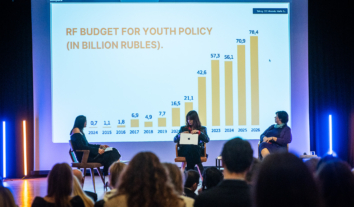
Wellington Nyongesa, intake editor at Standard Group PLC, stated at the Third International Conference Crimea Global that nearly 300 young Kenyan men are trapped on the Russian front lines in Ukraine, lured by false promises of jobs in supermarkets, logistics, and construction.
Previously, ZMINA reported that a video showing Russian mistreatment of African mercenaries spread among Kenyan social media users. In the video, a Russian serviceman humiliates an African fighter by strapping an anti-tank mine to him in what the narration frames as a cruel prank or punishment, labeling him with a racist expression as “coal.”
Munira Mustaffa, Senior Fellow at Verve Research, warned countries that Russia has built a global human trafficking infrastructure to sustain its war in Ukraine, exploiting economic desperation across the Global South to avoid domestic mobilization. Moscow loses approximately 1,000 soldiers daily and must recruit 30,000-40,000 new personnel monthly to maintain force levels.
After a 2022 mobilization attempt drove over 261,000 Russians to flee the country, Russian ruler Vladimir Putin authorized foreign nationals to serve in Russia’s military through a July 2025 decree that deliberately omitted recruitment specifications.
The trafficking networks span from North Korea to Cuba, Nepal to Kenya, operating through false promises of construction jobs or warehouse work. Russia has recruited over 10,000 North Korean soldiers and established pipelines in Syria, Cuba, Nepal, India, Bangladesh, Kenya, Somalia, Sierra Leone, South Africa, and Iraq. These networks weaponize poverty, with victims having no stake in the conflict’s causes or outcomes.