Sybiha invites Ghana’s FM to Ukraine amid appeal over captured Ghanaian fighter on Ukrainian soil
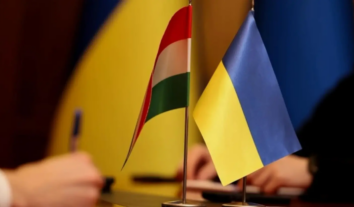
Ukraine’s Foreign Minister Andrii Sybiha responded to an appeal regarding a captured citizen of Ghana as a POW on Ukrainian soil and invited the country’s Foreign Minister, Samuel Okudzeto Ablakwa, to Ukraine.
“We have noted Ghana’s concerns and request for the return of a Ghanaian citizen who was captured in a combat zone as a Russian mercenary. I reiterate my invitation to Ghana’s Foreign Minister to visit Ukraine in February 2026,” Sybiha wrote on X.
Ukraine’s Foreign Minister promised that Ghanaian diplomats would be granted access to prisoners of war in accordance with international humanitarian law, adding, “We stand ready to discuss this issue in a substantive manner.“
Additionally, he stated that Ghanaian diplomats will be granted access to prisoners of war upon their request, in accordance with international humanitarian law.
“We look forward to cooperation with the Ghanaian side in a spirit of friendship and mutual respect,” the minister added.
To provide background, in November 2025, during the Third International Conference “Crimea Global. Understanding Ukraine through the South”, the panel discussion — “Mercenaries or Victims of Human Trafficking? How Russia Recruits Foreign Fighters into Its Army” — took place.
Secretary of the Coordination Headquarters for the Treatment of Prisoners of War Dmytro Usov outlined current trends in the recruitment of foreign nationals into the Russian army, noting that most of those signing military contracts are citizens of CSTO member states and African countries, with fewer coming from elsewhere. He emphasised that key motives for foreigners include financial incentives, ideological alignment, or coercion by Russian occupation forces.
Director of Research at the Institute of International Cooperation and Engagement, Dr. Pramod Jaiswal, stressed that Kathmandu continues to support Ukraine at the highest political level, yet Russia persists in recruiting Nepali men for its war. He underscored that Moscow uses all foreign recruits as expendable shields — they receive only two weeks of training, and their bodies are often abandoned on the battlefield.
Journalist at Standard Group PLC, Wellington Nyongesa, noted that Russia employs Kenyan citizens at its defence production facilities — including drone assembly plants – and continues to recruit Kenyan men for the war against Ukraine, often through employment agencies. He added that the Kenyan government is currently seeking dialogue with Ukrainian authorities to develop a mechanism for securing the release of Kenyan citizens held in captivity.
Senior Research Fellow at Verve Research Munira Mustaffa emphasised that Russia compensates for its manpower shortage by recruiting foreign volunteers willing to sign contracts with the Russian military. She stressed that governments are unable to protect their citizens once they join the Russian army because Russia’s recruitment model is built on systematic fraud and deception.
Columnist, author, analyst, and expert on politics, conflict, and international relations in South Asia, Luv Puri highlighted that the participation of Indian citizens in foreign wars has no legal basis and is neither supported by Indian society nor by the state. He noted that the primary drivers of Indians joining the Russian Armed Forces are poverty and economic migration — individuals seeking “quick money” become victims of manipulation. He also underscored that although Asian diplomacy often relies on non-public mechanisms, India’s position on this issue remains firmly aligned with Ukraine.