Special Tribunal for the Crime of Aggression against Ukraine open to global participation — Dr. Anton Korynevych
The Special Tribunal for the Crime of Aggression against Ukraine will become a global mechanism — countries in Latin America, Africa, and Asia are invited to join it. Ukraine is finalizing the treaty for an international committee that will govern the tribunal and influence its operations, including the appointment of judges, according to Dr. Anton Korynevych, Director of the International Law Department of the Ministry of Foreign Affairs of Ukraine.
 Anton Korynevych
2025 has been a significant year for Ukraine in terms of developments in the justice sector. Ukraine signed an agreement on the creation of the Special Tribunal with its mostly European partners.
Korynevych explained that an integral element of the document on the Special Tribunal is a treaty concerning the committee that will govern this tribunal. This document is currently being finalized, and he hopes it will be fully completed by late 2025.
He added that Costa Rica participated in the most recent session.
“Through this committee, they will influence the work of the tribunal: they will elect judges and resolve other key issues. This committee treaty is the instrument that makes the tribunal multilateral,” Korynevych said.
In addition to the tribunal, the International Register of Damage for Ukraine has begun operating in The Hague — it will record all losses from the war for future compensation. Australia recently joined the Register, which, according to Anton Korynevych, demonstrates that the mechanism is open to countries worldwide, not just in Europe.
“The expert community in the states of Latin America, Africa, and Asia can also disseminate information about joining these international mechanisms,” Anton Korynevych added.
Furthermore, he announced that the treaty for the International Commission for Claims and Applications will be signed on December 16, 2025, in The Hague. Leaders of various states will gather on that day in The Hague to sign this convention, which various countries of the world can also join.
Founding member of the Research Group on International Protection of Minorities at the University of São Paulo, Dr. Felipe Alamino, discussed the issue of Crimea’s occupation. In his speech during the international conference, he focused on the legal consequences of Russia’s aggression.
He noted that although there is no specific legal document directly addressing the occupation, the United Nations General Assembly resolution revives the concept of aggression and provides grounds for prosecution. He clarified that the resolution is not legally binding but affirms that the occupation constitutes an act of aggression aimed at violating a state’s territorial integrity, with the use of armed forces serving as direct evidence of such aggression.
Professor of Sociology of Law, Transitional Justice, and Political Sociology at Alberto Hurtado University, Dr. Hugo Rojas, emphasized that Latin America has valuable experience in documenting human rights violations. His recommendations cover various topics, including documentation, information protection, decision-making processes, informing families, determining who has access to the data, and how to use this information in judicial proceedings. He also stressed the importance of establishing a parallel registration system by civil society in cooperation with the government.
Additionally, Anton Korynevych recalled that Ukraine became the 125th member state of the International Criminal Court (ICC) upon ratifying the Rome Statute. He emphasized the importance of countries detaining suspects of international crimes based on the court’s arrest warrants.
Korynevych expressed serious concern over U.S. sanctions against the ICC. The U.S. has already introduced personal restrictions against individual court employees and could now introduce institutional sanctions against the entire organization.
You may also want to read: Justice cannot be subject to political pressure — Tomoko Akane
“This move will create challenges for the work of the International Criminal Court and for its investigation into the situation in Ukraine. Therefore, it is extremely important for Ukraine that this do not happen; it is important to ensure the active functioning of the ICC with the investigation of the situation in Ukraine and the operation of the court’s office in Kyiv,” Anton Korynevych stressed.
He also announced the Assembly of States Parties of the International Criminal Court in The Hague and called on the expert community, civil society, activists, and intellectuals in countries across Latin America, Africa, and Asia to promote support of the International Criminal Court.
ZMINA previously reported that the European Union agreed to allocate the first 10 million euros for the creation of the Special Tribunal for the Crime of Aggression against Ukraine and another 6 million euros for victims of sexual violence committed by Russian military personnel.
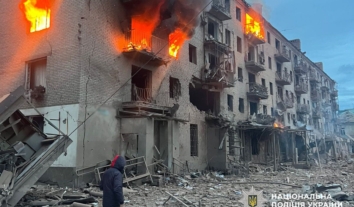
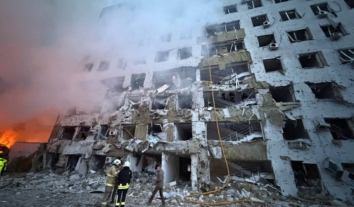
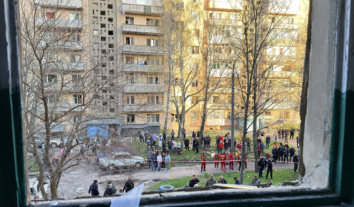
Russian authorities have already prepared a legislative basis to avoid prosecution for war crimes. The full-scale Russian invasion of Ukraine remains the deadliest conflict globally, accounting for 59% of all fatalities in interstate conflicts worldwide.