Russians killed six adults and three children in Ukraine with shelling on February 11
As a result of Russian military shelling over the course of February 11 in the Kharkiv, Dnipropetrovsk, and Donetsk regions, nine civilians were killed, and more than four dozen others sustained various injuries, specifically in the Kherson and Zaporizhzhia regions, according to the National Police of Ukraine.
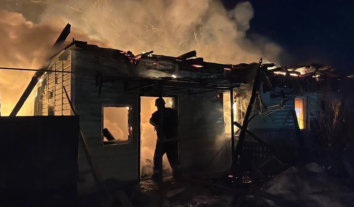
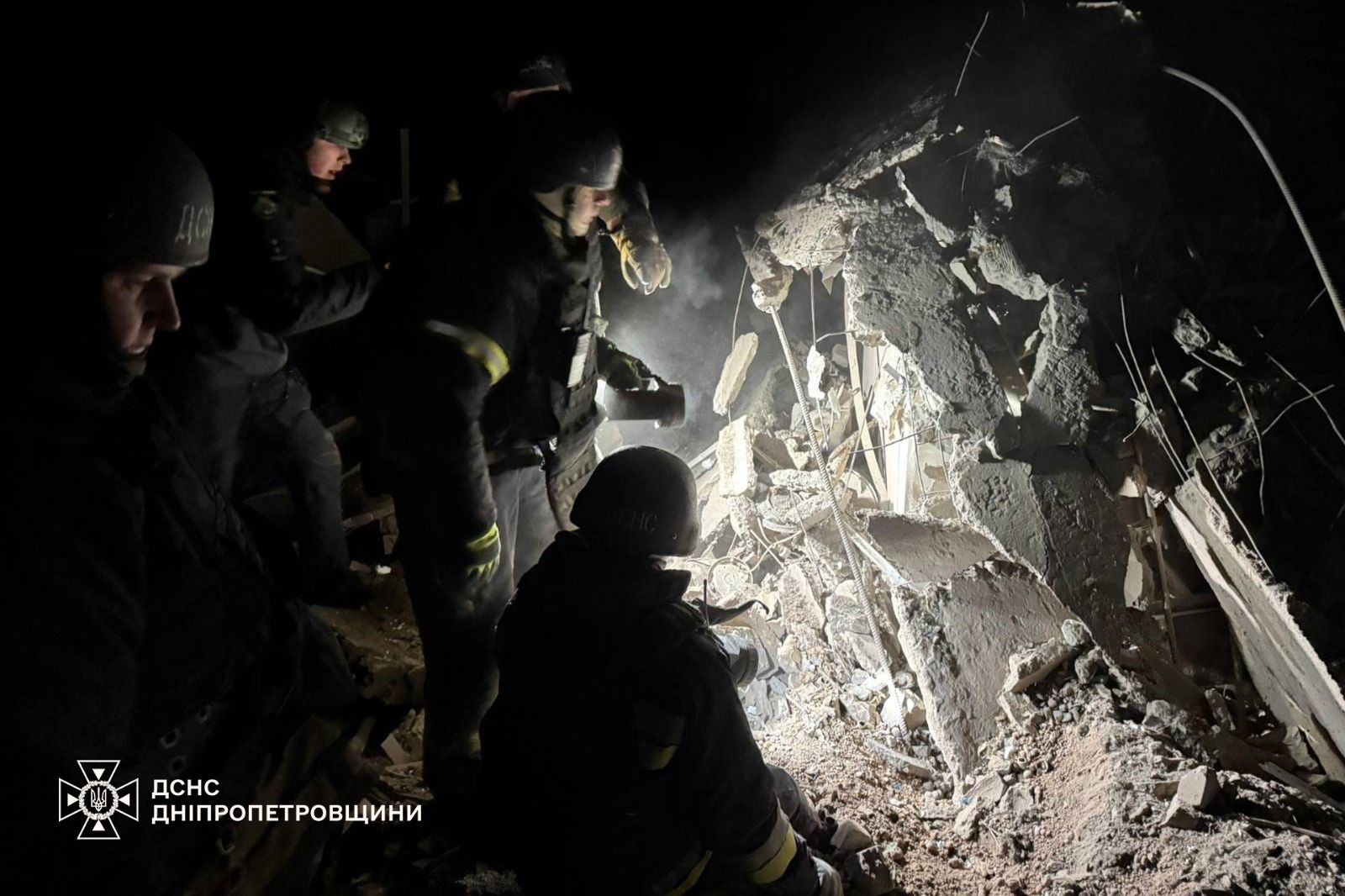 Rescuers are searching for the bodies of the deceased under the rubble of a building shelled by the Russian military in the Dnipropetrovsk region
The victims of the Russian strikes on February 11 were:
- A father and three small children, whose bodies were found under the rubble of a house in Bohodukhiv, struck by an enemy drone;
- A married couple and their adult son, whose home was hit by a Russian guided aerial bomb in the Pokrovsk “hromada,” a local government area that includes one or more nearby settlements;
- A man in one of the hromadas in the Dnipropetrovsk Oblast;
- A person in Kostiantynivka, the Donetsk Oblast;
- A person from a medical vehicle that Russians struck with a drone on the Kyiv–Kharkiv–Dovzhanskyi highway.
In addition to the dead, many civilians, including children, were injured.
In the Kharkiv Oblast, at least 19 people were injured by Russian strikes, among them nine from Barvinkove, where a two-story store was hit. Also in the region, two children suffered an acute stress reaction in the village of Zolochiv, which Russia struck with drones.
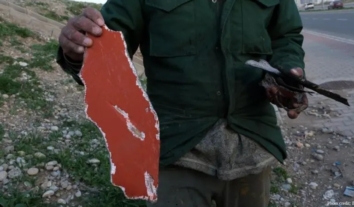
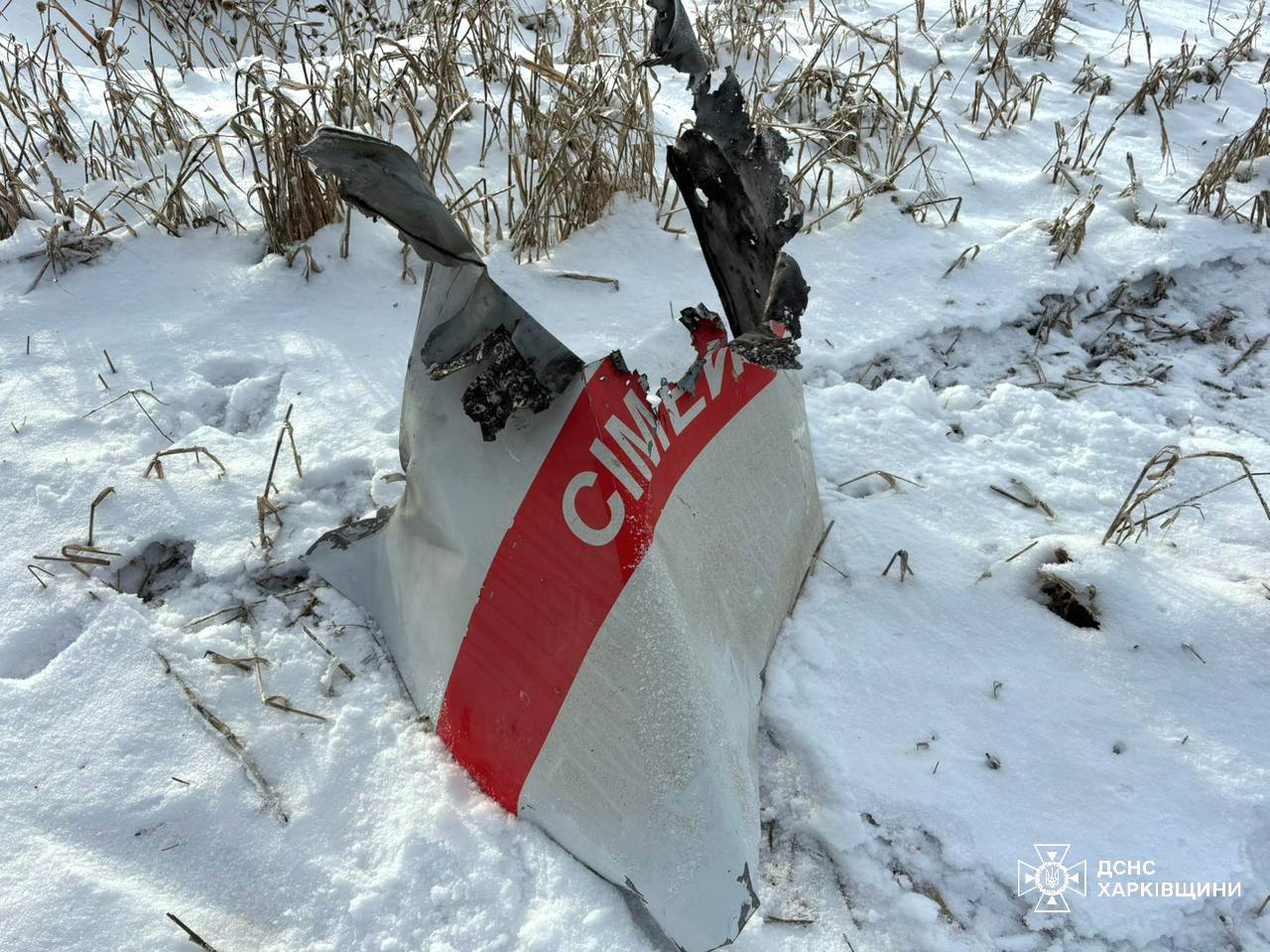 A fragment of a vehicle that the Russian military struck with a drone in the Kharkiv region, while five medics and patients were inside.
In the Kherson region on the previous day, Russian shelling injured 10 locals. At night, a drone struck a house in Novokairy, injuring a married couple; later, a female pensioner was wounded in Lyubymivka, and due to a Russian artillery strike, a married couple was injured in Bilozerka.
Among those injured on February 11 were two city residents from Kherson, and two individuals injured days earlier were also included in the police report. These are an 86-year-old woman and a 51-year-old man.
Serhiy Koretskyy, Chairman of the Board of NJSC Naftogaz of Ukraine, stated that Russians are striking the Kherson Combined Heat and Power (CHP) plant of the Naftogaz group, attacking the station with various types of drones. According to him, there is further damage.
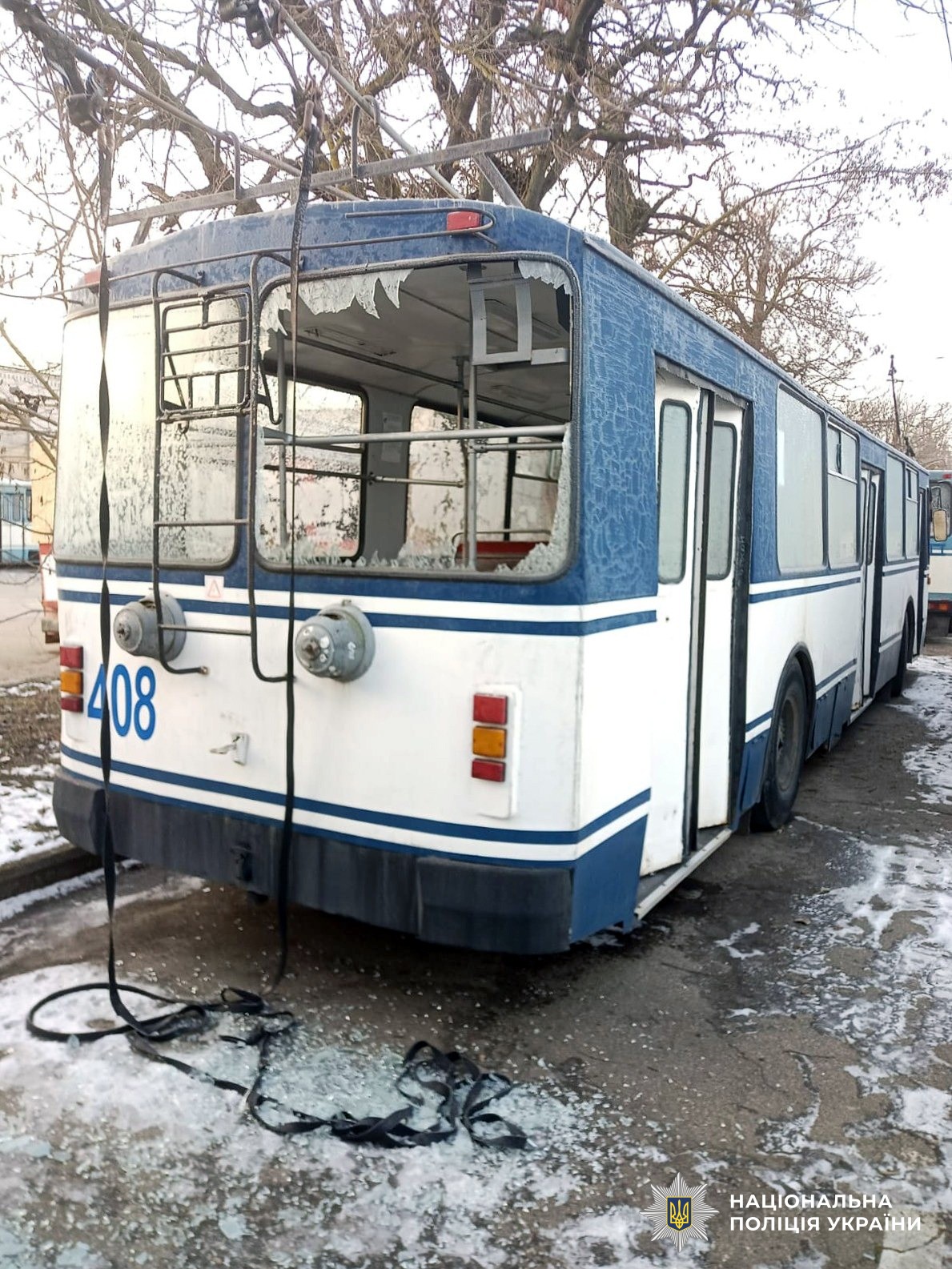 A trolleybus damaged by a Russian strike in Kherson
In the Dnipropetrovsk region, the morning of February 11 began with a Russian drone strike on a minibus, from which no one was injured. At the same time, by evening, it became known that three people were injured due to other shelling; in particular, there were reports of a neighbor of a deceased family who was rescued.
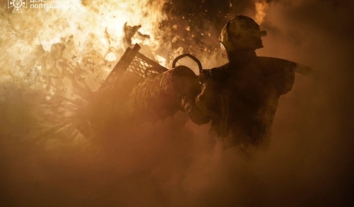
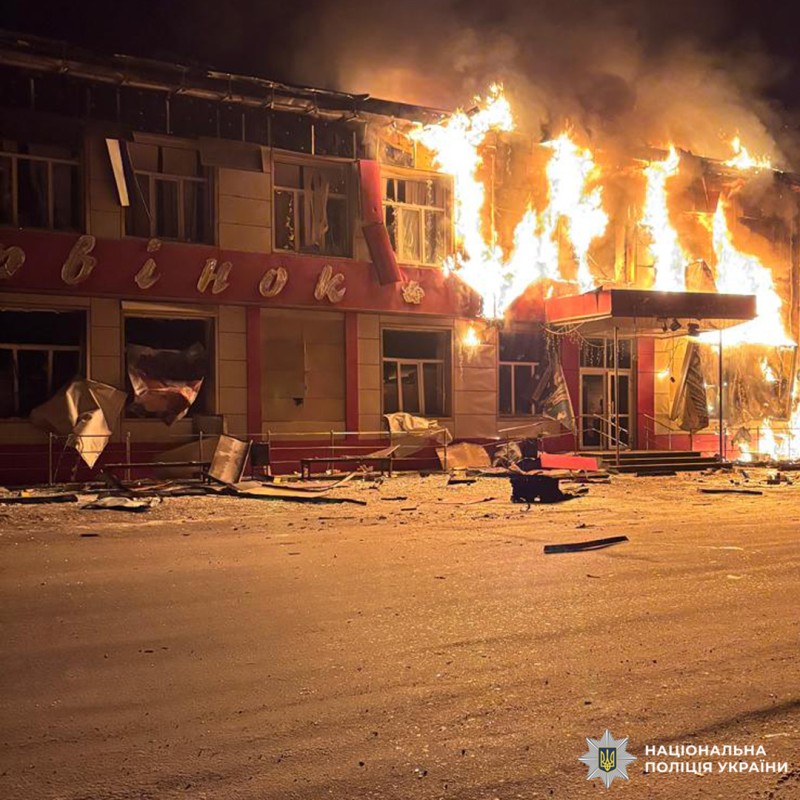 A two-story store is on fire after Russian shelling in the Kharkiv region
In the Donetsk region, where Russians launched 1,500 strikes on February 11, four people were injured in Kostiantynivka and one in Starodubivka.
Two more women were injured due to a Russian strike on the night of February 11 in the Zaporizhzhia Oblast. In total, over the course of the day, the Russian Federation launched nearly 700 attacks on the region, primarily with drones, as well as with artillery, multiple launch rocket systems, and aviation.
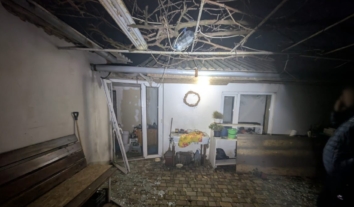
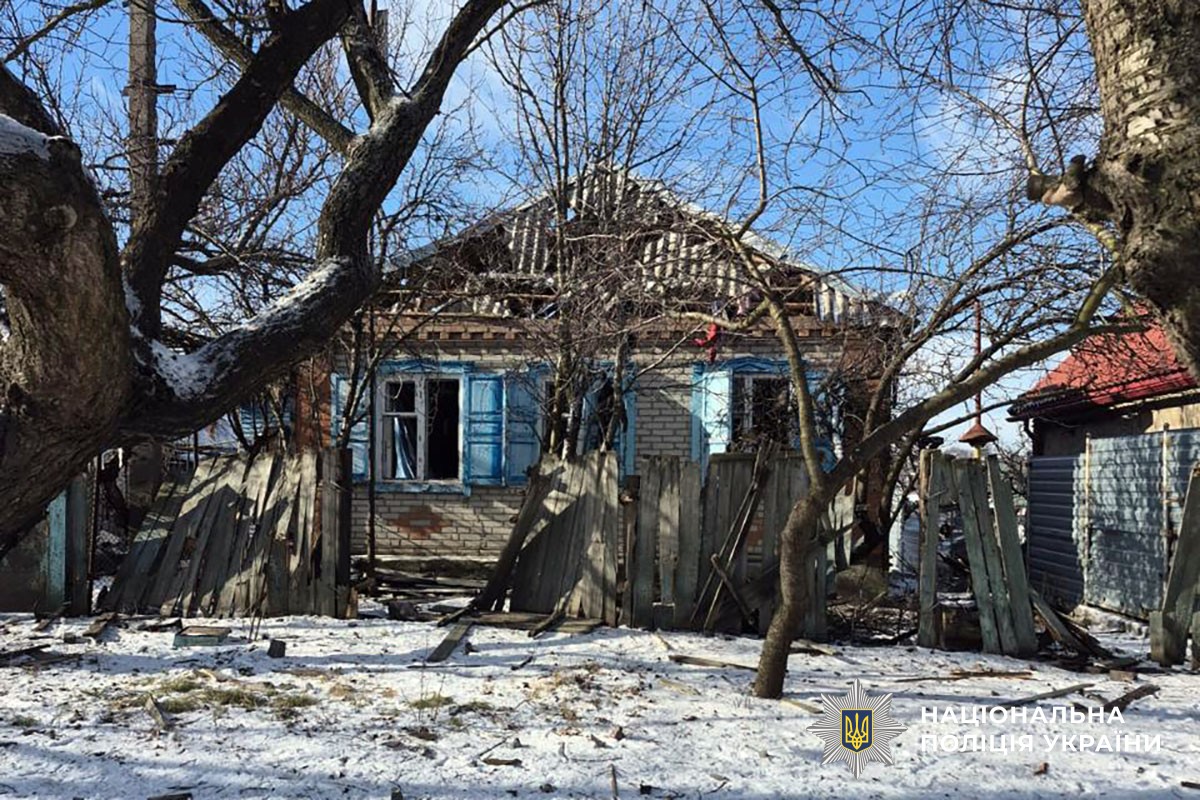 A house damaged by Russian shelling in the Donetsk region
As a reminder, during the 24-hour period of February 10, Russian military shelling killed four adults and a child in Ukraine.
To provide background, within 24 hours of taking office, U.S. President Donald Trump has not secured an end to Russia’s war as he promised. Furthermore, numerous Ukrainian and international experts point out that the U.S., as a guarantor state under the Budapest Memorandum, is pressuring Kyiv into capitulation.
Meanwhile, Ukrainian human rights lawyer and Nobel Peace Prize laureate Oleksandra Matviichuk has criticized U.S. President Donald Trump over a rise in civilian war casualties in Ukraine since he took office in 2025.
Nobel Peace Prize laureate pointed out that the number of Ukrainian civilians killed or injured because of the war rose by 31% compared to the previous year. She asked why Trump’s year of negotiations was the deadliest for Ukraine’s civilian population since the start of Russia’s full-scale invasion.
“Why did Putin not allow himself such brutal strikes on civilian infrastructure under Biden, whom Trump calls ‘weak,’ but totally destroys peaceful cities and disregards the ‘strong Trump’?” she asekd on her Facebook page.
Earlier, Bohdan Bernatskyy, a member of the Sanctions Policy Working Group of the Crimean Platform Expert Network, revealed at the Third Parliamentary Summit in Latvia that over 1,300 Russian military companies and 2 million industrial workers continue to operate, many without international restrictions.
Previously, Latvian Defense Minister Andris Sprūds stated that Western sanctions against Russia have a long-term impact on the country’s military economy.
Over the last three and a half years, China has become a critically important partner for the Russian Federation. While Beijing officially declares its neutrality, Western intelligence and analytical studies indicate otherwise. For instance, China does not supply weapons directly to Russia, but it provides critically important components, including machinery, microelectronics, specialized chemicals, optics, gunpowder, and ammunition components.
Donald Trump announced several days ago that the United States would lower tariffs on Indian goods in exchange for India halting its imports of Russian oil.
Indian Prime Minister Narendra Modi thanked Trump but did not explicitly confirm the deal or disclose further details.
According to energy data firm Kpler, purchases have declined in recent months but still averaged approximately 1.2 million barrels per day in January.
Meanwhile, the Center for Strategic and International Studies found that in 2024 China increased sales of ammonium perchlorate — a key ingredient used to produce solid propellant for Iskander missiles. This assistance enabled Russia to triple its ballistic missile production, the report stated. Beijing’s support has bolstered Russia’s defense industrial base, enabling Russian forces to launch salvos of 13 to 18 Iskander-M ballistic missiles in 2026.
Overall imports from China have grown to represent one-third of Russia’s total imports, while Russian oil exports now account for 75% of all oil purchased by Beijing. Analysts specifically highlighted defense-related imports, which provided the Russian military-industrial complex with machine tools, components, and raw materials for weapons manufacturing.
Furthermore, Russia’s defense industry also received computer chips, machine tools, radars, and sensors from China, according to CSIS. These goods are part of a list of 50 items aiding weapons production, effectively compensating for Russia’s limited manufacturing capacity in its defense sector. Other areas of support include the supply of drone hulls, lithium batteries, and fiber-optic cables. CSIS reported that Russian imports from China rose from $190 billion in 2022 to $250 billion in 2024.
In 2024, then-U.S. Secretary of State Antony Blinken stated that 70% of heavy industrial equipment and 90% of all microelectronics are sourced from China, which then flows into Russia.
Furthermore, according to recent NATO intelligence data, 80% of all Russian drones consist of Chinese parts.
According to The Telegraph newspaper, Chinese firms supplied sanctioned Russian companies with at least £47 million ($57.4 million USD) worth of parts between 2023 and 2024. Almost a quarter of the value of these supplies went to firms that produce Shahed-type drones.
Moreover, the Foreign Intelligence Service of Ukraine stated that China is also providing intelligence to Russia. The Kremlin used this data to prepare missile strikes, particularly against objects belonging to foreign investors, though the specific targets were not clarified. China denies these accusations.
Following the imposition of Western sanctions, Beijing has become a key supplier to Russia of cars, clothing, raw materials, and a range of other goods. In 2023, Russia-China trade turnover set a historic record, exceeding $240 billion, which is more than 60% higher than before Russia’s invasion of Ukraine, according to Chinese customs data.
Reuters also reported that China is buying oil and gas from Russia. The average daily volume of oil is more than two million barrels per day. During Vladimir Putin’s visit to Beijing, the countries signed a document for the supply of 106 billion cubic meters of gas per year to China.
Reuters also reported that tens of thousands of cars are being exported from China to Russia under gray-market schemes that often circumvent Western and Asian government sanctions and automakers’ commitments to exit the Russian market, according to registration data reviewed by Reuters and interviews with five people involved in the trade.
Follow ZMINA on X and LinkedIn for daily human rights coverage from Ukraine – we invite you to share your feedback on what you’d like to see more of in our survey here.