Russian ballistic missile strike on Odesa port kills two, injures six
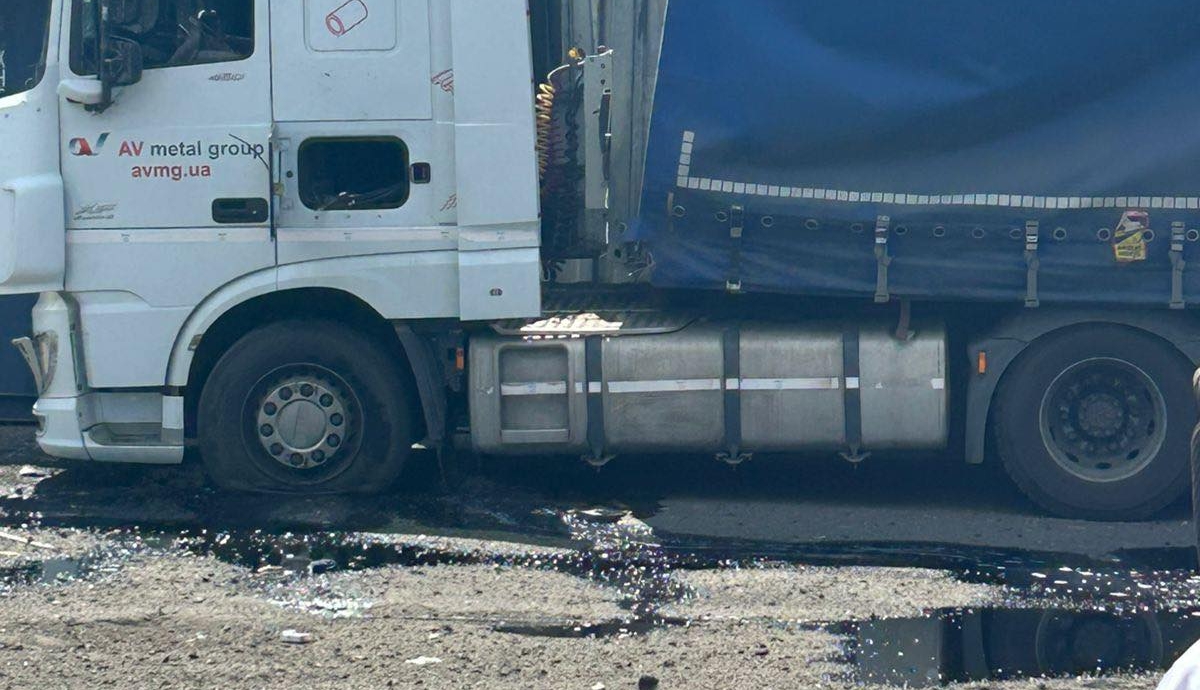
Russian armed forces killed two workers and injured six others in a ballistic missile attack on port infrastructure in Odesa on July 3, 2025. Russians struck the area while workers were unloading cargo from a foreign vessel, according to Oleh Kiper, head of the Odesa Oblast Military Administration, during the national 24/7 newscast.
The strike occurred shortly after an air-raid warning was issued in Odesa at 12:47. Minutes later, the Ukrainian Air Force reported a Russian aerial asset approaching the city.
Ukraine’s Deputy Prime Minister for Restoration, Oleksii Kuleba, revealed that an Iskander missile struck near one of the berths of the Odesa Sea Port. At the time of the attack, workers were present unloading metal from a foreign vessel flying the flag of São Tomé and Príncipe.
According to Kuleba, a dockworker and a truck driver were killed, while six others were injured, including employees of one of the port operators and a driver. Among the injured are two Syrian nationals who were crew members of the civilian vessel. All necessary assistance is being provided to the victims.
The attack also caused significant infrastructure damage, affecting portal cranes, equipment, and warehouses at the port facility.
This attack follows recent Russian strikes on Odesa. On the night of 2-3 July 2025, Russian drone attacks on the city damaged a nine-story residential building, injuring six people, including two children.
Meanwhile, Ukraine has warned that an interruption of US weapons shipments might encourage Russia to continue the war.
The White House said that it had cut off some weapons deliveries to Ukraine, which has been at war with Russia for four years. White House spokesperson Anna Kelly said the decision was taken “to put America’s interests first” following a Department of Defence review of US “military support and assistance to other countries.” Russia welcomed news of the US administration, saying reducing the flow of weapons to Kyiv will help end the conflict faster. Russia didn’t change its goal to conquer Ukraine.
Ukraine urges the international community to unite to restore global security under the UN Charter and strengthen sanctions against Russia to enforce compliance with international law. Following Russia’s initial invasion in 2014, Ukraine has pursued the liberation of its territories within its internationally recognized 1991 borders while developing comprehensive reintegration strategies and policies for all liberated areas.
Previously, Bohdan Bernatskyy, a member of the Sanctions Policy Working Group of the Crimean Platform Expert Network, revealed at the Third Parliamentary Summit in Latvia that over 1,300 Russian military companies and 2 million industrial workers continue to operate in Russian military equipment production, many without international restrictions.
Previously, the UN Human Rights Monitoring Mission in Ukraine (HRMMU) issued a report in which HRMMU indicated that the Russian military increasingly uses FPV drones for targeted strikes on civilians in Ukraine.
The report stated that drones had become one of the leading causes of civilian casualties in Ukraine, surpassing, in some months, more powerful weapons such as missiles, artillery and aerial bombs.
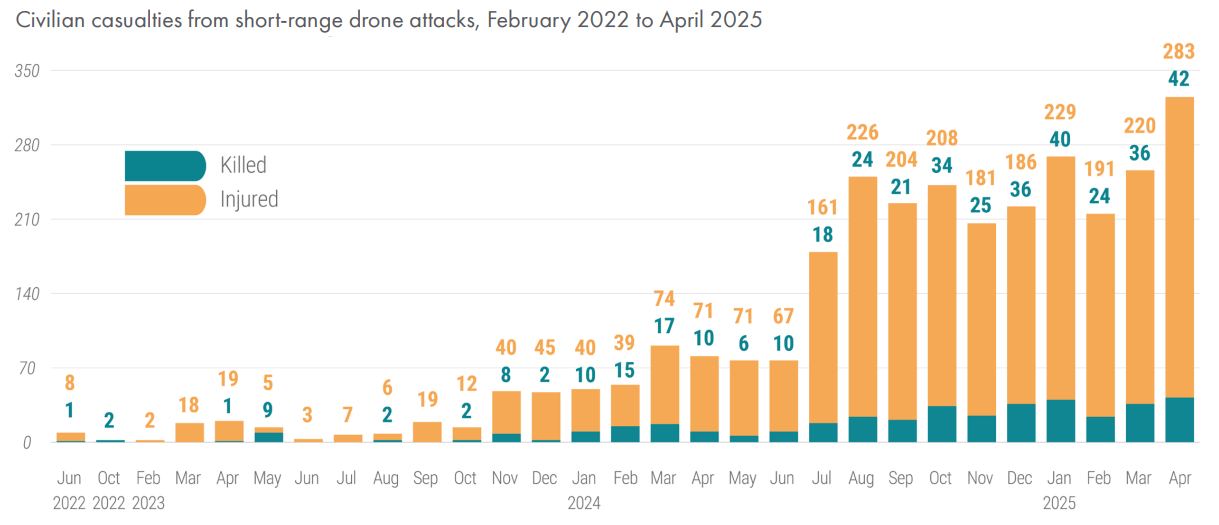 Infographics by the HRMMU
According to the UN’s analysis, Russian forces have deliberately attacked civilians who showed no signs of direct participation in hostilities. Among the casualties the HRMMU identified were civilians traveling by bicycle, in cars, on evacuation buses, in ambulances, during humanitarian missions, while walking or near their homes.
In addition to direct casualties, drone attacks prevent the delivery of humanitarian assistance. NGO workers, medical staff and public officials cannot move safely through affected areas, and the attacks deprive civilians of access to basic services, health care and food. Elderly people and persons with disabilities face the greatest impact as they remain in dangerous areas due to limited evacuation options.
On June 29, Slovak Foreign Minister Juraj Blanár stated that resolving Russia’s full-scale invasion of Ukraine requires re-establishing communication with Moscow, as reported by the Slovak news agency TASR, with reference to STVR. He also stated that the West must find a way to cooperate with Russia and “perhaps even forgive everything that has happened.”
Ukrainian Foreign Minister Andrii Sybiha reminded Blanár X (Twitter) that “a sense of impunity is the root cause” of Russia’s crimes.
“It’s naive to expect a criminal to stop if their crime is forgiven instead of punished. Russia will hit your other cheek as well,” the Minister wrote.
Sybiha also added that those “who have lost no one in this war have no right to make such statements.”
A diplomat from one of the key EU countries, on condition of anonymity, told a European Pravda news outlet that Slovakia and Hungary are blocking the 18th package of European Union sanctions against Russia on June 27.
Slovakia is blocking the sanctions in order to obtain guarantees from the European Commission regarding the consequences of completely abandoning Russian gas from 2028.
Hungary, as the European Pravda source said, did not put forward any specific conditions.
The diplomat expressed confidence that discussions among EU ambassadors on the 18th package of sanctions would not resume before the European Commission delegation visits Bratislava on July 3.