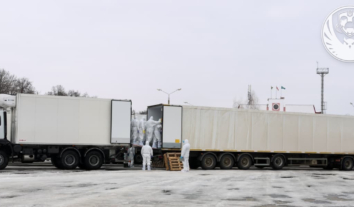
On Ocbtober 9, Russians killed one person in shelling, among the injured are elderly people and a female doctor
Russian shelling on November 9, 2025, killed one civilian in the Kherson Oblast and wounded more than 10 others across the Kharkiv, Dnipropetrovsk, and Donetsk regions, the National Police reported.
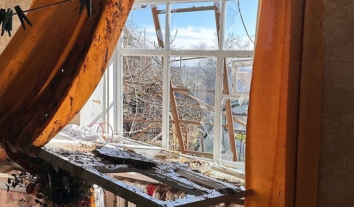
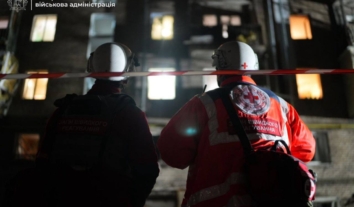
 Rescuers work at the site of a Russian military strike in the Kharkiv region, where two women were wounded in the village of Prykolotne on November 9, 2025
A 26-year-old man from Stanislav, the Kherson Oblast, died the previous day. was. He was killed in a Russian drone attack, which also wounded a 35-year-old medical worker. The woman was hospitalized with a blast injury and shrapnel wounds.
In addition to the medical worker, Russian forces also injured five Kherson residents on November 9. First, an artillery strike hit the coastal part of the city in the afternoon, wounding two men. Later, artillery fire wounded a civilian in the Shumenskyi District, and toward evening, a drone dropped an explosive device on two pensioners in the Dniprovskyi District.
Read also: Russian drone attacks on civilians amount to crimes against humanity – UN Commission
The daily report for the region also included two earlier fatalities from Russian drone strikes: a 59-year-old cyclist from Beryslav and a 62-year-old man from Lvove.
The Donetsk and Kharkiv Oblasts each reported two wounded people from Russian attacks the day before. In the Donetsk region, the victims were two residents of Kostiantynivka who survived airstrikes.
In the Kharkiv region, the wounded were women aged 75 and 55 from the village of Prykolotne, which Russian forces shelled with several types of weapons simultaneously.
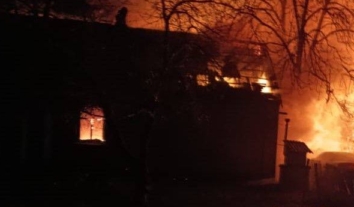
 A private house and a car burn after a Russian military strike in the Donetsk region on November 9, 2025
Another injured person was an 83-year-old female resident of Nikopol. Russian forces struck the coastal part of the city with artillery, hitting the woman’s house. She was subsequently hospitalized with shrapnel wounds.
Slidstvo.info journalists recently identified which Russian military personnel are responsible for targeting civilians in Nikopol and the neighboring city of Marhanets in the Dnipropetrovsk Oblast. Russians use various weapons to strike from the neighboring bank of the Kakhovka reservoir, which, after the Russians breached the dam in an attack in June 2023, has largely dried up.
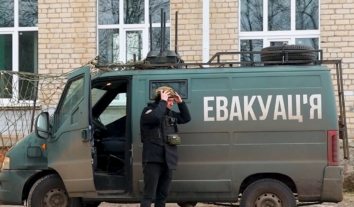
 A police officer, a civilian, and a paramedic help an elderly woman, wounded in Nikopol by a Russian artillery strike on November 9, 2025, into an ambulance
By way of background, the Russian forces shelled a number of regions in Ukraine on November 8, resulting in civilian fatalities and injuries. The Donetsk Oblast Military Administration and the Kherson Oblast Military Administration stated that three people were killed and 13 others injured in the Donetsk and Kherson oblasts on November 8.
Overall, as a result of Russia’s full-scale invasion of Ukraine, more than 14,300 civilians have been killed as of September 2025. Casualties and injuries have significantly increased this year due to the weaponry Russians are using to shell civilians.
China, North Korea, Iran, India, and Brazil also assist Moscow in killing citizens of Ukraine in Russia’s war, including funding the Russian budget through trade.
Andrii Klymenko, head of the Monitoring Group at the Black Sea Strategic Studies Institute, commented that it is too early to assess the impact of U.S. sanctions on India, one of the two main buyers of Russian oil. The reason tankers carrying Russian oil are not entering Indian ports is that they lack the capacity to accept and process these tankers.
He said that some tankers from the Baltic and Black Seas, which the monitoring group tracks, are not entering the Gulf of Kutch, on the shore of which several major oil ports, terminals, and refineries—Sikka, Vadinar, and Mundra—are located.
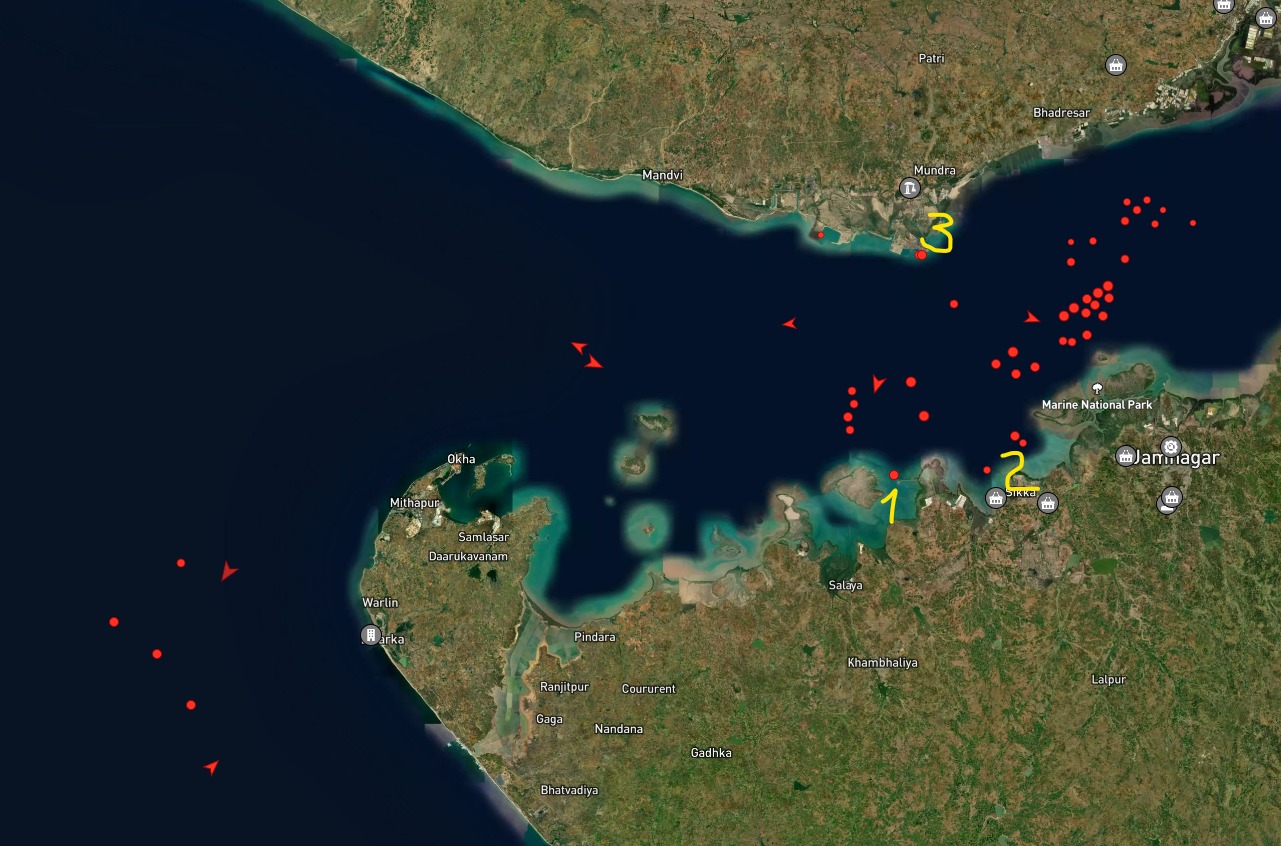
“We currently have record volumes of Russian crude oil sea exports,” the head of the monitoring group noted. This contrasts with statements by U.S. President Donald Trump, who imposed sanctions against the Russian oil companies Rosneft and Lukoil.
“As a result of Ukraine’s ‘long-range sanctions’ against Russian refineries, the enemy state was forced to maximize crude oil exports; otherwise, it would have had to plug the wells. Otherwise, there is nowhere to put this bloody oil,” Klymenko wrote.
He noted that although India and China do not believe the U.S. will control sanctions against Rosneft and Lukoil, they “still want to stock up at normal prices and even negotiate a discount” before November 21, when the sanctions officially take effect.