No peace decisions without Ukraine’s participation – MFA of Ukraine
Ukrainian Foreign Minister Andrii Sybiha stated on X that Ukraine and its international partners insist that no decisions on the path to peace can be taken without Ukraine’s participation.

The MFA said negotiations would only make sense after Ukraine and Russia reach a ceasefire.
“No one wants peace more than Ukrainians. No one wants peace more than Europeans. But Russia sees its very purpose in waging war. Russia prefers to build new walls on our path to a just and lasting peace. It wants to seal away our freedom,” the minister wrote.
Sybiha said transatlantic unity among democratic nations is stronger than “Russian imperialism”.
He also said shared transatlantic strength would help achieve a dignified peace built on reliable security.
Meanwhile, families of prisoners of war and missing Ukrainian defenders gathered at the U.S. Embassy in Kyiv on August 15 to highlight the price Ukraine is paying to preserve its territory and defend its independence.
According to Ukrinform news agency, about 100 people assembled in the park opposite the entrance to the United States Embassy.
The demonstrators called on President Donald Trump, whom they described as having “taken on the role of a peacemaker,” to raise the issue of an “all-for-all, without exceptions” prisoner exchange during negotiations, instead of discussing an “exchange of Ukrainian territories.”
Participants in the rally are demanding the release of all prisoners of war – both those confirmed and unconfirmed by the Red Cross, those illegally convicted in fabricated cases, and those declared “terrorists” in Russia.
Ukrainians living in temporarily occupied Crimea have voiced their opinions regarding the upcoming negotiations between U.S. President Donald Trump and Russian leader Vladimir Putin.
Activists with the “Yellow Ribbon” resistance movement published photos from the cities of Yevpatoriia, Bakhchysarai, and Sevastopol showing their protest against any potential deals made at Ukraine’s expense.


Previously, eight Ukrainian human rights organizations have called on all parties in the negotiation process to consider the interests of Ukrainian citizens living in the temporarily occupied territories (ТОТ) of Ukraine. In a joint statement, the organizations remind that ensuring the rights and interests of TOT residents must be part of the agreements within the negotiation process. The organizations also presented a ten-point list of specific steps that the occupying authorities must implement.
Among the specific steps that should be part of the negotiation process, the organizations highlight:
- Releasing of all civilians arbitrarily detained by representatives of the Russian armed forces or the occupation authorities;
- Cessation of Russia’s unlawful practice of criminal and administrative persecution and detention of Ukrainian citizens in the TOT of Ukraine, which is used as an instrument of intimidation and political pressure;
- Determining the temporary line of contact and establishing temporary checkpoints to allow entry and exit from the TOT of Ukraine to the government-controlled areas and vice versa (humanitarian corridors);
- Granting humanitarian access for international organisations to the TOT of Ukraine by the RF, with the possibility of direct humanitarian assistance to Ukrainian citizens;
- Providing available information and access to the TOT of Ukraine to search teams to establish the location of persons missing under special circumstances;
- Ensuring the presence of international observation (monitoring) missions in all TOT of Ukraine, in particular to monitor the human rights situation;
- Demining of settlements and civilian infrastructure in the TOT of Ukraine;
- Ensuring that Ukrainian citizens can reside in the TOT of Ukraine without the need to obtain a Russian passport or any other documents granting the “right to reside” in the TOT of Ukraine, in accordance with the Russian legislation illegally extended to the TOT of Ukraine;
- Ensuring unimpeded access of Ukrainian citizens in the TOT of Ukraine to medical services, social and pension benefits, education, property rights, and freedom of movement, independent sources of information;
- Ensuring that residents of the TOT of Ukraine who have been forcibly displaced to the territory of the RF or within the TOT of Ukraine are able to return to their homes or leave for the territory controlled by the Government of Ukraine.
Any delay in the liberation of the territories temporarily occupied by Russia will lead to the complete destruction of Ukrainian and Crimean Tatar identity there, Alena Lunova, advocacy director of the ZMINA Human Rights Center, stated live on “Radio Nakypilo.”
The human rights advocate called a proposal to discuss the de-occupation of the temporarily occupied territories in 49 years, as was voiced during talks with the aggressor country, unacceptable. She noted that the aggressor nation, in violation of international law, is demanding that Ukrainian citizens in the occupied territories obtain Russian passports or a foreigner’s document, among other things.
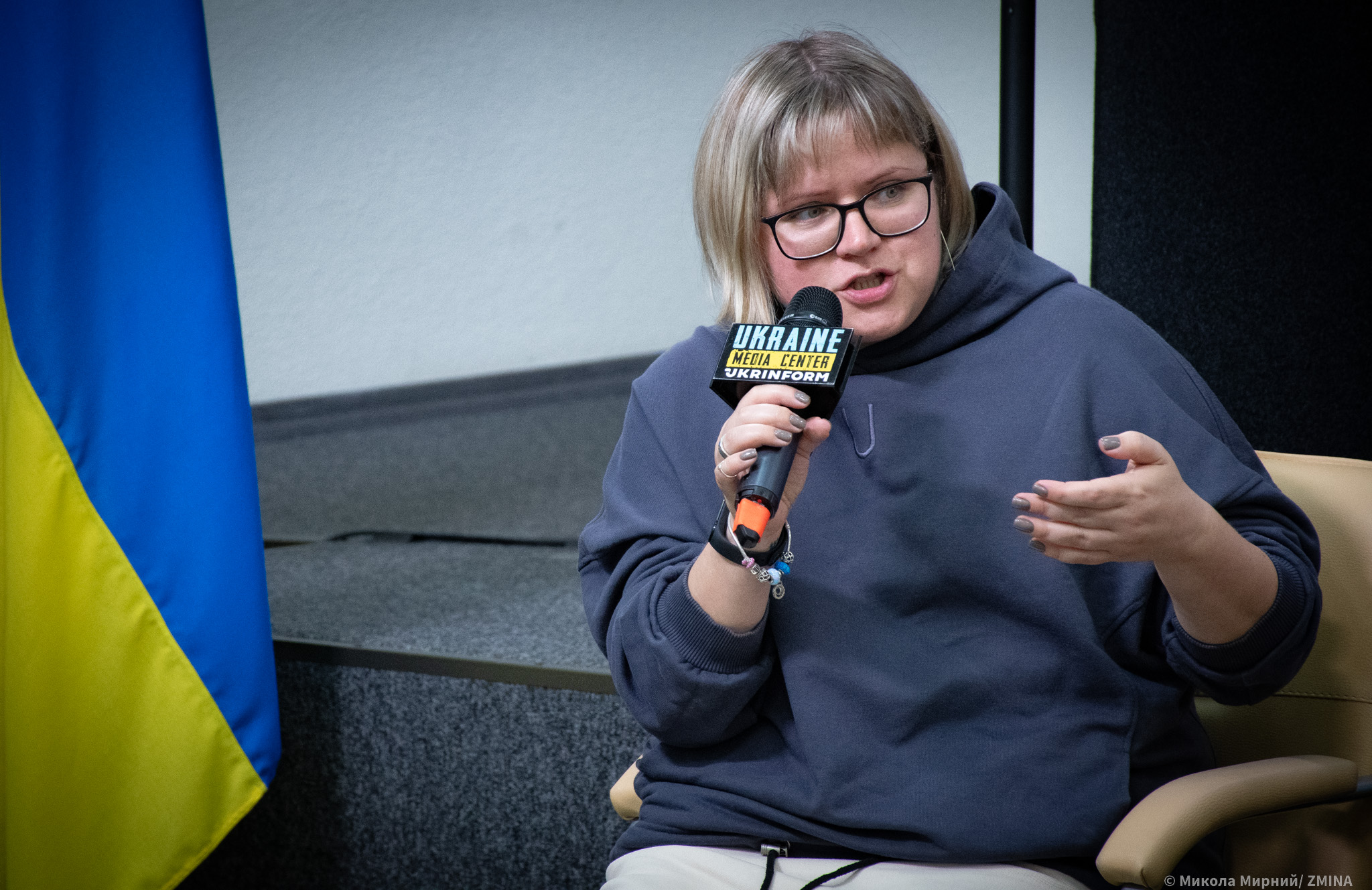 Alena Lunova
“We are documenting how the Russians are colonizing the temporarily occupied territories, settling them with their own citizens and thereby displacing the Ukrainian population from Ukrainian territory or destroying their identity. In 50 years, there will be no one there to talk to about de-occupation. Simply because the policy of the Russian Federation is aimed at the extermination of Ukrainianness,” Alena Lunova stated.
“A description of the Russian Federation’s violations can serve as an argument as to why this option is not suitable for Ukraine, and we need to communicate to our partners that we cannot take a years-long pause in any de-occupation policy, because there will be no more Ukrainians there,” she added, drawing a historical parallel to when Moscow, after deporting the Crimean Tatars from the Crimean peninsula in 1944, forbade them from returning home for decades.