Ignoring citizens of Ukraine in occupied territories during negotiations with occupying power risks “catastrophic” crisis – joint statement of human rights NGOs
Eight Ukrainian human rights organizations have called on all parties in the negotiation process to consider the interests of Ukrainian citizens living in the temporarily occupied territories (ТОТ) of Ukraine. In a joint statement, the organizations remind that ensuring the rights and interests of TOT residents must be part of the agreements within the negotiation process. The organizations also presented a ten-point list of specific steps that the occupying authorities must implement.
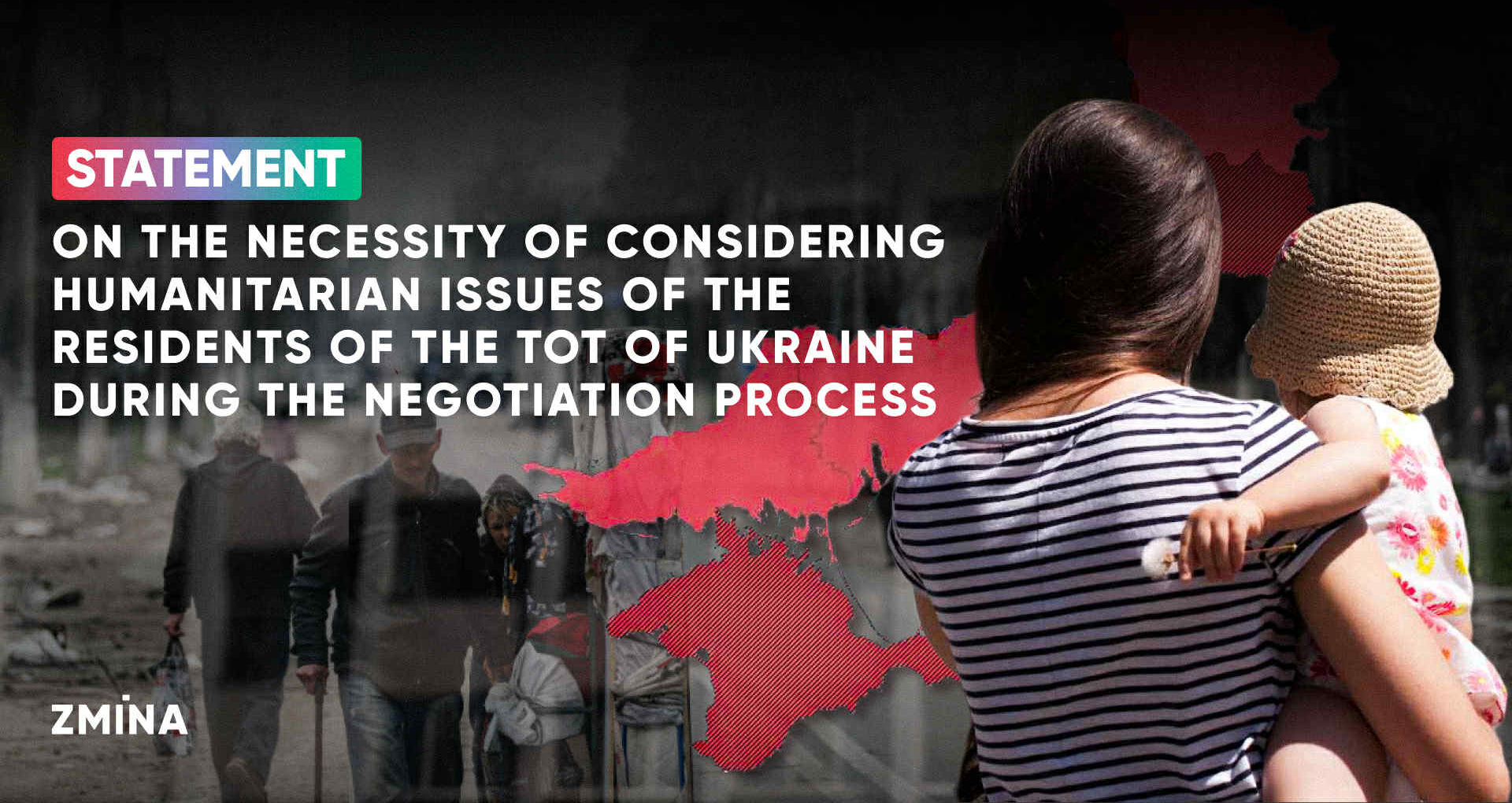
Human rights organisations pointed out that in recent weeks, the world has once again been discussing the prospect of a possible ceasefire on the battlefield of the Russian-Ukrainian war. This time, the political negotiations, which are usually rather secretive, are accompanied by conflicting reports in the media. “Territorial exchanges”, lifting sanctions, and neutral or non-aligned status as potential concessions on the part of Ukraine and its partners are increasingly being mentioned as a path to “reconciliation”. Ukrainian NGOs stressed that the media have not raised the question of the future of the residents of the territories of Ukraine temporarily occupied by Russia.
The statement emphasizes that the situation of Ukrainian citizens living in the TOT of Ukraine is “very difficult.” The organizations note that Russian authorities have never considered the occupation of Ukrainian territories to be temporary, as evidenced by the consistent imposition of Russian legal, economic, educational, cultural, social, medical, and information systems on Ukrainian territory.
The representatives of civil society organisations once again recalled that ensuring the rights and interests of residents of Ukraine’s TOT must be part of the agreements within the negotiation process and of the demands to the Russian Federation as the occupying power.
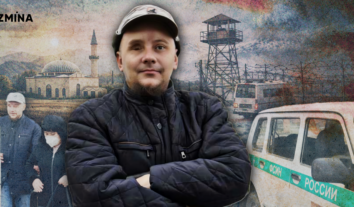
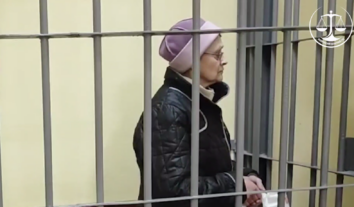
Civil society organizations and human rights defenders report that Russia acts in violation of international law by systematically imposing its citizenship in the temporarily occupied territories, implementing a policy of mass nationalization of property, abducting, arbitrarily detaining, and torturing civilians. Furthermore, Russia, as the occupying state, has forcefully conscripted Ukrainian citizens residing in the TOTs into the Russian Armed Forces.
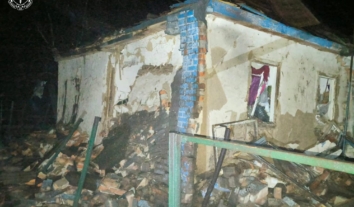
The authors of the statement elaborated that the continuation of the occupation regime over a significant part of Ukraine’s territory will lead to a deterioration in the situation of Ukrainian citizens who remain there. According to the document, delaying the process of returning Ukraine’s jurisdiction over these territories will result in Russia continuing to eradicate everything Ukrainian that remains there, and the humanitarian situation will be catastrophic.
The organizations recognize that only the complete de-occupation of Ukraine’s territory will lead to the restoration and protection of the rights of Ukrainian citizens. At the same time, they believe that for as long as the occupation continues, the occupying power must ensure compliance with the norms of international humanitarian law.
Human rights defenders are convinced that ensuring basic conditions for the residents of the TOT of Ukraine should be part of the negotiations with Russia on ending the war, regardless of the name of the process.
Among the specific steps that should be part of the negotiation process, the organizations highlight:
- Releasing of all civilians arbitrarily detained by representatives of the Russian armed forces or the occupation authorities;
- Cessation of Russia’s unlawful practice of criminal and administrative persecution and detention of Ukrainian citizens in the TOT of Ukraine, which is used as an instrument of intimidation and political pressure;
- Determining the temporary line of contact and establishing temporary checkpoints to allow entry and exit from the TOT of Ukraine to the government-controlled areas and vice versa (humanitarian corridors);
- Granting humanitarian access for international organisations to the TOT of Ukraine by the RF, with the possibility of direct humanitarian assistance to Ukrainian citizens;
- Providing available information and access to the TOT of Ukraine to search teams to establish the location of persons missing under special circumstances;
- Ensuring the presence of international observation (monitoring) missions in all TOT of Ukraine, in particular to monitor the human rights situation;
- Demining of settlements and civilian infrastructure in the TOT of Ukraine;
- Ensuring that Ukrainian citizens can reside in the TOT of Ukraine without the need to obtain a Russian passport or any other documents granting the “right to reside” in the TOT of Ukraine in accordance with the Russian legislation illegally extended to the TOT of Ukraine;
- Ensuring unimpeded access of Ukrainian citizens in the TOT of Ukraine to medical services, social and pension benefits, education, property rights, and freedom of movement, independent sources of information;
- Ensuring that residents of the TOT of Ukraine who have been forcibly displaced to the territory of the RF or within the TOT of Ukraine are able to return to their homes or leave for the territory controlled by the Government of Ukraine.
Human rights organisations are convinced that it is within the framework of the negotiation process that representatives of the Ukrainian authorities and partners must clearly formulate demands to the Russian Federation to ensure compliance with international humanitarian law regarding the protection of the civilian population. These demands must not only be expressed but also enshrined in any peace agreements or documents signed between the parties. Only by taking these legal guarantees into account can we ensure the minimum necessary conditions for the protection of those who remain in the TOT of Ukraine as interim results on the path to a just and sustainable peace.
The document dated August 12 was signed by eight organizations: the Human Rights Centre ZMINA, CF East SOS, CF Stabilization Support Services, NGO Donbas SOS, NGO Civil Holding GROUP OF INFLUENCE, the Crimean Human Rights Group, NGO CrimeaSOS, and CF Right to Protection.