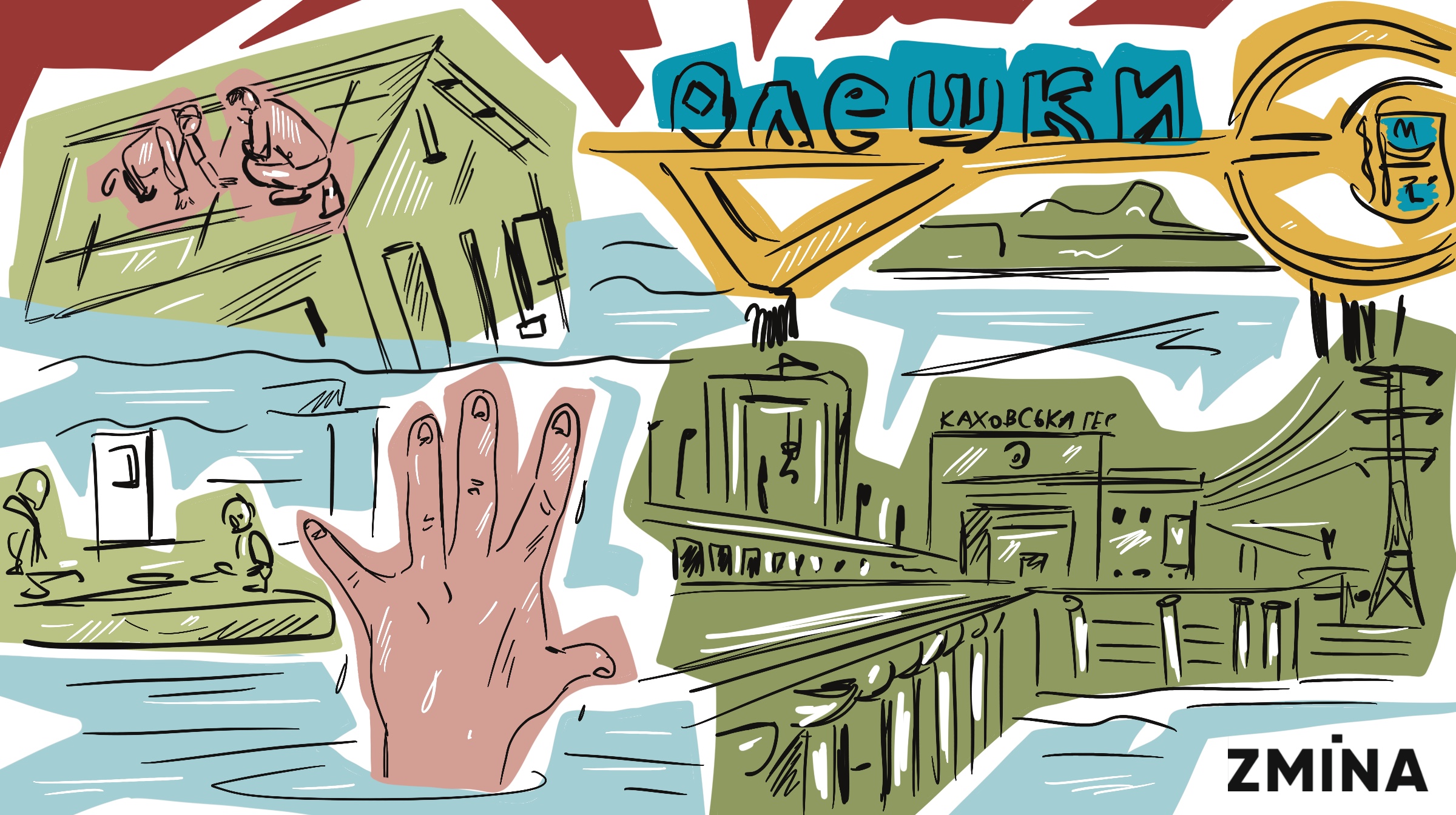
Resident of Oleshky on life under occupation and her missing husband after the destruction of the Kakhovka Dam in Kherson region
Two years ago, on 6 June 2023, Russian occupiers destroyed the Kakhovka hydroelectric power plant dam in the Kherson region, southern Ukraine, causing a massive environmental disaster, deaths and injuries. Many people went missing.
Due to the rapid rise in water levels, the settlements on the left bank of the Kherson region suffered the most. In particular, the city of Oleshky, which has been occupied since the beginning of the full-scale war, had a population of approximately 16,000 at the time of the flooding. The absence of proper evacuation and assistance from the occupying authorities led to a large number of casualties and victims. At the same time, the Russian authorities did everything possible to conceal the actual number of deaths in the occupied areas of the region.
The locals tried to survive on their own in harsh conditions, left without homes and money.
Viktoriia (name changed for security reasons) is one of those who saw the flooding of Oleshky with her own eyes after the dam was blown up. She and her family survived the flood, the shelling of their home, the death of their neighbours, and witnessed the repression of locals.
The resident of Oleshky told ZMINA about almost a year and a half of life under occupation, the destruction of the Kakhovka hydroelectric power plant dam, the behaviour of collaborators, and her missing husband.
Students who were studying remotely were detained for having Ukrainian apps on their phones
At the time of the full-scale invasion, Viktoriia was living with her husband and two children in the town of Oleshky, Kherson region. She worked as a manager at a factory manufacturing metal-plastic windows, and her husband was a sole proprietor. The family also ran a farm and bred rare dog breeds.
On 24 February 2022, the woman woke up to the sound of explosions – that was how the war began for her. Her city was occupied immediately, so her family did not have time to flee to safety.
At the beginning of the occupation, residents were afraid to go outside for some time. Then, when problems with food supplies to shops began, people were forced to exchange food. Later, the occupying authorities started to bring in supplies from occupied Crimea.
“Then they stopped baking bread because there was no yeast or sourdough. So people went to the neighbouring town for sourdough. But there were huge queues for bread, so they gave out one loaf per family or two for large families,” Viktoriia said.
ATMs also stopped working, so it was impossible to withdraw cash.
Viktoriia stayed at home with her family because her husband feared for her life. After all, at every intersection, there were enemy checkpoints manned by aggressive occupiers. The troops there were rotated every two months.
Throughout 2022, the Russians never once came to check Viktoriia’s home. Usually, the occupiers checked the documents of those who were moving around the city or passing through the checkpoints.
“I heard from people that young men were taken away and held in basements. If occupiers found Ukrainian symbols, you could be taken away. Students who were studying remotely were detained for having Ukrainian apps on their phones. But after a week, they were released,” she added.
The woman recalls that at the beginning of the occupation, Russians kidnapped a local businessman in the middle of the night right from his home. Before that, they surrounded his house, turned on their car headlights, and directed them at the house. Later, his relatives found out that the businessman was being held in a basement.
“There were rumours that many civilians detained by the Russians were being held in Kalanchak [a rural settlement in the Skadovsk area of the Kherson region],” she said.
During the shelling, Viktoriia and her family initially hid in the basement, then took shelter behind a wardrobe in their house. When they got used to the sounds of explosions, they went out to watch the rockets landing in their neighbourhood.
Viktoriia constantly communicated with her neighbours, exchanging the latest news with them, especially about local collaborators who had agreed to cooperate with the Russians. Mostly, criminals and supporters of the “Party of Regions” switched to the enemy’s side. They told the occupiers about all the locals – who did what, where they lived, and who their relatives were.
According to Viktoriia, there was no forced passportisation in their area on the eve of the so-called referendum on joining the Russian Federation. Before the vote, two women, accompanied by military personnel, went door to door urging everyone to come to the polling stations. They also said that Russia had come forever.
“They said that Ukraine would no longer exist. But everyone locked themselves in their homes, so no one went to vote. When Kherson was liberated, a post from our mayor appeared on one of the local Telegram channels: “Oleshky is also Ukraine.” Many young men, rejoicing at this news, took to the streets with Ukrainian flags, but they were killed by KABs [correctable air bomb],” Viktoriia recalled.
Two to three days before the dam was destroyed, the Russians took away from the locals the boats that were in plain sight
During the occupation, Viktoriia’s family also experienced the destruction of the Kakhovka hydroelectric power plant dam on June 6, 2023. That day, she woke up to the sound of water rushing closer and closer to her home. She woke up her husband and children and began gathering documents and belongings. When they went outside, the water was already waist-deep. The family headed for a four-storey building on a hill.
“We were flooded so quickly that we had to climb out of the windows because we couldn’t get out through the doors,” she added.
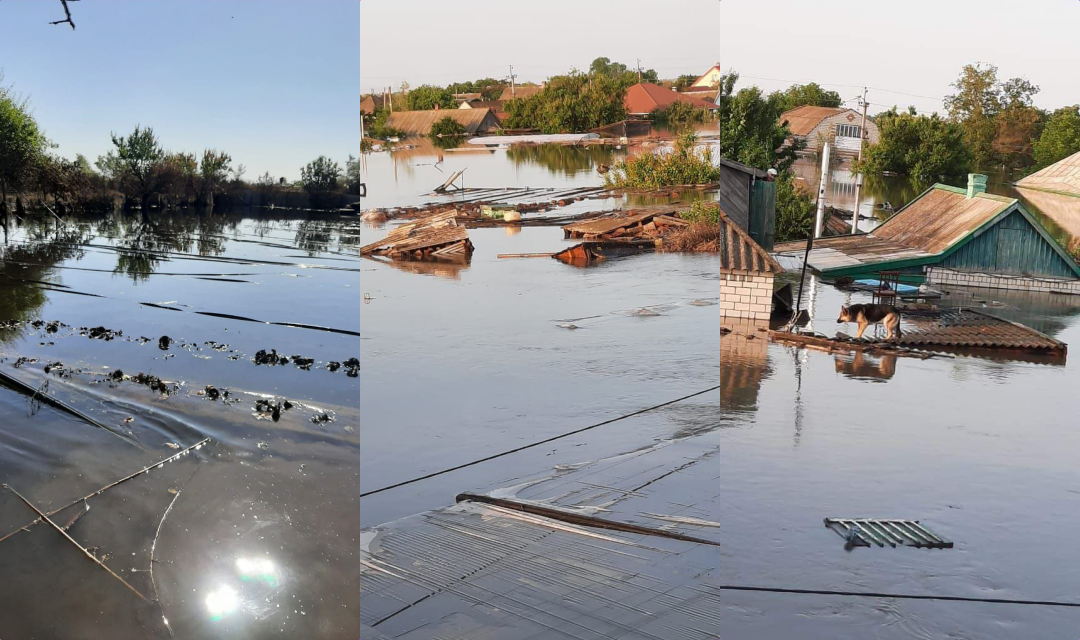 Photo from the local channel on the Telegram messenger app
Later, Viktoriia returned home with her son and rescued the pig, dogs and parrots.
“Two to three days before the dam was blown up, the Russians took away from the locals the boats that were in plain sight. So people had to save themselves on their own. Some people had boats hidden away, while others made rafts out of plastic bottles. The occupying authorities said that 36 people had died, but the hospital said that over 900 had died. Bodies were brought to the morgue and stacked on top of each other. Among them were people of all ages, especially many elderly people. Many people who were swept away by the current are considered missing. When the water receded, no one cleared the houses or looked for bodies. There were no Russians in the first days of the flood, so no one helped us,” Viktoriia described the events.
Most people fled to the city centre, where the flooding was minimal. The courtyards were flooded, but the houses themselves were not. After the dam was blown up, many people never returned home – some left the occupied territory, while others stayed with relatives.
While moving through flooded areas, Viktoriia injured her arm and had to go to a hospital that was not affected by the flooding. There, she was given a tetanus injection, as the water that had flooded out of the Kakhovka reservoir was contaminated.
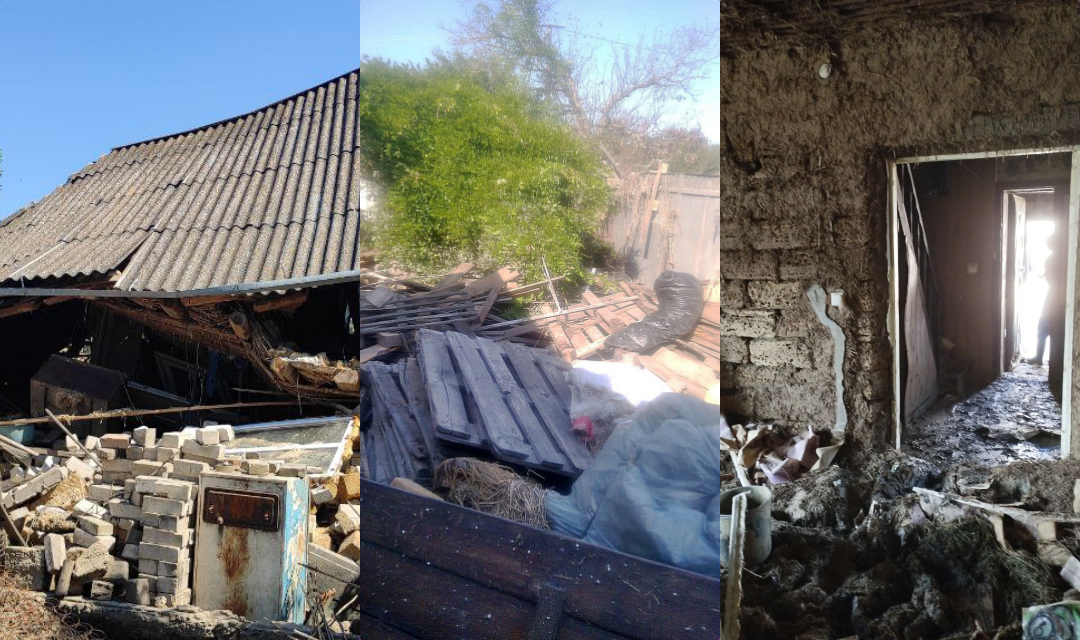 Photo from the local channel on the Telegram messenger app
Later, Viktoriia, her family, and other residents moved into empty flats in a four-storey building. There was no electricity, no communication, and no gas in the apartment, so people cooked their food outside over an open fire. This continued until Viktoriia’s husband got his flooded generator, which he carefully dried so that it could be used.
When the water receded, humanitarian aid began to arrive and shops reopened.
A few days later, four or five Russian soldiers in balaclavas arrived at the house by car. One of the local collaborators offered them a place to stay in one of the apartments. Viktoriia was against such neighbours, so she started arguing with the occupiers.
“Why did they come here? There are already 10 to 15 people living in a single flat, and you want to move into someone else’s home. One of them started talking back to me, saying that I was either the smartest or the bravest. Then I noticed a patch on his sleeve that said “Derzkyi” [Defiant]. They were Russians from the city – you could tell because they all spoke with an accent,” the woman recounted.
Despite the argument, the occupiers remained in the building, having broken down the door to one of the flats. According to Viktoriia, the invaders stayed in the building only because it was located on a hill and they could see Kherson from there. Due to rotation, the Russians did not stay there for long.
When the water finally receded, people returned to their homes. Only seven houses were not flooded in the area where the woman lived. Residents began to carry damaged furniture and belongings out onto the street, which were collected by a garbage truck.
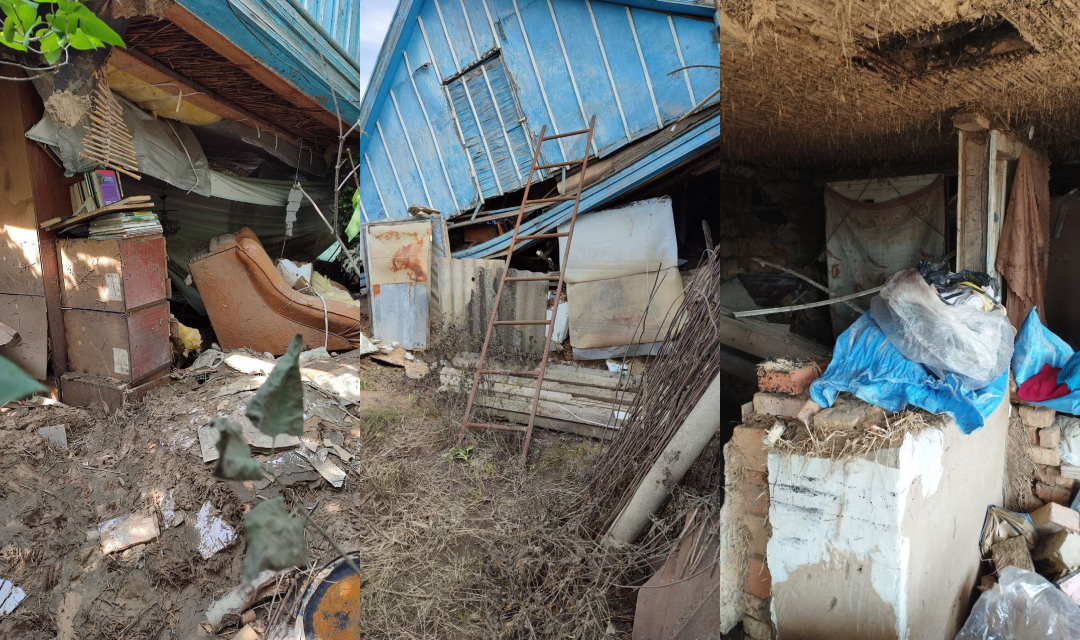 Photo from the local channel on the Telegram messenger app
Viktoriia and her family couldn’t go back to their house right away because it was flooded since it’s in a low-lying area. So, a neighbour whose house was on higher ground let them stay for a while.
“Our entire house was covered in mould, dirt and fuel oil. We cleaned it up, throwing out the laminate flooring, furniture and belongings. We left the refrigerator and the built-in kitchen. I tried to wash the T-shirts, but they were also covered in fuel oil,” Viktoriia explained.
One day, a shell hit a shop near Viktoriia’s house. People helped clear the rubble and clean up the premises. A local journalist named “Lys” [Fox] immediately arrived to report on the incident. He asked everyone there if they knew who was shelling Oleshky – Russians or Ukrainians.
“But people aren’t stupid, and during this time they’ve learned to distinguish where the shells are coming from and how long it will take them to hit. The mines flew for less than three seconds. So it definitely wasn’t coming from Kherson,” she said.
Russians shelled Oleshky
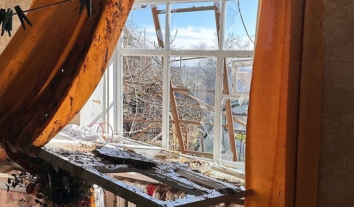
On 24 July 2023, two mines hit Viktoriia’s yard, leaving huge craters. The blast wave knocked down the fence, and debris shattered the walls of the house and damaged the windows and roof. According to her, it was fired from the occupied part of the city at residential areas, as locals knew that the enemy mortar was located two kilometres away.
“Since 28 April 2025, our house is no longer there. It burned down completely, and only the walls remain. This was the sixth time our yard had been hit, and this time it was the house itself. The house of the neighbour we were living with was also destroyed six days after I left,” she said.
Then, after the first arrival, the woman heard more explosions near her house. When she went out onto the neighbouring street, she saw two elderly men lying on the road. One of them died immediately, while the other was still alive.
“I ran up to one of them to check his pulse. He was dead. Another one was injured, so I went home to get bandages and hydrogen peroxide. Then, the Russians, dressed in civilian clothes, arrived and also examined them. Then the shelling started again, and I ran back home. One ambulance didn’t arrive because it came under fire, and another arrived half an hour later. They took the injured man away,” she added.
That day, her husband had gone to another city to buy groceries, so she called his friend to warn him about the shelling in their neighbourhood. She wanted him to take a different route home, not the one he usually took.
After returning, her husband told Viktoriia that they had to leave the occupied territory. They gathered their belongings and drove through the Armiansk checkpoint, where they and their car were thoroughly searched. During the interrogation, which lasted three hours, the Russians asked them where they were going and whether anyone in their family was serving in the Armed Forces of Ukraine.
“They interrogated us in separate carriages. I was questioned by a man in a T-shirt and jeans. I said that we were going to visit friends in Crimea so that the children could relax by the sea and escape the shelling. They checked our phones, which already had Russian SIM cards in them. I hid my Ukrainian one. We had Ukrainian passports. They gave us some papers, like a permit, saying that we could return home within three months,” the woman recalled.
The family arrived in occupied Simferopol, where they rented an apartment for the night. Local volunteers assisted them in purchasing train tickets to Saint Petersburg. Viktoriia, her mother and her children all went to Russia, while her husband returned to Oleshky. He said he would come later, once he had sorted things out with the dogs and persuaded his mother to leave.
In Saint Petersburg, Russian volunteers met Viktoriia, one of whom hosted them in her apartment.
The family moved from Saint Petersburg to Ivan-Gorod, where the border checkpoint with Estonia is located. They were held there for eight hours. The adults were separated from the children and taken to a regular classroom in a school. After sitting there for a long time, Viktoriia began to scream to be taken back to the children. After that, she was called in for questioning, where she was asked about the phone numbers in her phone, whether any of her relatives were serving in the Ukrainian Armed Forces, where she was going, and why.
“I said I was going to Germany to visit relatives. They checked my phone again. They were in civilian clothes, not military, maybe some police,” she suggested.
On 3 August 2023, Viktoriia and her family arrived in Germany. All this time, she had been in contact with her husband by phone. He was transporting other people’s cars, picking up those who wanted to leave Oleshky and go to Zaporizhzhia. The last time he helped a pensioner get from Oleshky to Poland. The woman assumed that her husband was able to move around the occupied territory thanks to a pass issued to him in Armiansk.
“The minibus my husband was travelling on took a detour through Skadovsk. People had to spend the night there, and the next day they would be brought back to Oleshky. On 8 August, my husband called his friend in Skadovsk from a petrol station in Melitopol and asked him to find a place for him to stay. On 9 August, I tried to call my husband, but no one answered. I called his friend, but he said, “Don’t worry. He’s probably on the road and out of signal.” But my husband never called back,” recalled Viktoriia.
Later, Viktoriia found out that her husband had reached Skadovsk after curfew. When he was walking to his rented apartment in the evening, he was detained by the local “police” along with another person. They were released in the morning, but then one of them was taken away again. Viktoriia suspects that it was her husband.
“I was told that his phone was last detected near Russian telephone towers,” she said.
After her husband went missing, the woman asked a Russian lawyer for help, who sent requests to different Russian pre-trial detention centres, but nothing changed. The other side hasn’t said anything about her husband being detained, just sending different replies. So, he’s still considered missing.
Viktoriia suggests that he may have been betrayed by local collaborators, against whom he had spoken negatively. Even before the full-scale invasion, he had conflicted with one of them.
The woman notes that her husband has scars on his left eyebrow and the left side of his upper lip.
According to Viktoriia, after her husband went missing, her eldest son said he would take care of the family until he returned. They hope that their father is alive and will be found. So they will continue to search for him.
“After moving to Germany, my younger son slept poorly and sometimes even walked in his sleep, like a sleepwalker. I tried to distract him with walks and trips to other cities,” she said.