Russians severely damaged Orthodox church in Kramatorsk
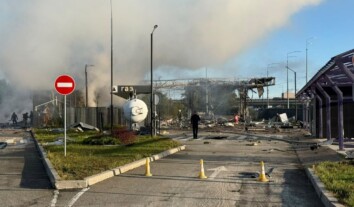
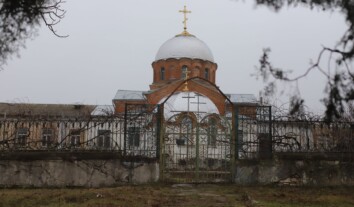
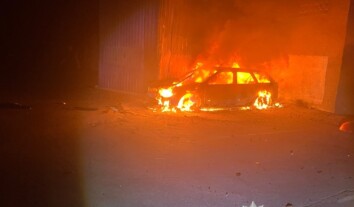
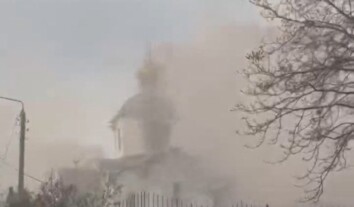
An Orthodox church sustained significant damage as a result of Russian shelling in Kramatorsk in the Donetsk Region (Oblast) on 22 September 2026, the Information and Education Department of the Ukrainian Orthodox Church (UOC) reported.
 Aftermath of the Russian shelling. Photo: UOC Information and Education Department
It is the Church of St John the Baptist.
The day before, photos and videos of the consequences of the latest Russian attack appeared online, specifically showing serious destruction to the walls, roof and dome.
“The metal frame of the building was twisted by the blast wave, and the entire territory is covered in debris. It is currently unknown whether there are any casualties among the people who might have been on the territory of or near the shrine,” the UOC stated.
Kramatorsk suffers daily from Russian strikes using various weapons, and overall, the Donetsk Oblast is one of the regions most affected by Russian aggression.
ZMINA previously reported that four injured monks and the body of a monk were recently evacuated under Russian shelling in the Kherson Oblast.
During this time, 50 countries and the European Union issued a statement at the UN in support of Ukraine, asking Russia to end the fighting. The US did not agree with the statement, the new outlet European Pravda reported, citing the text provided by the Ministry of Foreign Affairs of Ukraine.
The statement was signed by the European Union and 50 countries, including:
- Ukraine;
- Albania;
- Andorra;
- Australia;
- Austria;
- Belgium;
- Bosnia and Herzegovina;
- Bulgaria;
- Canada;
- Costa Rica;
- Croatia;
- Cyprus;
- Czechia;
- Denmark;
- Estonia;
- Finland;
- France;
- Georgia;
- Germany;
- Greece;
- Honduras;
- Hungary;
- Iceland;
- Ireland;
- Israel;
- Italy;
- Japan;
- Latvia;
- Liechtenstein;
- Lithuania;
- Luxembourg;
- Malta;
- Monaco;
- Montenegro;
- the Netherlands;
- New Zealand;
- North Macedonia;
- Norway;
- Poland;
- Portugal;
- the Republic of Korea;
- the Republic of Moldova;
- Romania;
- San Marino;
- Slovakia;
- Slovenia;
- Spain;
- Sweden;
- Switzerland;
- the United Kingdom.
The statement was released ahead of a UN Security Council meeting on 23 September.
The signatories expressed solidarity with Ukraine and deep concern over the escalation of Russian attacks against civilians and civilian infrastructure across the country.
They also voiced concern about attacks in the Black Sea and supported efforts to reach an agreement there to ensure freedom of navigation.
In the statement, the countries reiterated that Ukraine had agreed as early as March 2025 to a full, immediate and unconditional ceasefire.
“We call on Russia to finally do the same, as a necessary step towards meaningful diplomacy and negotiations leading to peace,” the statement reads.
The signatories also called on Russia to ensure the immediate return to Ukraine of all arbitrarily detained, forcibly transferred or deported Ukrainian civilians, including children, as well as the full return of all prisoners of war and all interned persons as important confidence-building measures.
“Ukraine wants peace. We want peace. Russia must stop its aggression, accept a ceasefire, and engage meaningfully in negotiations towards a comprehensive, just and lasting peace in accordance with international law.”
Ukrainian experts point out that countries, including China, Greece, North Korea, Hungary, Slovakia, Iran, and Brazil, assist Moscow in killing Ukrainians in its war against Ukraine by funding the Russian budget through trade.
Human rights organisations and Ukrainian authorities emphasise that structural economic pressure remains a key tool to halt such atrocities. They urge every nation and individual government worldwide to strictly enforce global sanctions, close existing regulatory loopholes, and completely sever remaining commercial and technological ties with the Russian Federation. Civil society groups stress that any continued cooperation by foreign businesses directly contributes to the resources Moscow uses to sustain its ongoing war crimes and crimes against humanity in Ukraine.
Follow ZMINA on X, Bluesky and LinkedIn for daily human rights coverage from Ukraine – we invite you to share your feedback on what you’d like to see more of in our survey here.