
Gazprom, Rosneft funded deportation of at least 2,158 Ukrainian children — Yale study
Russian energy giants Gazprom and Rosneft directly funded and facilitated the forced deportation and “re-education” of at least 2,158 Ukrainian children, according to a report by the Yale School of Public Health’s Humanitarian Research Lab (Yale HRL). The findings come at a critical moment, as the Donald Trump Administration recently issued a 30-day sanction waiver allowing the sale of Russian oil from these very entities.
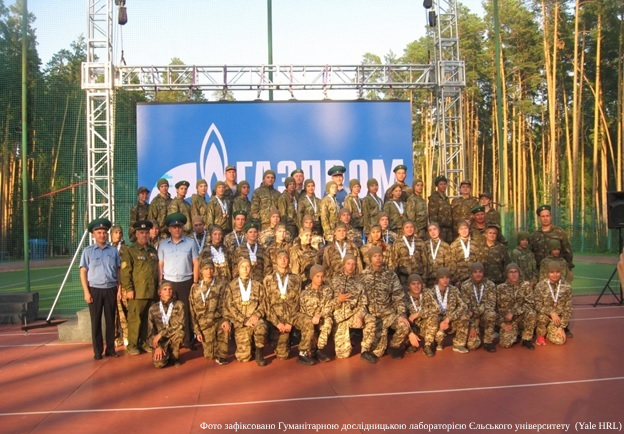 Event held August 19-25, 2022, at the camp “Prometheus”. Children identified as the family of Gazprom Ekaterinburg employees. 47 children visible in military fatigues for the culmination of the militarization event, 6 adults in military attire, Gazprom Transgaz Ekaterinburg logo backdrop for the photo
Yale researchers have established that children from Ukraine were deported to at least six camps located within Russia and temporarily occupied territories in Ukraine:
- “Prometheus”;
- “Signal”;
- “Kubanskaya Niva”;
- “Art-Quest”;
- “Sputnik”;
- the “A.V. Kazakevich Children’s Health Camp.”
The Yale HRL previously located all six camps in its September 2025 report, “Ukraine’s Stolen Children: Inside Russia’s Network of Re-education and Militarization.”
Gazprom- and Rosneft-controlled subsidiaries and trade unions facilitated and sponsored the transport and re-education of Ukraine’s children through direct ownership of camps, provision of camp vouchers, and coordination of pro-Russia indoctrination.
Three of the camps previously identified by the Yale HRL were owned by Gazprom subsidiaries when children from Ukraine were present at these facilities. As of March 2026, two of the three camps are still owned by Gazprom subsidiaries.
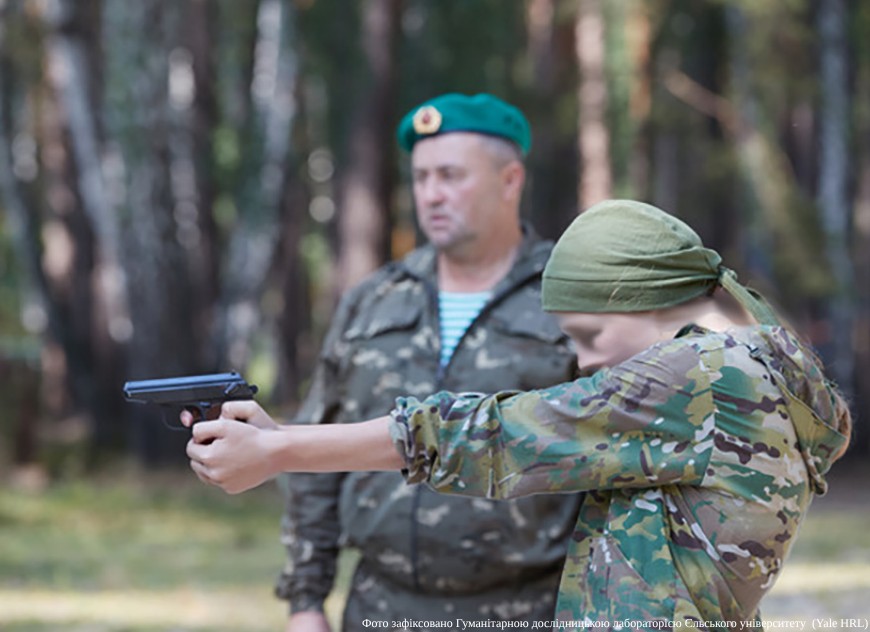 Militarization event hosted at Prometheus camp in Sverdlovsk, 19-25 August 2022, for children of Gazprom employees. Sergei Grishin (Mednogorsk LPU MG) is identified as a veteran of “border troops” and Chairman of the Trade Union Organization of the Mednogorsk LU MG Gazprom Transgaz Ekaterinburg, overseeing a child in military fatigues shooting a pistol.
The third camp, previously owned by a Gazprom subsidiary, was listed for sale as of January 2025. Three other camps to which Ukraine’s children were taken are privately owned.
Gazprom and Rosneft significantly increased their support for transportation and re-education of Ukraine’s children since Russia’s full-scale invasion of Ukraine. In 2022, Gazprom subsidiaries and Russia’s trade union organizations collaborated to send at least 1,200 children from occupied Ukraine to camps in Russia and Russia-occupied Ukraine.
The following year, Gazprom subsidiaries provided more than a thousand vouchers for children from Ukraine to attend pro-Russia camps between 2022 and 2023. The Gazprom-provided vouchers enabled children to attend the camps at reduced or no cost. HRL has no information regarding the voluntariness of consent in all cases identified below. However, HRL has established in previous reports that while many children were taken to camps in Russia and Russia-occupied Crimea with the consent of their parents, other children have been sent to camps without the consent of their parents, or consent originally obtained was invalidated.
Onysiia Syniuk, head of the Analytical Department at the ZMINA Human Rights Centre, explained in a commentary to the ZMINA news outlet that violations of this magnitude — such as those Russia commits against Ukrainian children, including forced displacement, deportation, indoctrination, and militarization — require significant financial backing.
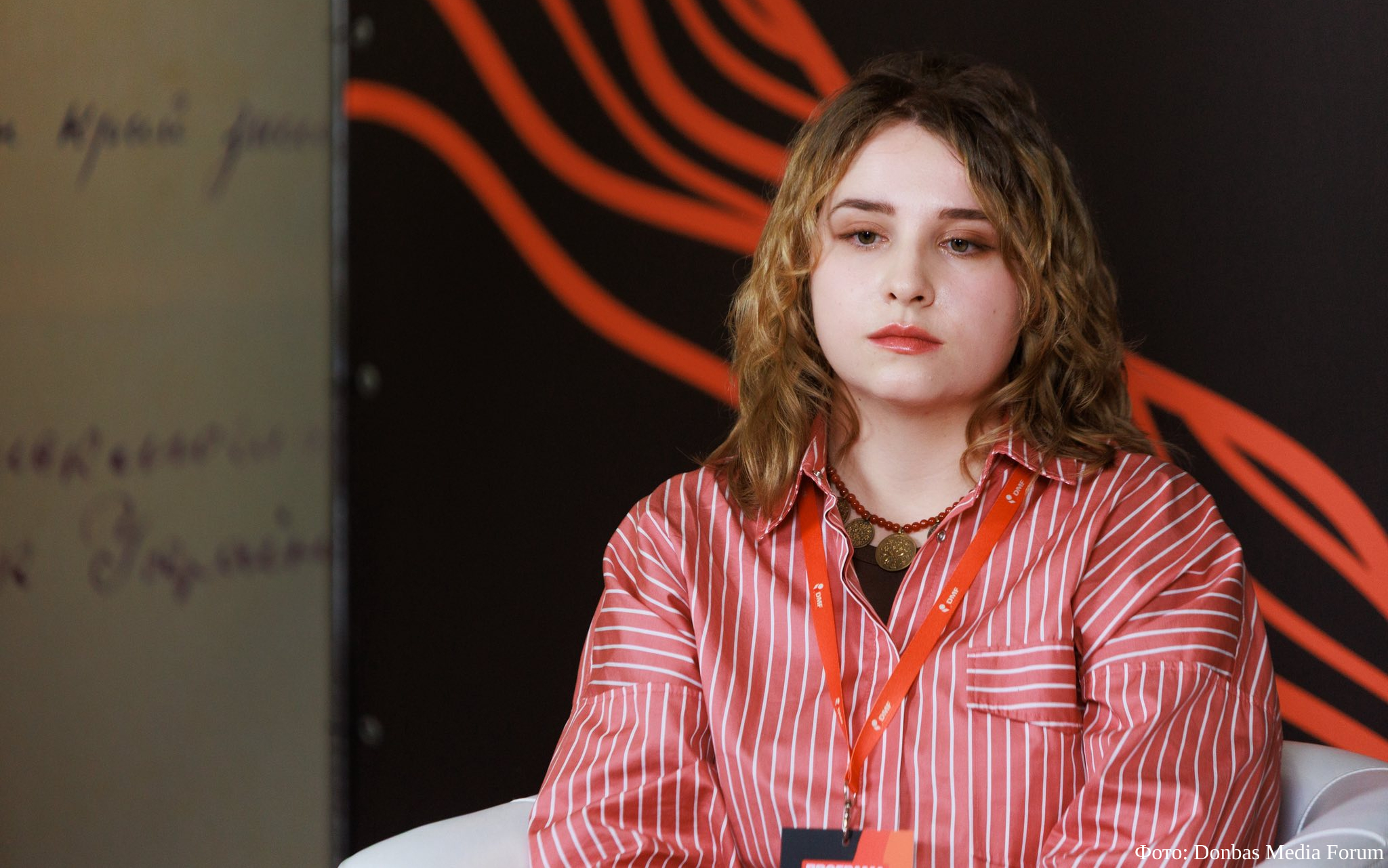 Onysiia Syniuk
“This report is essentially about two donors who contributed to the system’s financing. They placed transferred Ukrainian children in camps owned by their subsidiaries, funded these transfers, or financed the programs within these camps. Beyond the well-known ties between these companies, their owners, and Vladimir Putin, investigating the origins of these funds is vital for efforts to disrupt these financial flows,” the human rights advocate commented.
Researchers further noted that a significant number of the identified actors are currently not under any international sanctions.
The authors of the report highlight that these findings have added significance given the Donald Trump Administration’s decision on 12 March 2026 to temporarily authorize the sale, delivery, or offloading of Russian-origin crude oil and petroleum products that were already loaded onto shipping vessels in an attempt to stabilize global energy markets amid disruptions from the Iran war. This time-limited waiver of General License 134, approved by the US Office of Foreign Assets Control (OFAC), will remain in effect for 30 days, from March 12 to April 11, 2026, and applies only to cargoes already loaded and in transit, including crude and petroleum products of Gazprom and Rosneft.
“As a result, Gazprom and Rosneft are the first known Russian Federation-affiliated corporate entities directly implicated in Russia’s alleged war crimes related to child deportation that are currently making money from U.S. consumer spending at the time of this publication,” the researchers [of the Yale HRL] explained.
Onysiia Syniuk emphasized that a major problem lies in the erosion of existing restrictions — specifically, the United States’ suspension of sanctions.
“This has already occurred regarding Belaruskali, which also owns camps used for the transfer of Ukrainian children. Such steps undermine efforts to limit the capacity of Russia and its affiliated actors to commit violations against Ukrainian children, and in some cases, even facilitate their financing,” the human rights advocate underscored.
To provide background, a team of experts from Yale University estimates that up to 35,000 Ukrainian children may be held in Russia and its occupied territories. To date, according to the “Bring Kids Back UA” initiative of the President of Ukraine, only 2,070 children have been returned to Ukraine or have been able to return on their own.