Russian strikes hit Sumy and Odesa: Children among the injured in latest attacks
The State Emergency Service of Ukraine (SES) and the National Police reported that on the night of February 21, 2026, Russian troops launched strikes on the Sumy “hromada,” a local government area that includes one or more nearby settlements, and the Odesa region. As a result of the attack on Sumy, three civilians were injured, two of whom were children. In the Odesa region, two injuries were reported.
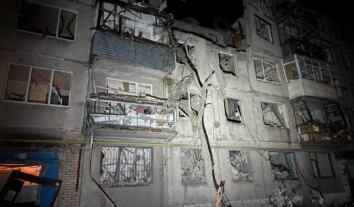
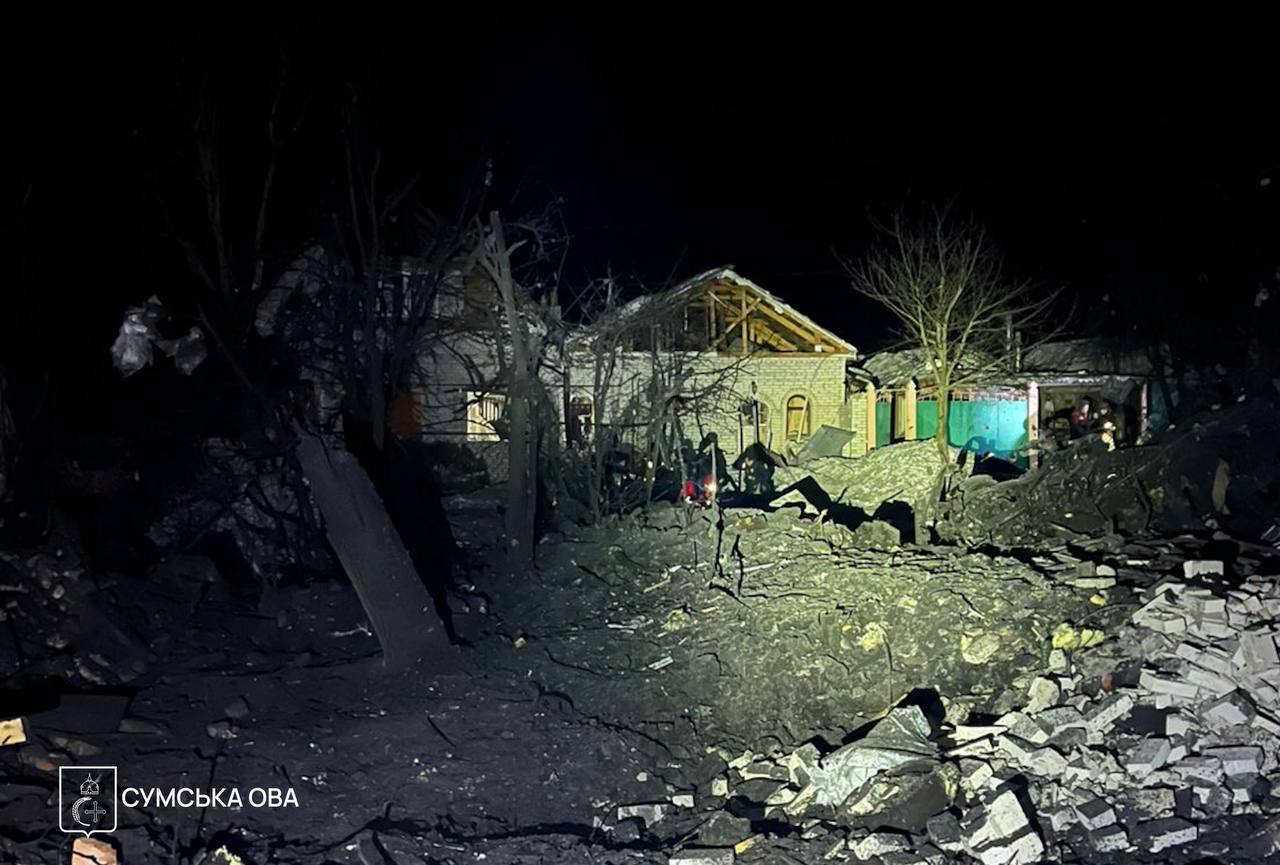 The aftermath of the Russian attack in Sumy
Around 4 a.m., Russian forces attacked Sumy with a guided aerial bomb, striking a residential area in the city’s Kovpakivskyi District. The explosion completely destroyed two homes and damaged at least ten neighboring properties. A civilian vehicle was destroyed, and the gas grid sustained damage. The final scale of the destruction is still being determined.
According to preliminary information, three people were injured in Sumy: a 5-year-old child, a 17-year-old girl, and an elderly woman. The children received on-site medical assistance while the woman was hospitalized.
Investigative teams, bomb disposal units, and other specialized services are currently on the scene working to mitigate the consequences of the strike.
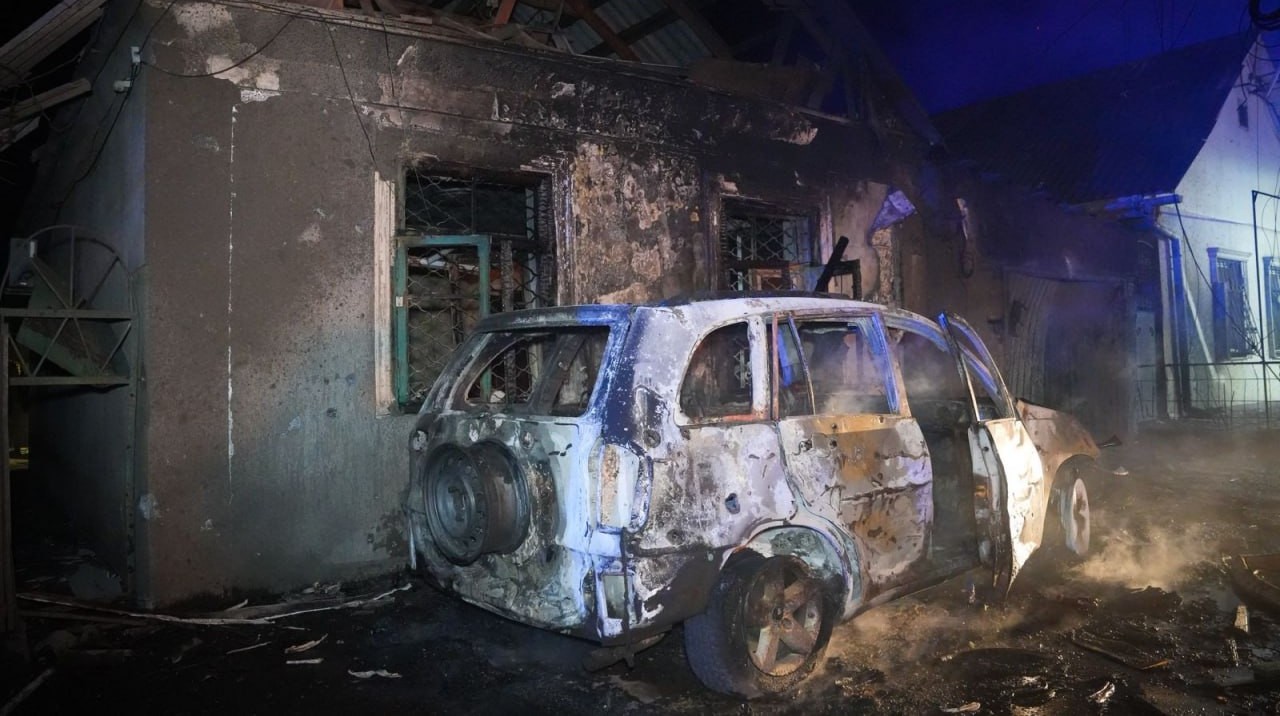 Odesa strike aftermath
The Sumy Oblast Military Administration reported that Russian forces carried out a missile strike on a civilian business in the Trostianets hromada in Sumy Oblast. Ukraine’s Air Force reported at least three missiles over Sumy Oblast on the morning of February 21. No casualties were reported.
In addition, in the Boromlia hromada, a Russian drone struck a civilian vehicle. The vehicle’s owner was injured and is in a hospital.
Russian forces attacked the Odesa Oblast overnight, injuring two people. According to rescue services, emergency teams responded to fires and destruction across multiple locations simultaneously.
The strikes destroyed private homes and several vehicles. In addition to residential areas, the attacks damaged warehouses and an energy infrastructure facility. A local lyceum also sustained significant damage, with its second floor partially destroyed. SES psychologists were deployed to the scene to provide aid to affected residents.
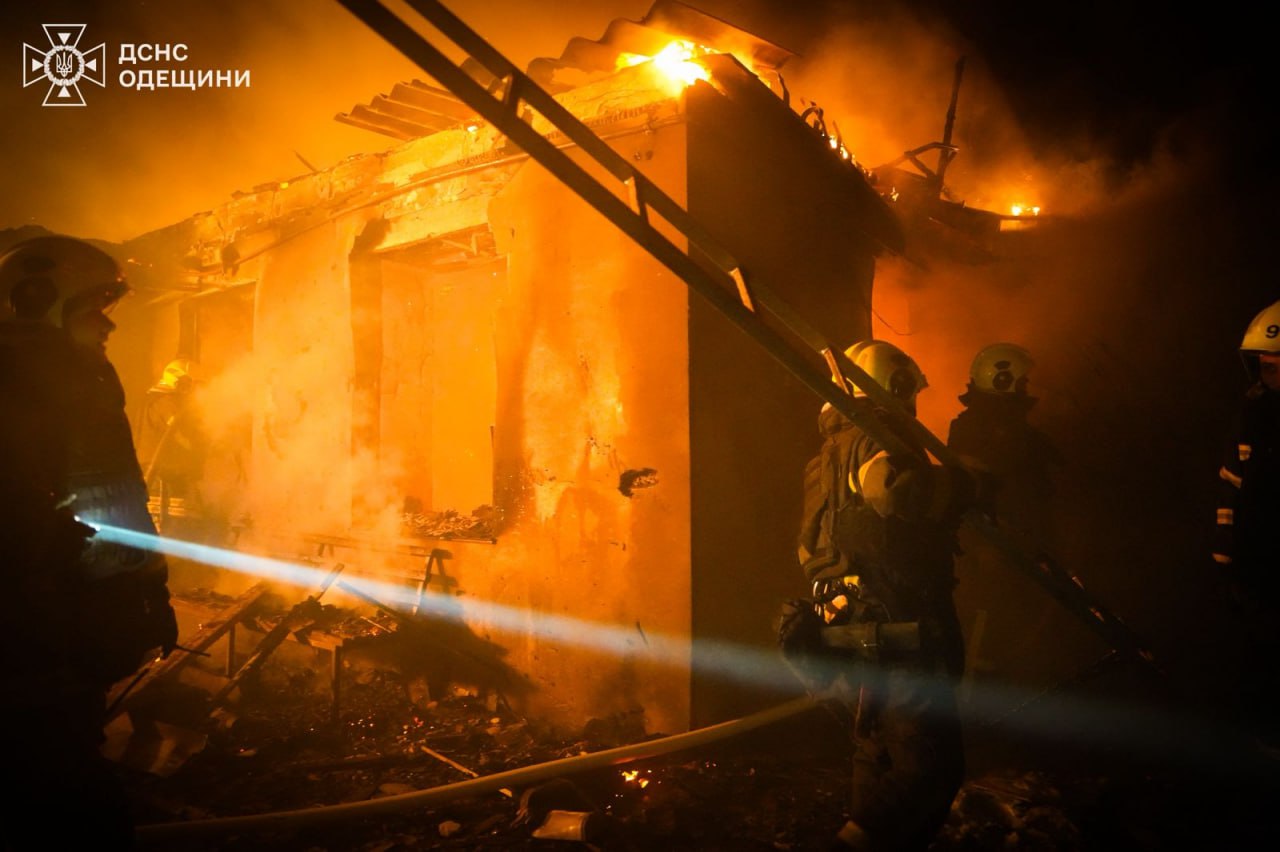 Odesa strike aftermath
Response and recovery operations are currently ongoing. Law enforcement officers are documenting the latest instances of Russian war crimes against Ukraine’s civilian population.
Meanwhile, Ukrainian experts point out that countries including China, North Korea, Hungary, Slovakia, Iran, and Brazil assist Moscow in killing Ukrainians in its war against Ukraine by funding the Russian budget through trade.
Earlier, Bohdan Bernatskyy, a member of the Sanctions Policy Working Group of the Crimean Platform Expert Network, revealed at the Third Parliamentary Summit in Latvia that over 1,300 Russian military companies and 2 million industrial workers continue to operate, many without international restrictions.
On February 21, Ukraine’s President Volodymyr Zelenskyy signed decrees implementing decisions by the National Security and Defense Council (NSDC) to impose new sanctions packages, particularly measures targeting 225 captains of vessels in Moscow’s shadow fleet that export Russian oil products.
The list features citizens of 11 countries: Russia, India, and the Philippines.
Ukrainian authorities said monitoring in the Black, Red, and Baltic Seas has revealed that these captains commanded vessels from Russia’s shadow fleet, transporting oil in breach of EU, G7, and other international sanctions.
A second sanctions package targets 46 Russian citizens, 2 Iranian citizens, and 44 Russian companies that service Russia’s military industrial complex.
These include firms that supplied, developed, produced, and repaired equipment, electronic warfare systems, and spare parts for Russia’s arms industry. Their products were used in the production of ballistic and cruise missiles, attack and reconnaissance drones, small arms, and ammunition.
The two Iranian citizens were linked to the supply of aviation parts and components through sanctions evasion. This took place in the interests of the Iranian Aircraft Manufacturing Industrial Company, a Russian partner in the development and production of Shahed-type drones, which is already under sanctions imposed by Ukraine, the United States, Switzerland, and New Zealand.
In his evening address, Zelenskyy expressed hope that the next EU sanctions package will include maritime services for vessels used by Russia.
“We highly expect that the next sanctions package from the European Union will take into account what is needed to put real pressure on Russia for this war, namely, to limit Russia’s ability to wage war. This also applies to the ban on maritime services for vessels used by Russia. Europe should come to this conclusion. This is what can become a significant incentive for Europe to finally move Russia from war to real diplomacy. The war must end,” the President stated.
Stay connected via X and LinkedIn with ZMINA – and help build this platform with us by filling out our anonymous 5-minute survey here.