Bodies of two Nigerian mercenaries found in Luhansk region, Ukraine’s intelligence says
In the Luhansk Oblast, Ukraine’s military intelligence officers discovered the bodies of two citizens of the Federal Republic of Nigeria who fought on the side of the Russian occupying army, the Main Intelligence Directorate of the Ministry of Defense of Ukraine (MID) stated.
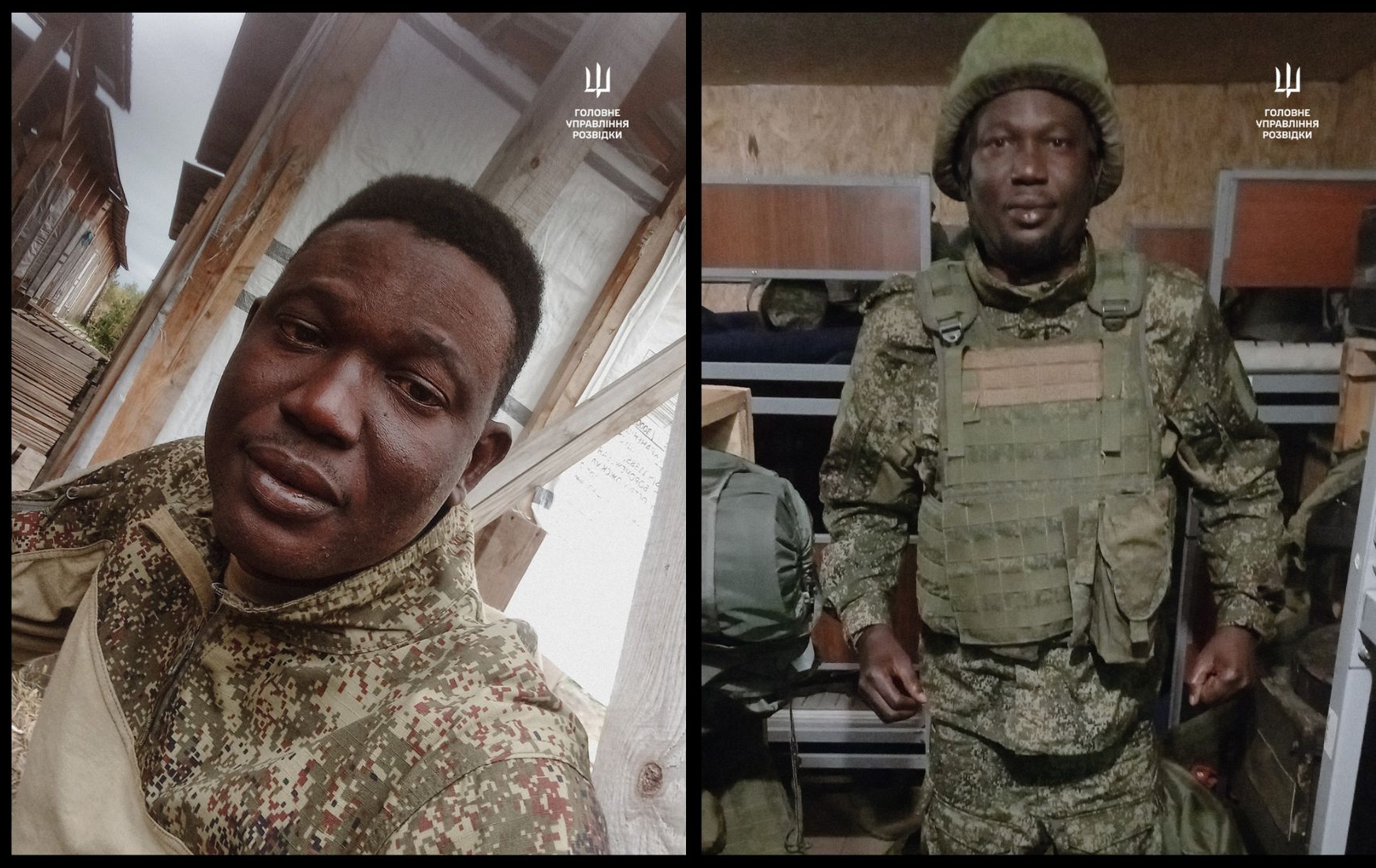
These are Hamzat Kazeen Kolawole (born April 3, 1983) and Mbah Stephen Udoka (born January 7, 1988). Both served as part of the 423rd Guards Motorized Rifle Regiment (military unit 91701) of the 4th Guards Tank Kantemirovskaya Division of the Russian Armed Forces.
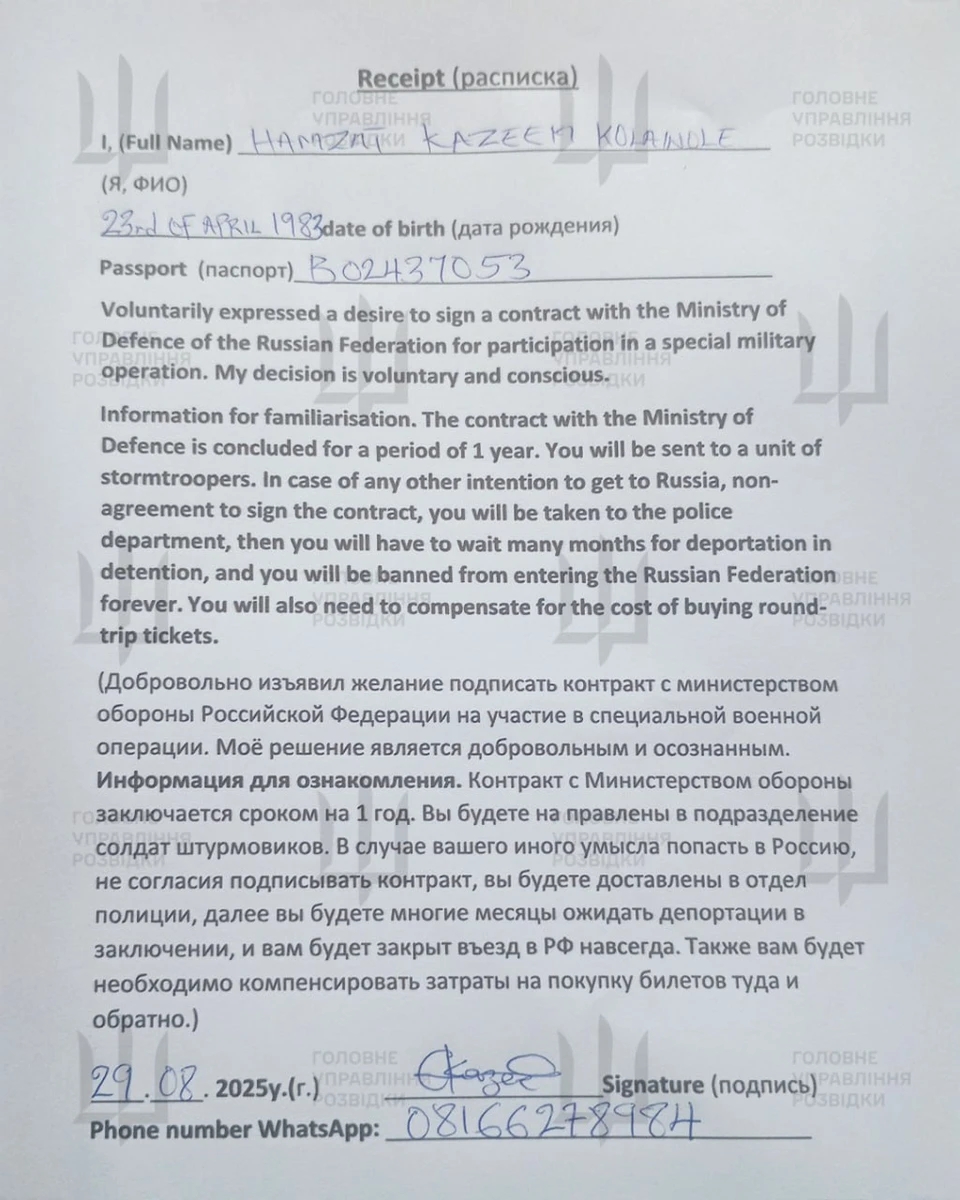
According to the documents discovered, they signed contracts with the Russian army in the second half of 2025: Kolawole on August 29 and Udoka on September 28.
The MID noted that Udoka received essentially no training — just five days later, on October 3, he was assigned to a unit and sent to the temporarily occupied territories of Ukraine that day.
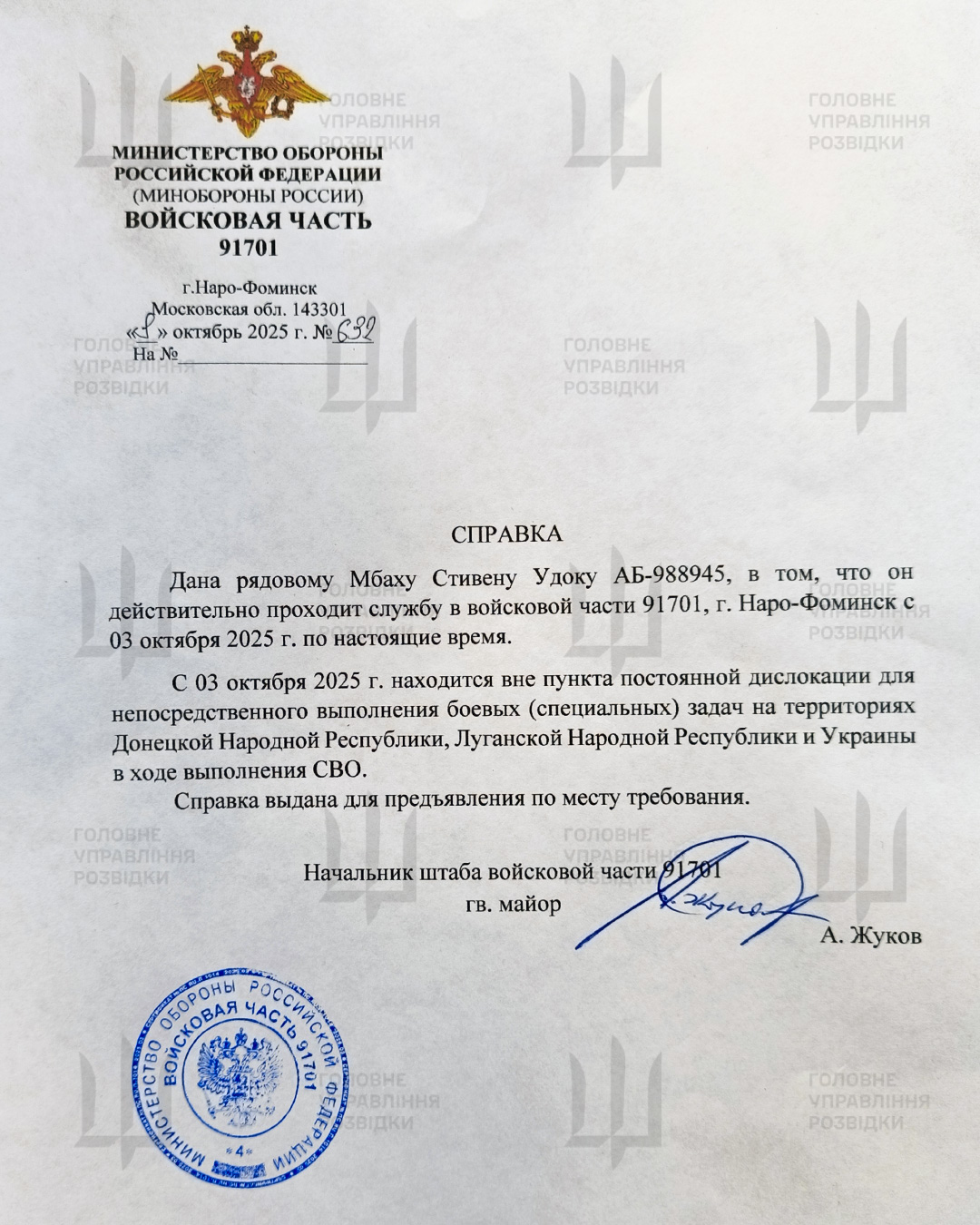
Documents regarding Kolawole’s training were not preserved; however, it is highly likely that he also did not undergo any military training. He is survived by a wife and three children in Nigeria.
Both Nigerians were killed in late November during an attempted assault on Ukrainian positions in the Luhansk Oblast. They never engaged in a firefight — the mercenaries were eliminated by a drone strike.
The Main Intelligence Directorate of the Ministry of Defense of Ukraine warned foreign citizens against traveling to the Russian Federation or working in its territory.
“A trip to Russia is a real chance to end up in a ‘suicide’ assault squad and, eventually, rot in Ukrainian soil,” the statement reads.
To provide background, since 2022, Moscow has targeted the economically vulnerable across Africa, South Asia, and Latin America — Nepalis promised security work, Kenyans told they’d guard facilities, Cubans offered escape from grinding poverty. Instead, they’ve become expendable infantry in a war they barely understand, while young women from Brazil and African nations labor under exploitative conditions in Russian drone factories.
You also want to read: Sybiha invites Ghana’s FM to Ukraine amid appeal over captured Ghanaian fighter on Ukrainian soil
Wellington Nyongesa, intake editor at Standard Group PLC, stated at the Third International Conference Crimea Global that nearly 300 young Kenyan men are trapped on the Russian front lines in Ukraine, lured by false promises of jobs in supermarkets, logistics, and construction.
Previously, ZMINA reported that a video showing Russian mistreatment of African mercenaries spread among Kenyan social media users. In the video, a Russian serviceman humiliates an African fighter by strapping an anti-tank mine to him in what the narration frames as a cruel prank or punishment, labeling him with a racist expression as “coal.”
Families of Kenyans killed in Russia’s war blame Kenya’s government for failing to regulate illegal recruiters. Many still cannot bury their loved ones as bodies remain on the battlefield.
Munira Mustaffa, Senior Fellow at Verve Research, warned countries that Russia has built a global human trafficking infrastructure to sustain its war in Ukraine, exploiting economic desperation across the Global South to avoid domestic mobilization. Moscow loses approximately 1,000 soldiers daily and must recruit 30,000-40,000 new personnel monthly to maintain force levels.
After a 2022 mobilization attempt drove over 261,000 Russians to flee the country, Russian ruler Vladimir Putin authorized foreign nationals to serve in Russia’s military through a July 2025 decree that deliberately omitted recruitment specifications.
The trafficking networks span from North Korea to Cuba, Nepal to Kenya, operating through false promises of construction jobs or warehouse work. Russia has recruited over 10,000 North Korean soldiers and established pipelines in Syria, Cuba, Nepal, India, Bangladesh, Kenya, Somalia, Sierra Leone, South Africa, and Iraq. These networks weaponize poverty, with victims having no stake in the conflict’s causes or outcomes.