Kenya to сonfront Russia over “unacceptable” recruitment of citizens for Russia’s war against Ukraine
Kenya will talk to Russia over growing reports that its citizens are being recruited to fight in the war in Ukraine. Speaking to the BBCNews, Foreign Minister Musalia Mudavadi called the practice “unacceptable and clandestine”, and said Nairobi had shut down illegal recruiters and would urge Moscow to sign a deal banning the conscription of Kenyan soldiers.
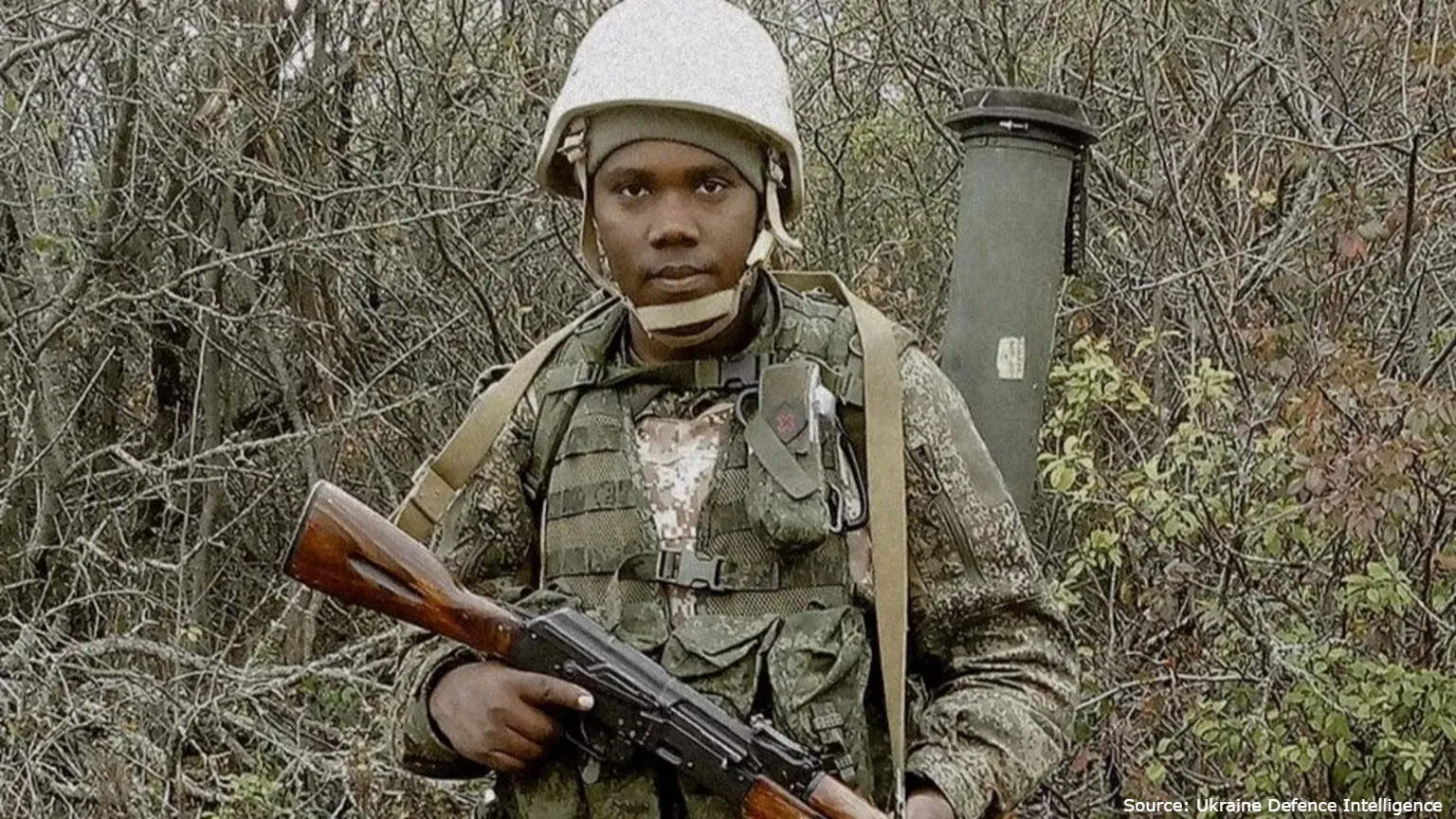 Clinton Mogesa, 29, died while fighting for Russia against Ukrainian people
The Kenyan government estimates that around 200 of its nationals have been recruited to fight for Russia.
The exact number remains unclear, as Nairobi maintains that none of them travelled through official channels.
“Kenya and Russia have had long relations since independence, literally. So this, in my view, becomes a very unfortunate episode of otherwise very positive and cordial relations between our two countries,” Musalia Mudavadi said.
Mudavadi has told the BBC that Kenya’s engagement with Russia will focus on curbing illegal recruitment practices, including discussions on visa policy and bilateral labour agreements, excluding military conscription.
He said the Kenyan authorities had closed more than 600 recruitment agencies suspected of duping Kenyans with promises of jobs overseas.
So far, 27 Kenyans who had been fighting in Russia have been repatriated, he said, with authorities providing psychological care to address their trauma and “de-radicalise” them.
It is not clear how many Kenyans have died in Russia’s war against Ukraine, and Russia has not formally addressed such reports. Earlier, BBC News reported that relatives who approached the Russian embassy in Nairobi for answers were turned away.
“Families that we’ve spoken to say they have not been able to bury their loved ones because their bodies are still on the other end,” Kenya’s foreign minister said.
“It is difficult because, remember, it depends on where the body has been found. There have been some found in Ukraine – we are also working with the government of Ukraine to try and get the remains of those people repatriated.”
Pressure has been mounting on the Kenyan government to act after the recent discovery of more bodies of citizens who had been recruited to fight for the Russian armed forces.
Some of the affected families have told the BBC that they lay the blame squarely at Kenya’s government’s door for failing to regulate and criminalise clandestine recruitment agencies.
But the Kenyan foreign minister rejects this.
“You cannot blame the government for this,” Mudavadi told the BBC. “Where there are illegal recruitment agencies, we have scrapped them, and we continue to scrap them.”
Ukrainian intelligence assessment estimates that more than 1,400 people from 36 countries in Africa have been recruited to fight for Russia. Ukraine has also previously come in for criticism for trying to recruit foreign nationals, including Africans, to fight on its side.
Ukrainian officials have repeatedly warned that anyone fighting for Russia will be treated as an enemy combatant and that the only safe route out is to surrender and be treated as a prisoner of war.
To provide background, since 2022, Moscow has targeted the economically vulnerable across Africa, South Asia, and Latin America — Nepalis promised security work, Kenyans told they’d guard facilities, Cubans offered escape from grinding poverty. Instead, they’ve become expendable infantry in a war they barely understand, while young women from Brazil and African nations labor under exploitative conditions in Russian drone factories.
You also want to read: Sybiha invites Ghana’s FM to Ukraine amid appeal over captured Ghanaian fighter on Ukrainian soil
Wellington Nyongesa, intake editor at Standard Group PLC, stated at the Third International Conference Crimea Global that nearly 300 young Kenyan men are trapped on the Russian front lines in Ukraine, lured by false promises of jobs in supermarkets, logistics, and construction.
Previously, ZMINA reported that a video showing Russian mistreatment of African mercenaries spread among Kenyan social media users. In the video, a Russian serviceman humiliates an African fighter by strapping an anti-tank mine to him in what the narration frames as a cruel prank or punishment, labeling him with a racist expression as “coal.”
Munira Mustaffa, Senior Fellow at Verve Research, warned countries that Russia has built a global human trafficking infrastructure to sustain its war in Ukraine, exploiting economic desperation across the Global South to avoid domestic mobilization. Moscow loses approximately 1,000 soldiers daily and must recruit 30,000-40,000 new personnel monthly to maintain force levels.
After a 2022 mobilization attempt drove over 261,000 Russians to flee the country, Russian ruler Vladimir Putin authorized foreign nationals to serve in Russia’s military through a July 2025 decree that deliberately omitted recruitment specifications.
The trafficking networks span from North Korea to Cuba, Nepal to Kenya, operating through false promises of construction jobs or warehouse work. Russia has recruited over 10,000 North Korean soldiers and established pipelines in Syria, Cuba, Nepal, India, Bangladesh, Kenya, Somalia, Sierra Leone, South Africa, and Iraq. These networks weaponize poverty, with victims having no stake in the conflict’s causes or outcomes.
Keep up with ZMINA on X and LinkedIn – and help us improve by answering a few quick questions here about our English-language coverage.