On February 1, Russians killed 17 civilians in Ukraine
Russian military shelling on February 1, 2026, killed 17 civilians in the Dnipropetrovsk and Donetsk regions, while over three dozen others sustained injuries across the Kherson, Kharkiv, and Zaporizhzhia regions, the National Police reported.
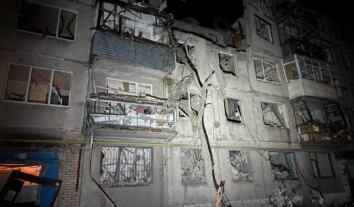
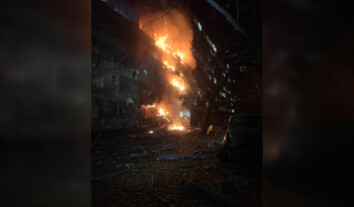
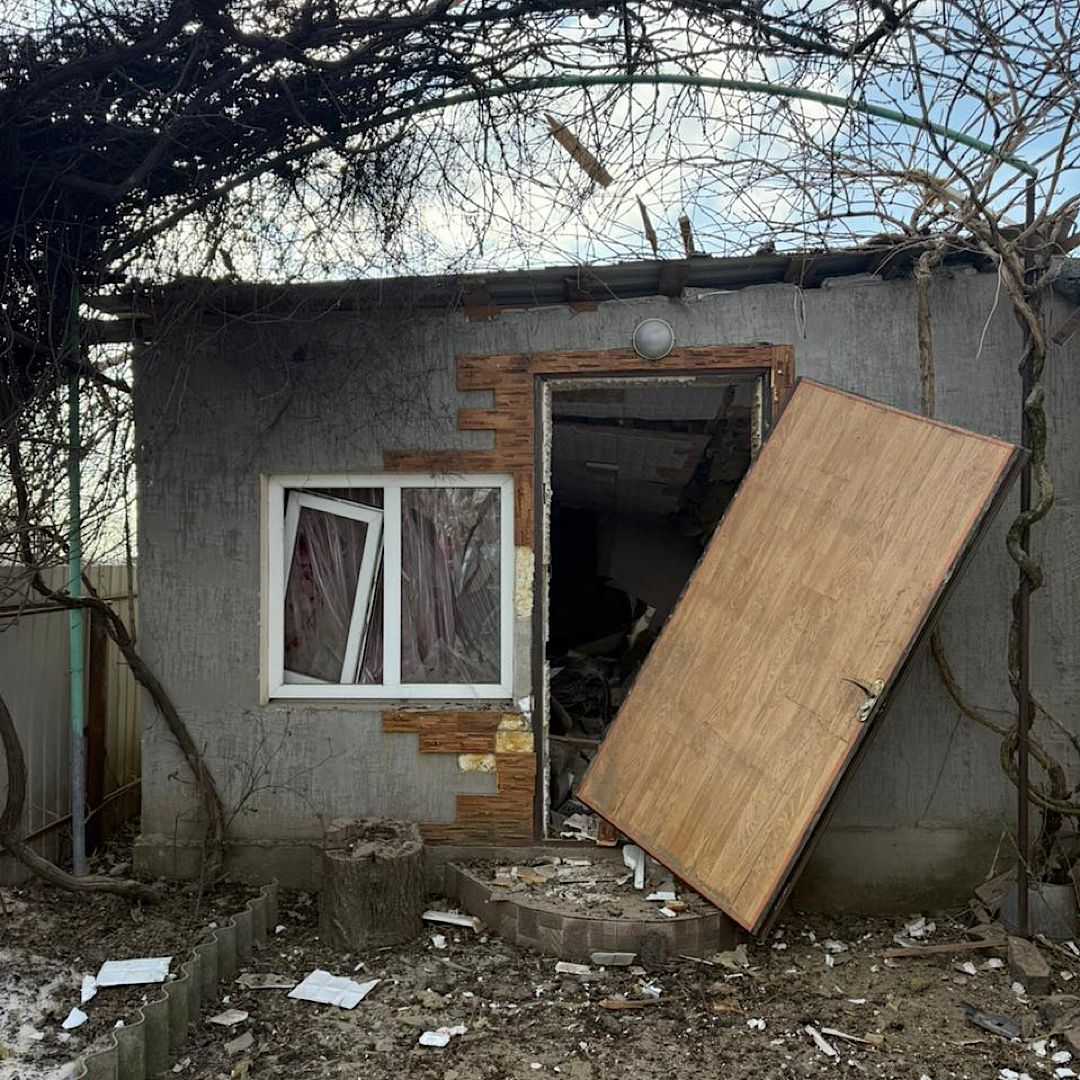 A residential house in the Dnipropetrovsk Oblast damaged by Russian military shelling on February 1, 2026
The victims of the Russian strikes include:
- Fifteen people from a bus in the Dnipropetrovsk Oblast, which was targeted by a Russian drone equipped with a live video feed, allowing the operator to see the target before impact. The vehicle was transporting mine workers home from their shift.
- A female resident of Kramatorsk, who was killed by a Russian airstrike on Slovyansk, the Donetsk Oblast.
- One person was killed in Oleksiievo-Druzhkivka, the Donetsk Oblast.
In addition to those killed, the Russian strikes left many others injured.
In the Dnipropetrovsk region, 16 passengers were injured when a bus came under fire, along with an elderly man from a village in one of the “hromadas,” a local government area that includes one or more nearby settlements.
At least 10 others were wounded during Russian strikes in the Zaporizhzhia Oblast. Among the victims in the city of Zaporizhzhia are a 4-year-old boy and six women who were at a residential area and a maternity hospital hit by Russian drone attacks.
Additionally, two elderly women were injured in Russian drone strikes on Kushuhum and Shyroke. In Preobrazhenka, a man was hospitalized after an explosive device detonated.
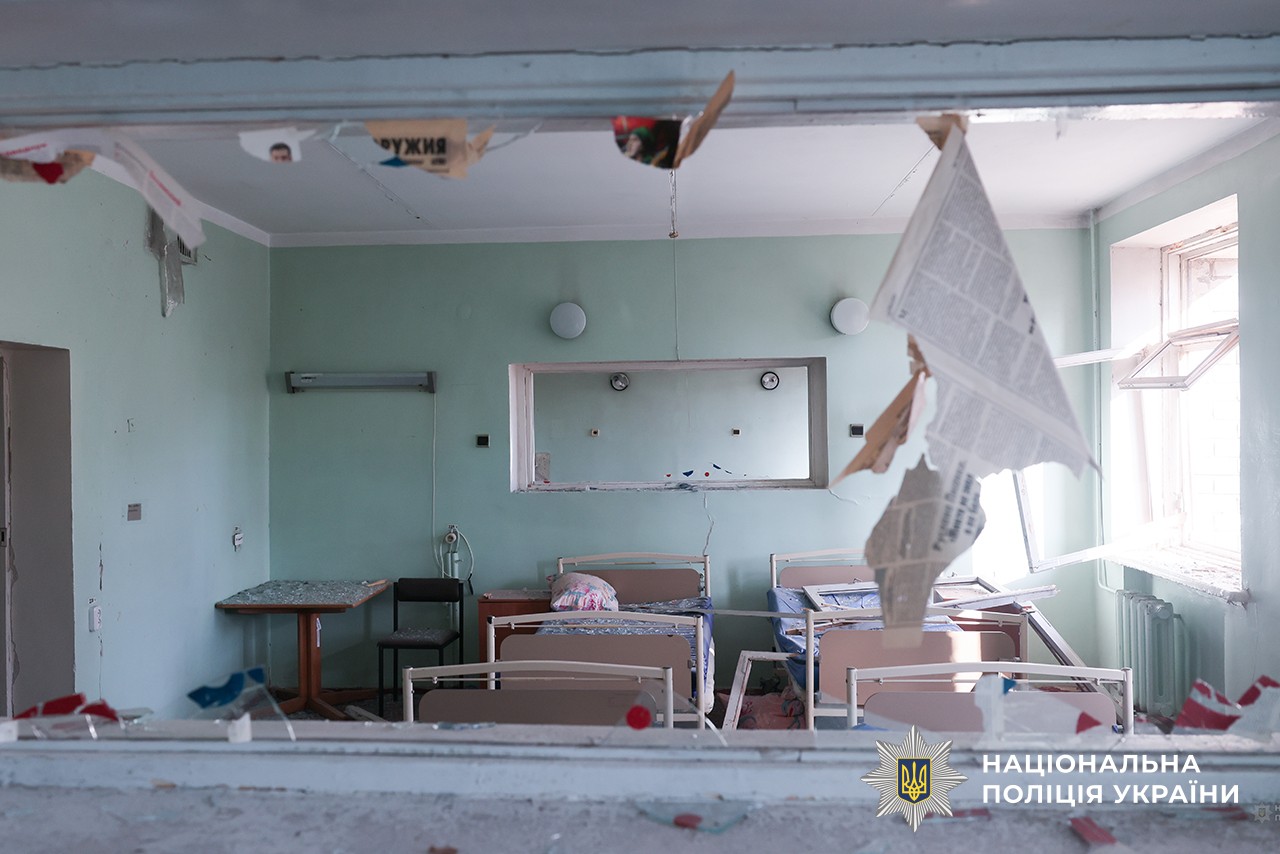 Russian drone strike destroys maternity hospital ward in Zaporizhzhia
In the Vovchansk hromada of the Kharkiv region, Russian strikes wounded one man and two women.
Additionally, Russian forces targeted a civilian vehicle with a drone on the road between the village of Prykolotne and the town of Velykyi Burluk; however, no casualties or injuries were reported in that incident.
In the Donetsk Oblast, Russian attacks wounded four people, including residents of Sloviansk, Druzhkivka, Kostiantynivka, and Oleksiievo-Druzhkivka.
In the Kherson region, three residents of Kherson were injured on February 1. The Russian military struck the city center in the morning and the Dniprovskyi District in the evening.
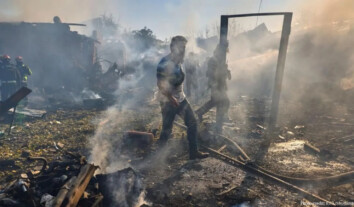
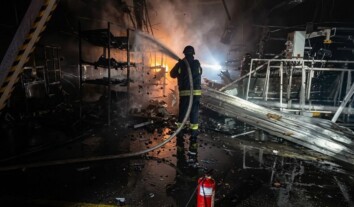
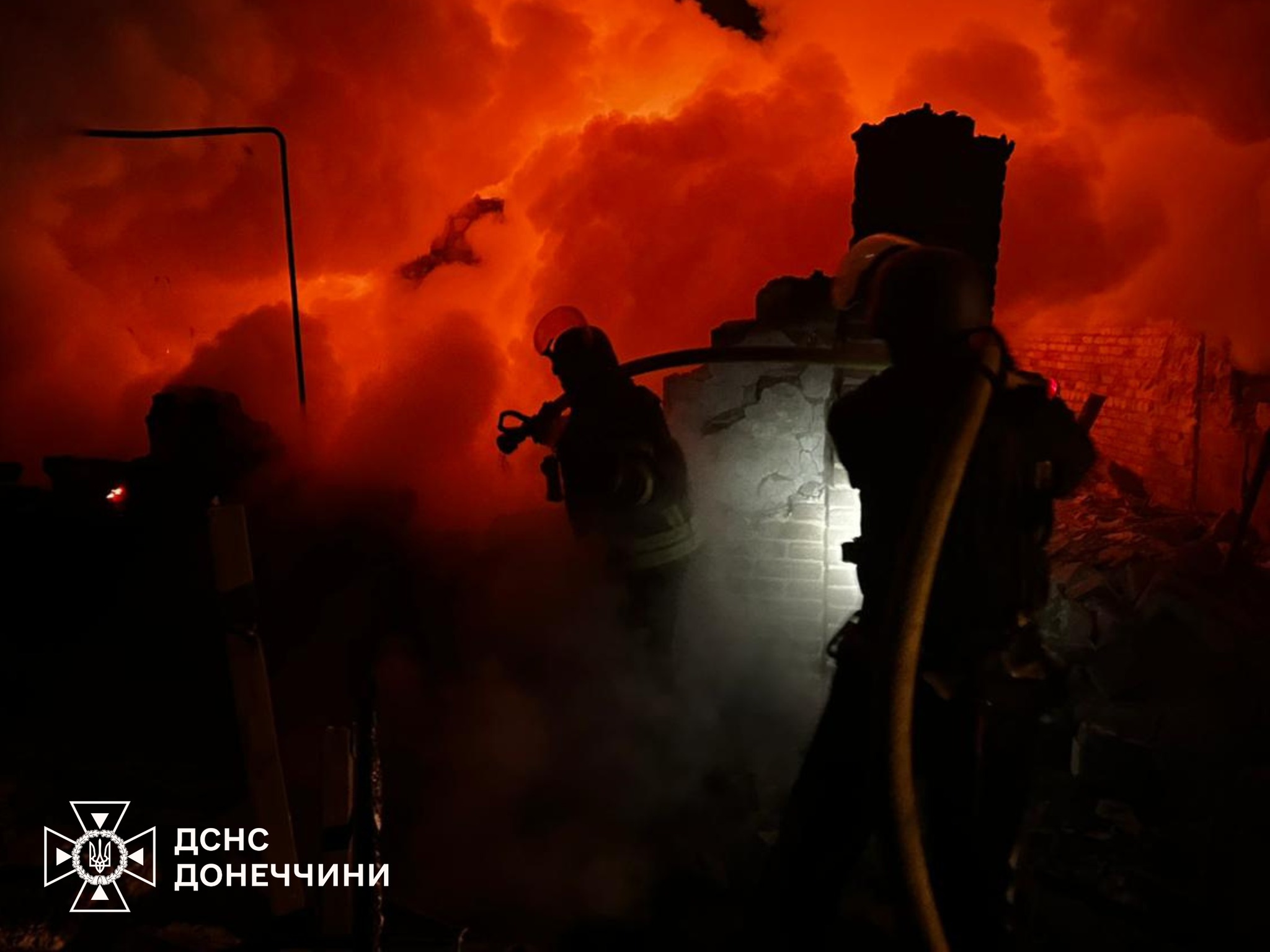 Rescuers at the site of a Russian strike in the Donetsk region
Previously, President of Ukraine Volodymyr Zelenskyy pointed out that the Russian Federation continues to systematically attack Ukrainian civilian infrastructure in an attempt to destroy the country’s energy and transport logistics. Throughout January the enemy launched over 6,000 attack drones, approximately 5,500 guided aerial bombs, and 158 missiles of various types at Ukraine.
Earlier, Bohdan Bernatskyy, a member of the Sanctions Policy Working Group of the Crimean Platform Expert Network, revealed at the Third Parliamentary Summit in Latvia that over 1,300 Russian military companies and 2 million industrial workers continue to operate, many without international restrictions.
Ukrainian experts point out that countries, including China, North Korea, Hungary, Slovakia, Iran, and Brazil, assist Moscow in killing Ukrainians in its war against Ukraine by funding the Russian budget through trade.
The Center for Strategic and International Studies found that in 2024 China increased sales of ammonium perchlorate — a key ingredient used to produce solid propellant for Iskander missiles. This assistance enabled Russia to triple its ballistic missile production, the report stated. Beijing’s support has bolstered Russia’s defense industrial base, enabling Russian forces to launch salvos of 13 to 18 Iskander-M ballistic missiles in 2026.
Since 2022 trade between China and Russia has nearly doubled, allowing the Russian army to sustain operations through 2026 and expand its Iskander-M arsenal, according to a CSIS report.
Overall imports from China have grown to represent one-third of Russia’s total imports, while Russian oil exports now account for 75% of all oil purchased by Beijing. Analysts specifically highlighted defense-related imports, which provided the Russian military-industrial complex with machine tools, components, and raw materials for weapons manufacturing.
Furthermore, Russia’s defense industry also received computer chips, machine tools, radars, and sensors from China, according to CSIS. These goods are part of a list of 50 items aiding weapons production, effectively compensating for Russia’s limited manufacturing capacity in its defense sector. Other areas of support include the supply of drone hulls, lithium batteries, and fiber-optic cables. CSIS reported that Russian imports from China rose from $190 billion in 2022 to $250 billion in 2024.
Stay connected via X, BlueSky and LinkedIn with ZMINA – and help build this platform with us by filling out our anonymous 5-minute survey here.