Russian attacks kill civilian in Donetsk region, injure 11 in Donetsk and Kherson Oblasts on December 20
Russians killed one civilian in the Donetsk region and injured four in the Donetsk Oblast and seven in the Kherson Oblast in Russian attacks on December 20, 2025, according to the Donetsk Oblast Military Administration and Kherson Oblast Military Administration.
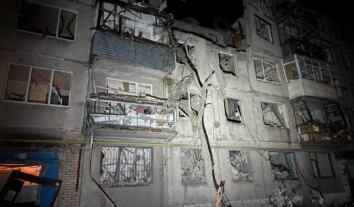
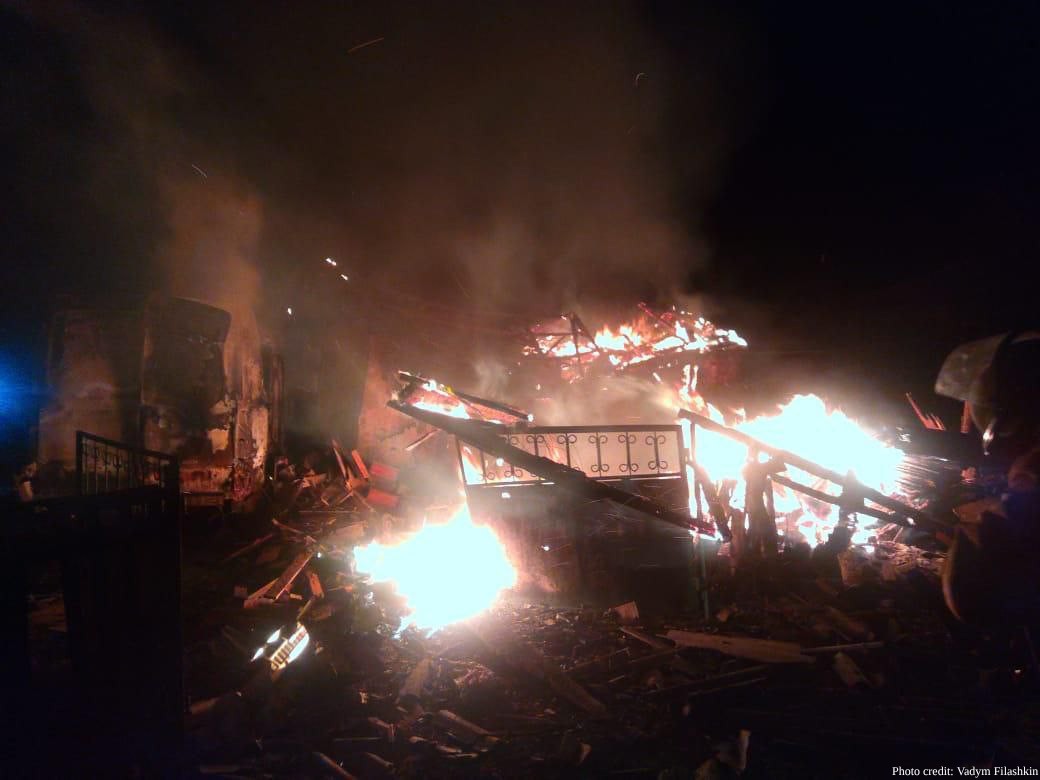 Aftermath of Russian shelling in the Donetsk Oblast
Local authorities reported that Russians killed one resident of the town of Druzhkivka in Donetsk Oblast. Another four people in the oblast were injured over the day: three in Druzhkivka and one in the city of Kostiantynivka.
Seven people were injured in Kherson Oblast as a result of Russian aggression.
According to the authorities, Russian forces struck critical and social infrastructure facilities and residential areas across the oblast, damaging four apartment buildings and three houses. The Russians also damaged an administrative building, a gas pipeline, and a car.
Meanwhile, President of Ukraine Volodymyr Zelenskyy reported that Russian forces launched about 1,300 attack drones, nearly 1,200 guided aerial bombs, and nine missiles of various types against Ukraine over the past week. According to Zelenskyy, the South of Ukraine was hit particularly hard, including Odesa Oblast.
Zelenskyy informed on X that negotiating teams from Ukraine and the United States are continuing their work on pathways to end the war with a dignified peace. He highlighted that long-range sanctions against Russia are also working as required.
“The aggressor must understand that war brings no dividends and always returns to where it came from,” he said.
You may also want to read: Ukraine calls on the world not to ease sanctions against Russia until it frees all Ukrainian people and territories, including Crimea
On December 17, Zelenskyy and Russian leader Vladimir Putin stated that Russia supposedly prefers a diplomatic settlement to the war. However, if Ukraine and its partners refuse what he called a “substantive dialogue,” Moscow is ready to continue seizing territory by military means.
President Volodymyr Zelenskyy, in his evening address, reacting to Putin’s comments, pointed out that Russia has sent signals indicating it plans to continue fighting next year.
“We heard further signals from Moscow that they are preparing for next year as a year of war. These signals are not only for us. It is important that partners see this. It is important that they not only see it, but also respond – in particular, partners in the United States of America, who often say that Russia supposedly wants to end the war. But a completely different rhetoric and different signals are coming from Russia – including official instructions to their army,” he said.
In addition, Zelenskyy also added that with such an attitude, Russia will undermine diplomacy, trying through various diplomatic wordings and pressure on one point or another in documents, simply to cover up its desire to destroy Ukraine.
The US Treasury Department removed some companies from its sanctions list that had sold sanctioned equipment to Russia, including to the military-industrial complex.
According to the US Treasury Department website, the companies removed include Cyprus-based Veles International Limited and its owner, Dmitrii Bugaenko. The company is a subsidiary of an investment firm based in Moscow. However, the Moscow-based legal entities linked to this company remain under sanctions.
In addition, the United States lifted sanctions imposed on Dubai-based 365 Days Freight Services FZCO and the Turkish company Etasis, which had exported sanctioned equipment to Russia that was used in its military-industrial complex.
The United States also lifted sanctions on the Finnish company Hi-Tech Koneisto and its top executive, Finnish national Evgenia Dremova. They had supplied optoelectronic and laboratory equipment to Russian companies subject to sanctions.
The United States has not disclosed the reasons for these decisions. It is also unclear whether Washington will change its policy toward the Russian companies that were the end recipients of products supplied by the intermediaries in question.