Civilian deaths from Russian strikes in large cities of Ukraine up fourfold in first 10 months of 2025 – UN (updated)
Released by the Office of the UN High Commissioner for Human Rights, data indicate that in the first 10 months of 2025, 548 people became civilian fatalities of Russian military shelling in large cities of Ukraine — nearly four times the number recorded over the same period last year.
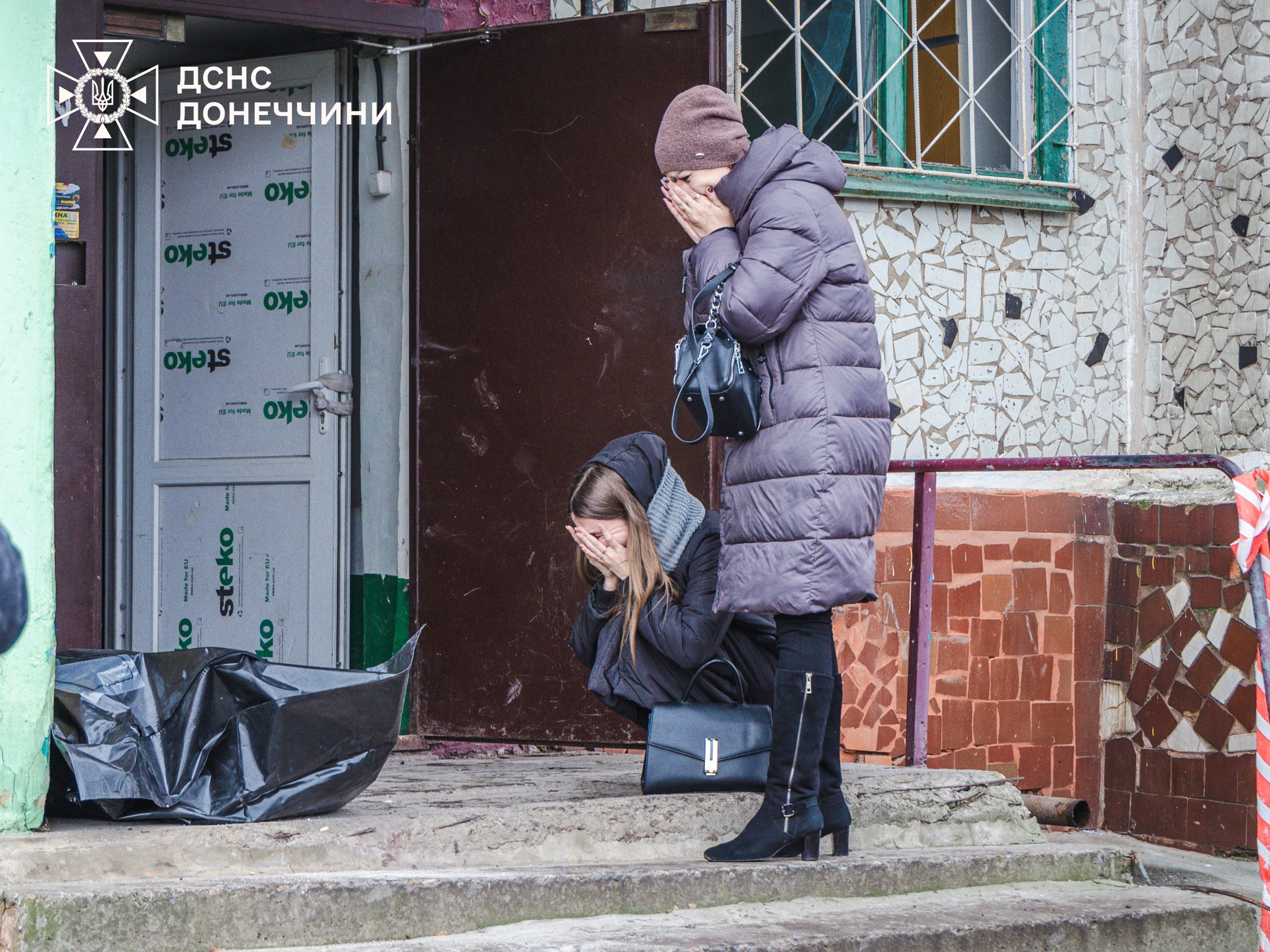 Two women weep looking at the body of an acquaintance or relative killed by a Russian strike on Kramatorsk in the Donetsk region on December 1, 2025
In Kyiv, which is regularly targeted by Russia, the number of civilian casualties this year is also four times higher than last year. Analysts observe this trend not only in the capital but also in other major cities such as Dnipro and Kharkiv.
“62% of civilian casualties were caused by explosive weapons with a wide impact area, with older people being disproportionately affected. Another 38% of civilian casualties resulted from attacks by long-range missiles and loitering munitions [drones of various types – Ed.] deployed in urban areas, often far from the front line. These attacks regularly hit cities such as Kyiv, Zaporizhzhia, and Kharkiv, although civilians in some regions were also affected for the first time, specifically in Chernivtsi and Zakarpattia,” the report states.
Russian strikes involving multiple launch rocket systems (MLRS) also caused significant destruction and casualties, primarily targeting Zaporizhzhia and Sumy.
“Systems firing multiple unguided rockets in quick succession lack the accuracy needed to effectively distinguish between military and civilian objectives in populated urban areas, as required by international humanitarian law,” the UN monitors stressed.
In addition to the fatalities, in general, and not only in large cities at least 3,529 people sustained various injuries, which is 75% higher than during the same period last year.
Among the casualties are:
- 61 medical workers;
- Six media workers;
- Nearly 100 emergency service personnel, who are often targeted by Russian “double-tap” strikes.
The report also highlighted at least 13 victims of Russian strikes among humanitarian workers. Such incidents occurred this year not only in frontline areas but also farther away.
The document separately addressed the consequences of Russian strikes on infrastructure, illustrating certain regions on a map to indicate the status of water, electricity, and heat, as well as the closure of grocery stores, among other details.
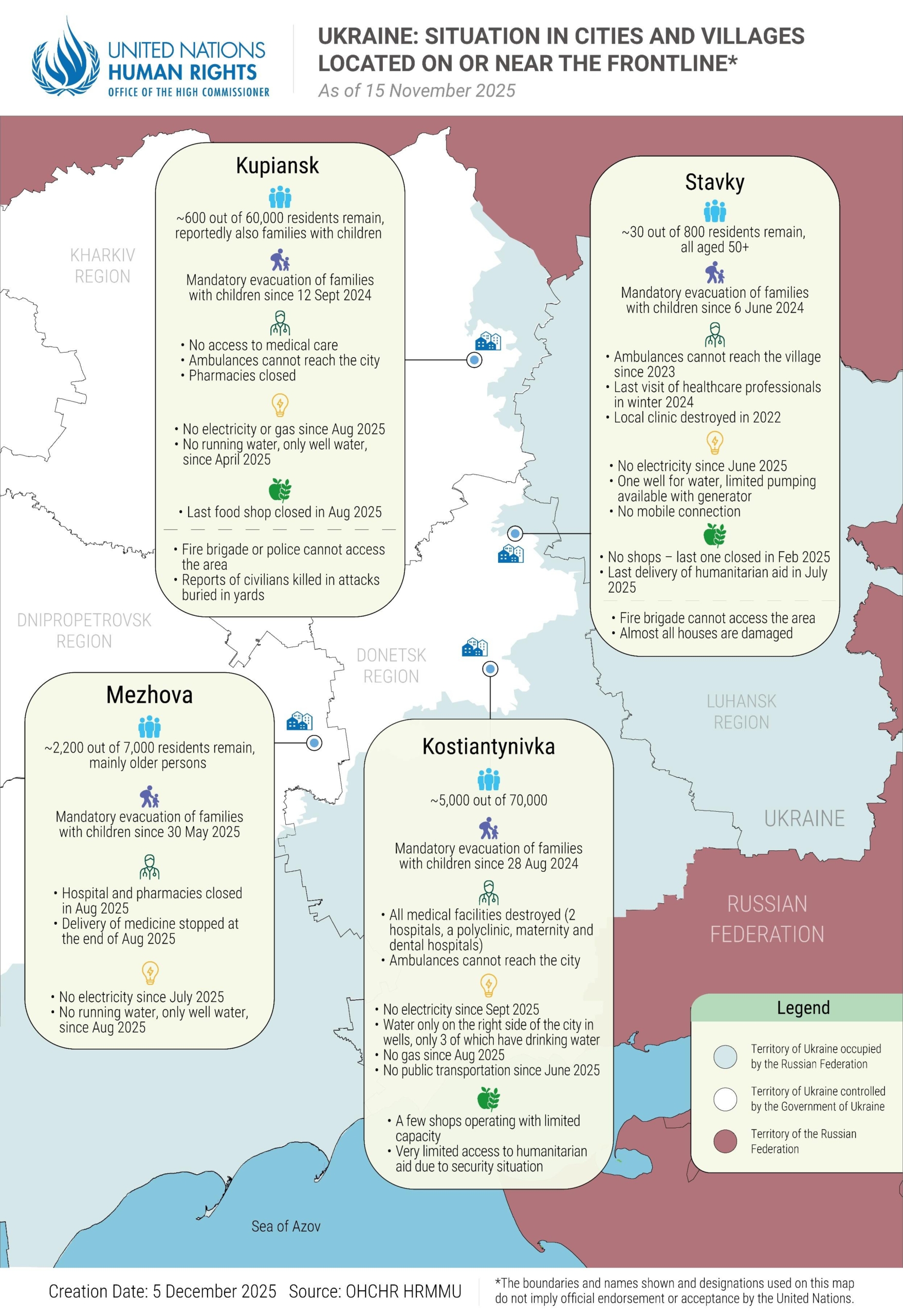
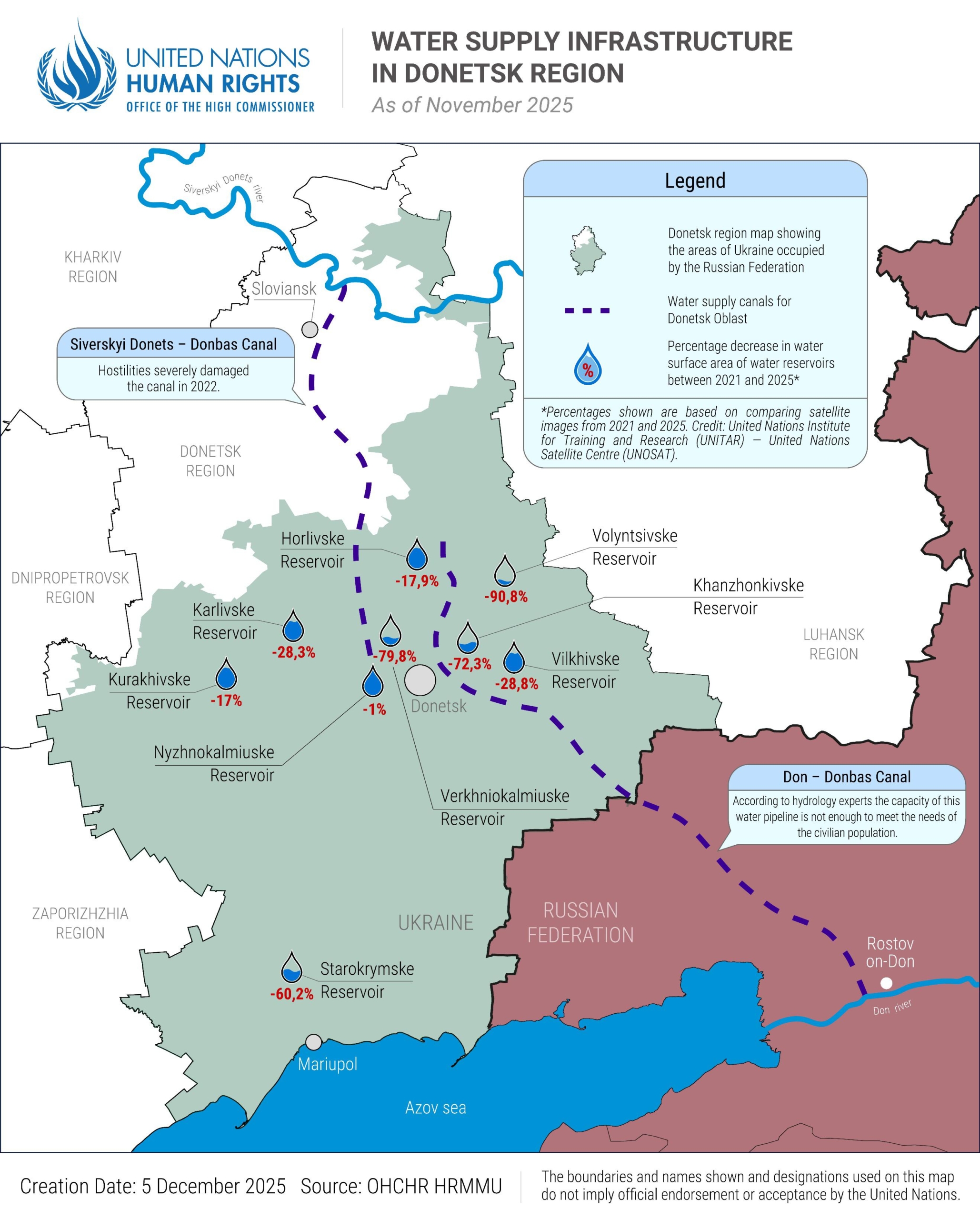
The report separately addressed the crisis in the temporarily occupied Donetsk oblast, where, because of the Russians, thousands of Ukrainian citizens in this Ukrainian territory remain without adequate water service. Access to drinking water and sanitation is a universal human right.
To provide background, in 2024, Ukraine saw a 30% increase in fatalities, while child deaths increased by half. Prior to this, such high numbers of child fatalities occurred only during the first months of the full-scale invasion.
Meanwhile, Ukrainian experts have pointed out that China, North Korea, Iran, and Brazil assist Moscow in killing citizens of Ukraine in Russia’s war, including funding the Russian budget through trade.
Previously, Reuters news agency reported that China’s crude oil imports rose 4.88% in November from the same period in 2024, according to government data released on December 8, with daily import volumes reaching the highest level since August 2023. The world’s largest crude importer brought in 50.89 million metric tons of oil in November, equivalent to 12.38 million barrels per day (bpd), up 5.24% from October, according to data from the General Administration of Customs.
“Domestic demand has experienced a seasonal decline, but sanctions on crude supplies from Iran and Russia have led to significant price reductions for feedstock, boosting refining margins and prompting more refineries to apply for advance import quotas ahead of the first batch in 2026,” said Emma Li, Vortexa’s lead China market analyst.
In addition, Reuters reported that India’s crude oil imports from Russia in December are heading toward a six-month high, as the world’s third-largest oil buyer believes U.S. sanctions against Russian producers will soon ease.
According to data compiled by analytics firm Kpler, oil shipments from Russia are expected to rise to 1.85 million barrels per day (bpd) in December, compared to 1.83 million bpd in November.
The largest share of Russian oil imported by India in December is being offloaded at the Vadinar port. Kpler estimates volumes at about 658,000 bpd, up from 561,000 bpd in November and well above the 2025 average of 431,000 bpd.
The Vadinar port serves the refinery of the same name owned by Nayara Energy, in which Rosneft holds a 49.13% stake.
The refinery has a processing capacity of 405,000 bpd, meaning current import levels from Russia significantly exceed its capacity.
Follow ZMINA on X and LinkedIn for daily human rights coverage from Ukraine – we invite you to share your feedback on what you’d like to see more of in our survey here.